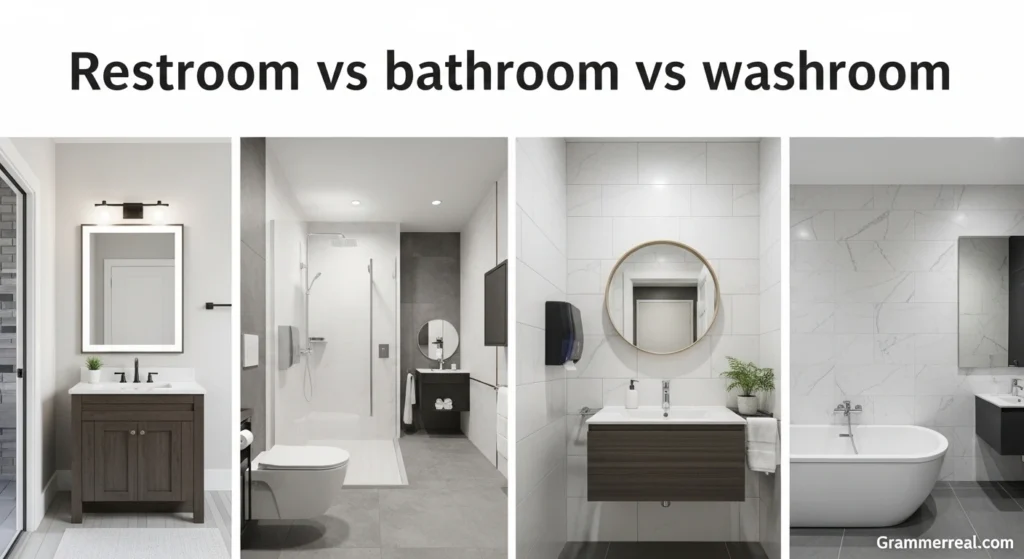
Many people hear the words restroom, bathroom, and washroom every day, but they often wonder if these words mean the same thing. The truth is that they are similar, yet each word has its own use, tone, and place.
In daily conversation, people choose one term based on country, culture, setting, and habit. Some words sound more formal, while others sound more casual and common. If you travel, study English, or write in English, knowing the difference can help you avoid confusion. This topic is also useful because these words appear in schools, offices, malls, airports, and homes. Even native speakers sometimes switch between them depending on the situation. In this guide, you will learn clear meanings, common uses, mistakes to avoid, and simple tips. By the end, you will feel more confident using restroom vs bathroom vs washroom in real life.
What Do Restroom, Bathroom, and Washroom Mean?
These three words often point to a place where people go for personal needs, but the exact meaning can change.
Restroom
A restroom usually means a public toilet in the United States. You may hear this word in restaurants, offices, airports, hotels, and stores.
Examples:
- Where is the restroom?
- The restroom is near the entrance.
- Please keep the restroom clean.
Even though the word includes “rest,” people do not go there to rest. It is simply a polite public term.
Bathroom
A bathroom often means a room with a toilet and a bath or shower inside a home. In American English, people also use it for public toilets.
Examples:
- I need to clean the bathroom at home.
- She is taking a shower in the bathroom.
- Excuse me, where is the bathroom?
In many places, this is the most common everyday word.
Washroom
A washroom usually means a place with toilets and sinks, especially in Canada. It is also used in some other countries.
Examples:
- The washroom is down the hall.
- Please wash your hands in the washroom.
- This mall has clean washrooms.
This word sounds polite and practical.
Why Do People Use Different Words?
Language changes by region, culture, and habit. One country may prefer one word, while another country prefers a different word.
For example:
- In the United States, many people say restroom or bathroom.
- In Canada, many people say washroom.
- In the United Kingdom, people often say toilet, loo, or bathroom depending on the place.
- In some Asian countries, washroom is common in signs and formal speech.
No single word is always correct everywhere. Context matters.
Key Differences in Daily Use
Public Place vs Private Home
This is one of the easiest ways to understand the difference.
In Public Places
Common choices:
- Restroom
- Washroom
- Bathroom
Examples:
- Where is the restroom in this airport?
- Is there a washroom on this floor?
- Can you show me the bathroom?
In Private Homes
Common choice:
- Bathroom
Examples:
- The bathroom is next to the bedroom.
- Our upstairs bathroom has a shower.
- Please use the guest bathroom.
When speaking about a home, bathroom is usually the safest choice.
Formal Tone vs Casual Tone
Some words sound more polite or formal.
- Restroom sounds polite and common in business places.
- Washroom sounds clean, neutral, and polite.
- Bathroom sounds natural and casual in everyday speech.
If you are unsure, use the term common in that country.
Contextual Examples
Below are simple examples to show how meaning changes with place.
At a Restaurant
- Excuse me, where is the restroom?
- Is the washroom near the kitchen?
- Can I use the bathroom?
All three may be understood, but restroom is common in the United States.
At Home
- The bathroom needs new towels.
- Please turn off the bathroom light.
- The children are brushing their teeth in the bathroom.
Here, bathroom fits best.
At School
- May I go to the restroom?
- May I use the washroom?
- May I go to the bathroom?
Teachers may hear all three depending on region.
At the Airport
- Where is the nearest restroom?
- Is there a washroom after security?
- Which side has the bathroom?
Travelers often use different terms, so staff usually understand all of them.
Common Mistakes People Make
Using Bathroom for Every Situation
Many learners use bathroom for everything. This is not wrong in many places, but in some formal public settings, restroom may sound more natural.
Thinking Restroom Means a Relaxing Room
Some learners believe a restroom is a place to sit and rest. That is incorrect in normal use. It means a toilet area.
Avoiding Washroom Because It Sounds Strange
Some people do not use washroom because they hear it less often. However, it is normal and common in Canada and other regions.
Confusing Toilet with Bathroom
The word toilet can mean the actual toilet fixture or the room itself, depending on region. In some countries, saying toilet is direct and normal. In others, people prefer softer words like bathroom or restroom.
Forgetting the Audience
If you speak with people from another country, choose a clear word they know. If they look confused, simply use another term.
American vs British English Differences
English changes across countries. These words are a good example.
American English
Common words:
- Restroom
- Bathroom
Examples:
- Where is the restroom?
- I need to use the bathroom.
In homes, bathroom is very common.
British English
Common words:
- Toilet
- Loo
- Bathroom
Examples:
- Where is the toilet?
- I need the loo.
- The bathroom upstairs has a shower.
In the UK, restroom is less common than in the United States.
Canadian English
Common words:
- Washroom
- Bathroom
Examples:
- The washroom is beside the elevator.
- The bathroom is upstairs.
Australian English
Common words:
- Toilet
- Bathroom
- Ladies / Gents (on some signs)
Because language shifts often, local habits may vary.
Idiomatic and Polite Expressions
People sometimes avoid direct words and use softer expressions.
Common Polite Phrases
- I need to use the restroom.
- I need to use the bathroom.
- I need to wash up.
- Excuse me for a moment.
- Where can I freshen up?
These phrases are polite in many situations.
Casual Expressions
- I need the loo.
- I need to go.
- Be right back.
Use casual phrases only in relaxed settings.
Which Word Should You Use?
If you are unsure, follow these easy rules.
Use Restroom When:
- You are in the United States.
- You are in a restaurant, office, or airport.
- You want a polite public word.
Use Bathroom When:
- You are talking about a room in a home.
- You are using everyday American English.
- You want a common and simple word.
And Use Washroom When:
- You are in Canada.
- You see the word on signs.
- You want a neutral public term.
Practical Tips for Students and Travelers
Listen to Local People
If everyone around you says washroom, use that word. If they say restroom, copy the local style.
Read Signs
Signs in malls, stations, and hotels show local usage. They teach you natural vocabulary.
Keep It Simple
If you forget the right word, ask politely:
- Excuse me, where is the toilet?
- Excuse me, where is the bathroom?
Most people will understand.
Be Polite First
Tone matters more than the exact word. A kind voice helps.
Learn More Than One Word
Knowing several words gives you confidence while traveling.
Word Choice in Writing
When writing emails, stories, or school work, choose the word that matches place and audience.
For an American Audience
Use restroom for public places and bathroom for homes.
For a Canadian Audience
Use washroom in public places and bathroom for homes.
For a British Audience
Use toilet or bathroom, depending on the setting.
For Global Readers
Use the clearest word for the context. If needed, explain once and stay consistent.
Short Comparison Table in Words
Here is a simple comparison:
- Restroom = common public word in the United States
- Bathroom = common home word, also public word in the United States
- Washroom = common public word in Canada and some other places
Why This Topic Helps Your English
Learning small word differences improves communication. It also helps you understand movies, signs, books, and travel conversations. You become more flexible because you can adjust your language to the listener. Good writers also choose words by audience and setting. This skill improves speaking and writing at the same time.
Grammar and Writing Lessons from This Topic
This topic also teaches strong writing habits.
Clear Noun Choice
Each word is a noun, but each noun carries a different tone and use. Choosing the right noun makes meaning clearer.
Correct Verb Use
Examples:
- The restroom is clean.
- The bathrooms are upstairs.
- She uses the washroom often.
Singular subjects take singular verbs. Plural subjects take plural verbs.
Good Sentence Flow
Short and long sentences together create smooth reading. Compare:
- The bathroom is busy.
- The bathroom is busy today because many guests have arrived.
Better Modifiers
Use precise words like clean, public, private, formal, and common. They add meaning without confusion.
Correct Prepositions
Examples:
- in the bathroom
- near the restroom
- beside the washroom
- inside the building
Small words matter.
Common Situations and Best Choices
In a Hotel
Ask:
- Where is the restroom in the lobby?
- Does my room have a bathroom?
In a Friend’s House
Say:
- May I use the bathroom?
In a Canadian Mall
Ask:
- Where is the washroom?
In a US Office
Ask:
- Where is the restroom?
In the UK Café
Ask:
- Where is the toilet?
How to Sound Natural
Do not worry too much about perfection. Native speakers often understand all three words. Focus on clarity, politeness, and confidence. If one word does not work, try another. Real communication matters more than small differences.
Conclusion
The debate around restroom vs bathroom vs washroom is mostly about region, setting, and style. Restroom is common in public places in the United States. Bathroom is the usual word for a room in a home, though Americans also use it in public places. Washroom is widely used in Canada and some other regions. None of these words is wrong when used in the right context. The best choice depends on where you are and who you are speaking to. By learning these differences, you improve your vocabulary, writing, and confidence. You also become better at choosing words that fit the situation. Simple word choices can make communication smoother and clearer.
FAQs
1. Are restroom, bathroom, and washroom the same?
They often refer to a toilet area, but usage depends on country and context.
2. Which word is most common in the United States?
Restroom and bathroom are both common.
3. Which word is most common in Canada?
Washroom is very common.
4. Is bathroom only for rooms with a bath?
Not always. In American English, it can also mean a public toilet room.
5. Is restroom used inside homes?
Usually, no. Bathroom is more common for homes.
6. Is washroom polite?
Yes. It sounds neutral and polite.
7. What do people say in the UK?
Many people say toilet or loo.
8. Which word should travelers use?
Use the local term if possible. If unsure, bathroom is often understood.