The clock ticks in slow, stubborn beats. A fan hums above, pushing warm air across your skin. Outside, a distant horn fades, then returns again, like a thought you cannot shake. Your fingers tap the table. Your eyes wander to the door, then to the clock, then back again. Time stretches. It bends. It feels less like minutes passing and more like something alive—breathing, lingering, refusing to move faster.
Waiting lives inside all of us. We wait for messages, for answers, for people, for change. Sometimes we wait with hope. Other times, we wait with heavy hearts. And because waiting feels so hard to describe, we reach for metaphors. We compare it to things we can see, touch, and feel. These comparisons give shape to an invisible experience.
In this article, you will explore metaphors for waiting—simple, vivid, and powerful ways to express patience, delay, longing, and anticipation. You will also learn how to use them in writing, storytelling, and everyday life. Along the way, you will find examples, mini stories, and creative exercises to help you make these metaphors your own.
What Waiting Often Symbolizes
Waiting can represent:
Hope Patience Uncertainty Anticipation Delay Trust Growth beneath the surface Fear of the unknown
Although waiting feels passive, it often contains silent movement. Something prepares to happen. Something builds in the background. That hidden activity makes waiting rich with meaning.
Why Waiting Makes a Powerful Metaphor
Waiting is universal. Every person has felt the stretch of time before important news. Because of this shared experience, metaphors for waiting feel relatable.
In addition, waiting stands between two moments — what has already happened and what will happen next. That in-between space feels uncertain. Metaphors help describe that emotional tension. They turn stillness into something visible.
Waiting as Winter
Winter feels long and cold. Trees look bare. Growth seems to stop.
Meaning: Waiting can symbolize a quiet season before renewal.
Example idea: “She lived through a winter of waiting.”
Even though winter appears empty, life continues beneath the surface. This metaphor reminds us that stillness does not mean absence of progress.
Waiting as a Seed in the Soil
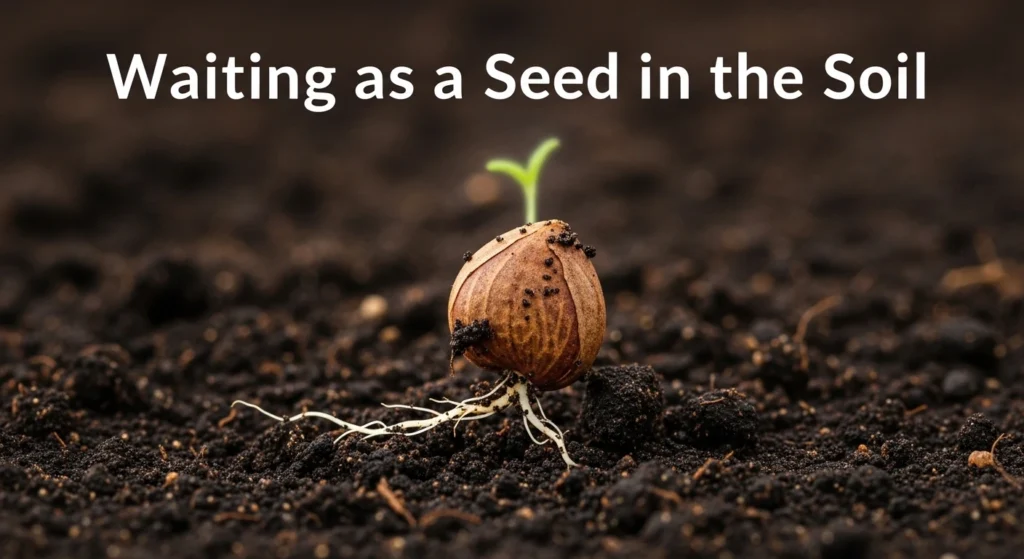
A seed rests underground before it grows. No one sees its movement.
Meaning: Waiting represents hidden preparation.
Example idea: “His dreams were seeds waiting for rain.”
The metaphor suggests that growth takes time and patience.
Waiting as a Train at the Station
A train stands still before departure. Passengers sit, watching the clock.
Meaning: Waiting reflects anticipation before movement.
Example idea: “Her heart felt like a train paused at the platform.”
This image captures both stillness and readiness.
Waiting as Holding Your Breath
When you hold your breath, time slows. Your body feels alert.
Meaning: Waiting symbolizes tension and expectation.
Example idea: “The room held its breath while they waited for the verdict.”
This metaphor highlights suspense.
Waiting as a Ticking Clock
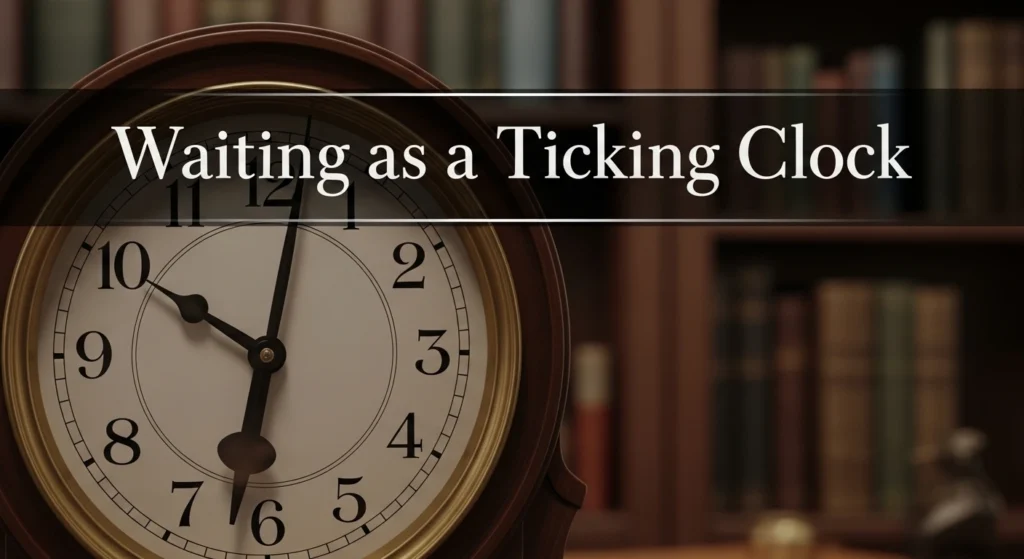
A clock continues to move, even when progress feels invisible.
Meaning: Waiting can represent awareness of passing time.
Example idea: “Each second ticked loudly in his season of waiting.”
The image emphasizes impatience or urgency.
Waiting as Standing at a Crossroad
A crossroad forces a pause before choosing direction.
Meaning: Waiting symbolizes decision and uncertainty.
Example idea: “She stood at the crossroad of her future, waiting.”
This metaphor reflects choice and reflection.
Waiting as Calm Before the Storm
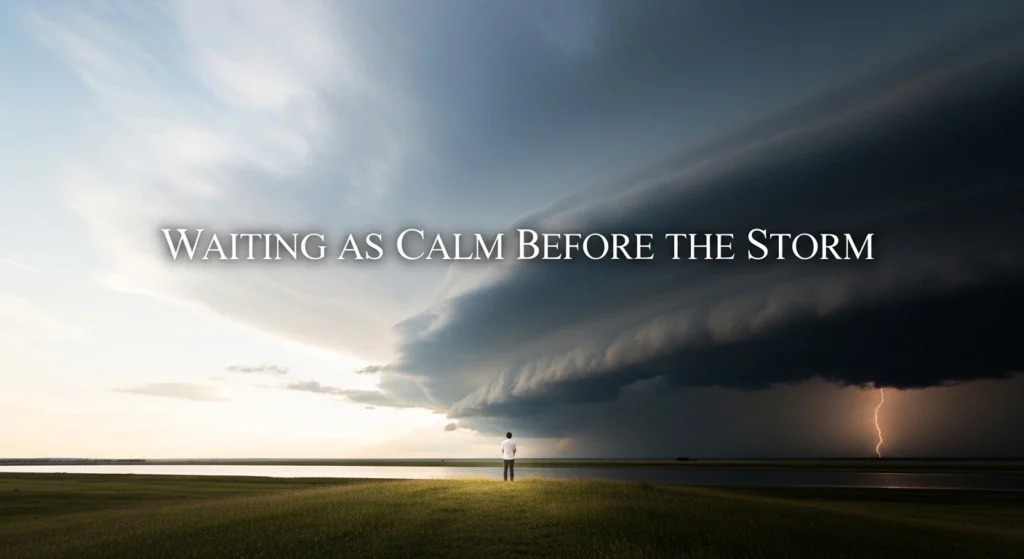
Before a storm arrives, the air grows quiet and heavy.
Meaning: Waiting can signal something powerful approaching.
Example idea: “The silence felt like calm before the storm.”
The image carries tension and expectation.
Waiting as a Door Not Yet Open
A closed door suggests opportunity beyond it.
Meaning: Waiting represents delayed access to something desired.
Example idea: “He stood before a door that had not opened yet.”
The metaphor conveys hope mixed with frustration.
Emotional Layers of Waiting
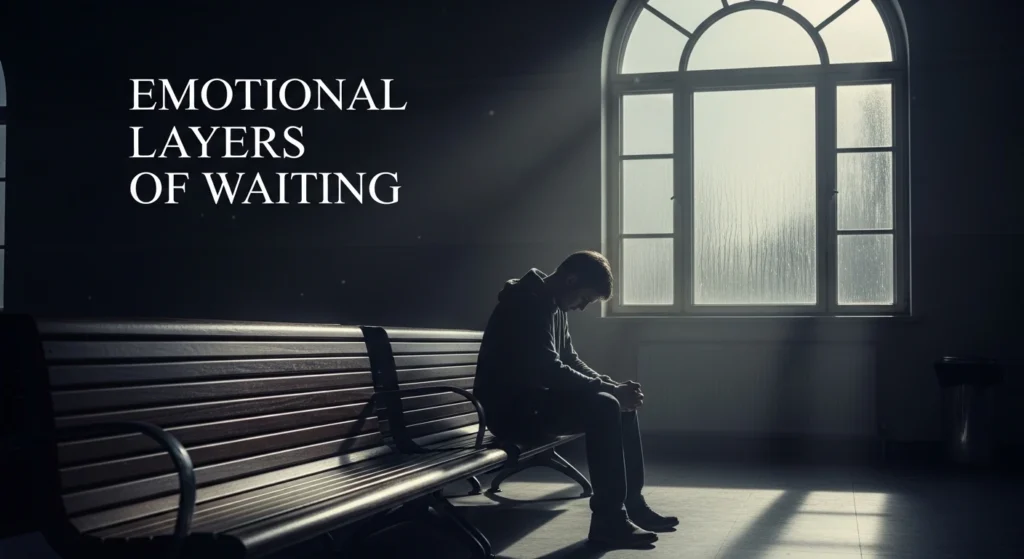
Waiting rarely feels simple. At times, it brings hope. At other times, it brings doubt. One day it feels peaceful, like resting before action. The next day it feels restless, like being trapped.
Because waiting includes both stillness and anticipation, it often feels heavy. Yet within that heaviness lies preparation. Waiting shapes patience. It strengthens resilience. It teaches trust in timing.
How Writers Use Waiting Metaphors
In stories, waiting often builds suspense. A character may wait for rescue, for love, for change. Instead of directly stating anxiety, a writer might describe long winters, ticking clocks, or empty roads. Through these images, readers feel the stretch of time.
Metaphors also prevent waiting from feeling dull. They turn a passive moment into an emotional landscape.
A Simple Reflection Exercise
Think about something you are waiting for right now.
Does it feel like winter — slow and cold? Does it feel like a seed — quiet but full of promise? Does it feel like a train — ready but paused?
Choose the image that fits best. That image becomes your personal metaphor.
Using Waiting Metaphors in Daily Language
Instead of saying, “I’m being patient,” you might say, “I’m in my winter season.” Instead of saying, “I’m nervous,” you could say, “I’m holding my breath.” Instead of saying, “It hasn’t happened yet,” you might describe it as “a door not opened.”
These expressions give emotional depth to simple statements.
Conclusion
Waiting may feel empty, yet it holds hidden depth. Through metaphors, you give that depth a voice. You turn silence into imagery. You transform stillness into something vivid and alive.
Moreover, metaphors do more than decorate language—they reveal emotion. They help you understand your own experiences while also connecting with others. Whether you wait for love, success, or change, the right metaphor can capture that moment perfectly.
So next time you find yourself watching the clock, pause. Notice the feeling. Shape it into words. Let waiting become more than time passing—let it become a story worth telling.
FAQs
Why is waiting often compared to winter?
Winter represents stillness and patience before renewal, which mirrors the experience of waiting.
Can waiting have a positive meaning?
Yes. Waiting can symbolize growth, preparation, and trust in timing.
Why does waiting feel longer than normal time?
Because attention focuses on the future outcome, which makes each moment feel stretched.
What does “holding your breath” symbolize in waiting?
It represents tension and anticipation before an important result.
How can I create my own metaphor for waiting?
Notice how waiting feels emotionally — calm, tense, hopeful, heavy — then connect that feeling to an image from nature or daily life that carries the same energy.



