The room is dim, quiet enough that you can hear your own breath move in and out like a tide. Then, suddenly, a single spark glows in the corner—soft at first, then brighter, until it draws your eyes away from everything else. You don’t question why you noticed it. You simply did. That spark, small yet undeniable, feels different from the rest. It holds your attention, your curiosity, your sense of wonder.
That spark is what uniqueness feels like. It does not shout. It does not compete. Instead, it exists in its own quiet power.
When we talk about metaphors for unique, we step into a world where language becomes alive. A metaphor does more than describe; it paints, it breathes, it lingers. It helps us explain something that feels hard to define—what it means to stand apart, to be one of a kind.
Moreover, understanding these metaphors matters because uniqueness shapes identity. It helps writers create stronger images. It helps speakers connect deeply. And, perhaps most importantly, it helps individuals recognize their own distinct voice in a crowded world.
Understanding What “Unique” Really Means

Before exploring metaphors, it helps to understand the deeper meaning. Unique does not simply mean “different.” It means one of a kind. It means there is no second version.
In daily life, uniqueness can appear in:
- Personality
- Talent
- Perspective
- Experience
- Creativity
- Identity
Sometimes uniqueness feels like a gift. At other times, it feels lonely. Therefore, metaphors for unique can carry both pride and isolation.
Why Metaphors Help Describe Uniqueness
When someone says, “She is unique,” the sentence feels simple. However, when someone says, “She is a rare gem,” the image becomes clearer. The metaphor adds color and emotion.
Moreover, uniqueness often involves comparison. It stands out against a background. Metaphors allow us to show contrast without long explanation.
Unique as a Rare Gem
A gem forms under pressure deep within the earth. It takes time. It remains hidden before someone discovers it.
Meaning: A unique person or thing has value and rarity.
Example idea: “He was a rare gem in a world of ordinary stones.”
This metaphor suggests beauty shaped by experience and time.
Why This Metaphor Works
Gems are not common. They are admired, protected, and treasured. The image naturally conveys worth.
Unique as a Fingerprint
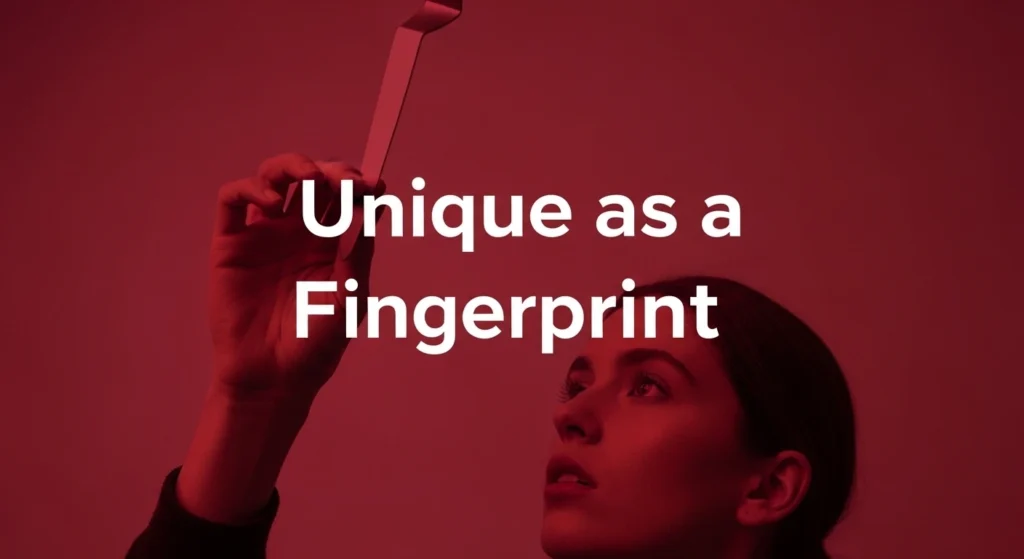
No two fingerprints are the same. Even identical twins have different patterns.
Meaning: Uniqueness reflects individuality and identity.
Example idea: “Her ideas carried the mark of a fingerprint — impossible to copy.”
This metaphor emphasizes personal identity.
Deeper Layer
A fingerprint leaves a mark. Likewise, unique people often leave lasting impressions.
Unique as a Single Star in the Sky
At night, countless stars appear. Yet sometimes one shines brighter.
Meaning: Uniqueness can symbolize noticeable brilliance.
Example idea: “Among many voices, his stood like a lone bright star.”
The image captures both separation and radiance.
Unique as a Wildflower
In a field of grass, a wildflower grows unexpectedly. It does not follow rows or patterns.
Meaning: Uniqueness can represent natural individuality.
Example idea: “She bloomed like a wildflower where no one expected color.”
This metaphor suggests freedom and authenticity.
Unique as a Snowflake

Every snowflake forms with a different design.
Meaning: Uniqueness reflects delicate individuality.
Example idea: “Each student carried a snowflake-like pattern of strengths.”
The image shows beauty in difference.
Unique as an Original Painting
An original painting cannot be fully replaced by a copy.
Meaning: Unique people or creations carry originality and creative depth.
Example idea: “His mind worked like an original painting in a gallery of prints.”
This metaphor highlights creative distinction.
Unique as a One-Note Melody
Sometimes one clear musical note stands out in silence.
Meaning: Uniqueness can represent clarity in a noisy environment.
Example idea: “Her honesty rang like a single pure note.”
The image shows simplicity that commands attention.
The Positive Side of Being Unique
Uniqueness can feel empowering. It suggests confidence, creativity, and courage. When someone embraces their individuality, they often inspire others.
Standing apart does not always require loud action. Often, quiet authenticity carries greater impact. Like a calm but steady light, uniqueness does not compete. It simply exists.
The Challenging Side of Being Unique

At times, being unique can feel isolating. A lone star may shine brightly, but it also stands alone. A wildflower grows freely, yet it may not blend with the field.
This dual meaning adds depth to uniqueness. It can represent pride and loneliness at the same time. Therefore, metaphors for unique should reflect both strength and vulnerability.
How Writers Use Unique Metaphors
Writers often use imagery to highlight individuality. Instead of saying a character is different, they compare the character to a rare element, an unexpected color, or a sound that cuts through silence.
Through metaphor, uniqueness becomes visible. Readers see contrast. They feel distinction. The description becomes memorable.
A Creative Reflection
Think about your own uniqueness.
If your personality were an object in nature, what would it be? A mountain that stands firm? A river that changes direction? A spark that lights quietly?
Choosing an image helps you understand your individuality more clearly.
Using Unique Metaphors in Daily Language
Instead of saying, “She’s different,” you might say, “She’s a rare gem.” To describe originality, you could say, “His ideas shine like a bright star,” rather than simply stating that his ideas stand out. When expressing individuality, you might use the phrase, “I want to bloom like a wildflower,” instead of saying, “I want to be myself.”
These expressions feel richer and more expressive.
Conclusion
In the end, uniqueness is not something you chase. It is something you uncover. Like a hidden gem, like a lone star, like a fingerprint—it already exists within you.
Metaphors give you the language to reveal it. They turn abstract ideas into vivid experiences. They help others see what you feel.
So, write boldly. Speak creatively. And most importantly, allow your uniqueness to shine—not loudly, but clearly.
FAQs
Why is uniqueness often compared to rare objects?
Rare objects highlight value and scarcity, which reflect the idea of being one of a kind.
Can uniqueness have negative meaning?
Sometimes it can feel isolating, but it also represents strength and individuality.
Why is a fingerprint a strong metaphor for unique?
Because no two fingerprints are identical, it clearly symbolizes individuality.
How can I describe my own uniqueness creatively?
Think about what makes you different — your voice, habits, or perspective — then connect that trait to an image from nature or art that reflects it.
Is being unique always about standing out?
Not necessarily. Sometimes uniqueness shows itself quietly through authenticity rather than attention.