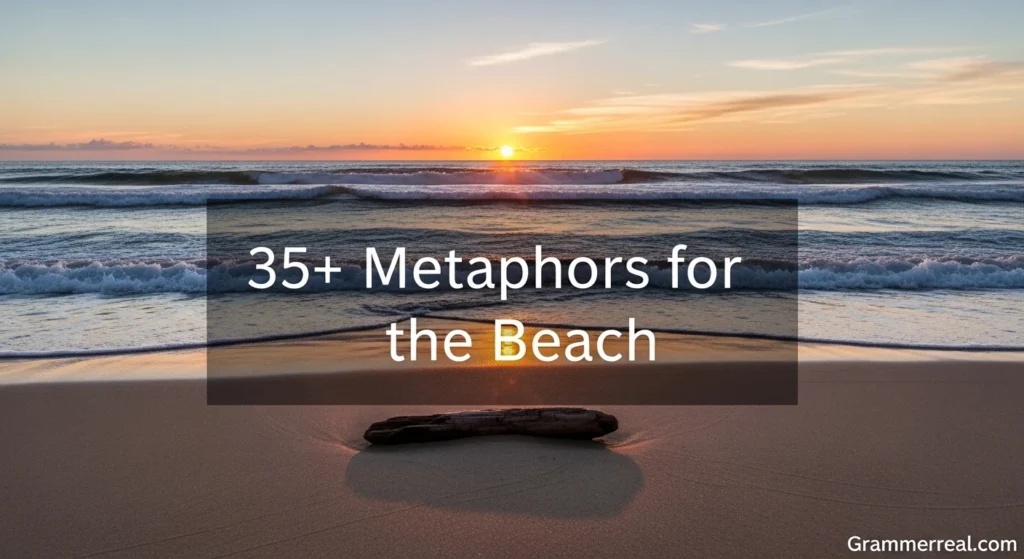
The beach feels different from other places. The air smells of salt. The wind moves freely. Waves touch the shore again and again. Because of this peaceful rhythm, writers often use metaphors for the beach to describe emotions, freedom, and life itself.
For some people, the beach means relaxation. For others, it represents endless possibility. Therefore, beach metaphors can carry many meanings. In this article, you will explore clear and simple comparisons that explain how the beach reflects human experiences.
The Beach as a Place of Healing
After a long and tiring week, many people visit the beach to relax. The sound of waves feels calming.
Meaning: The beach can symbolize healing and emotional rest.
For example: “The beach wrapped around her like a soft blanket.”
This metaphor suggests comfort. Just as a blanket gives warmth, the beach can provide peace. In addition, it shows how nature helps people feel balanced again.
The Beach as a Border Between Worlds
The beach stands between land and sea. One side feels solid. The other side moves constantly.
Meaning: It represents transition or change.
For instance: “He stood on the beach, caught between two worlds.”
This comparison works well when describing important life decisions. The shoreline becomes a symbol of moving from one stage to another.
The Beach as a Blank Page
Smooth sand often looks untouched early in the morning. No footprints appear yet.
Meaning: The beach can symbolize new beginnings.
Example: “The empty shore stretched before her like a blank page.”
This metaphor feels hopeful. Just as a blank page invites writing, the beach invites new memories and fresh starts.
The Beach as a Playground of Freedom
Children run freely on the sand. Waves invite people to jump and splash.
Meaning: The beach represents joy and freedom.
For example: “The beach opened like a playground without walls.”
This image highlights openness. There are no fences or limits. Therefore, it creates a feeling of escape from daily pressure.
The Beach as a Mirror of the Mind
Sometimes the ocean looks calm. At other times, it feels wild and stormy.
Meaning: The beach can reflect human emotions.
For instance: “His thoughts crashed like waves against the shore.”
When the sea feels restless, it mirrors anxiety. However, when it lies still, it reflects peace. As a result, this metaphor connects nature with inner feelings.
The Beach as a Clock of Nature
Waves move in and out all day. Tides rise and fall with steady rhythm.
Meaning: The beach symbolizes time and natural cycles.
Example: “The tide marked time like a quiet clock.”
This image shows how life moves forward gently. Even if people rush, nature follows its own pace.
The Beach as a Treasure Chest
Seashells, smooth stones, and hidden objects often rest in the sand.
Meaning: The beach can represent discovery.
For example: “The shore hid secrets like a treasure chest.”
This metaphor creates curiosity. Each visit may reveal something new. In addition, it reminds readers that beauty often hides in simple places.
The Beach as a Door to Adventure
The ocean stretches far beyond sight. Boats sail toward unknown destinations.
Meaning: The beach symbolizes opportunity and adventure.
For instance: “The horizon called to him like an open door.”
Standing at the beach can feel like standing at the edge of possibility. Therefore, it works well in motivational writing.
The Beach as a Gentle Teacher
The waves return again and again. They never give up.
Meaning: The beach represents patience and persistence.
Example: “The sea whispered lessons through every wave.”
Over time, water shapes rock. In the same way, small efforts shape life. This metaphor encourages steady growth.
The Beach as a Place of Letting Go
Waves wash footprints away. Nothing stays forever on the sand.
Meaning: The beach symbolizes release and acceptance.
For example: “The tide erased her worries like footprints in sand.”
This image feels light and freeing. It reminds us that problems can fade with time.
Why Writers Use Beach Metaphors
The beach combines movement and stillness. Sand stays quiet. Waves never stop moving. Because of this balance, it fits many emotional themes.
Moreover, most people have visited a beach or seen one in pictures. Therefore, the image feels familiar. Familiar images make writing easier to understand.
Beach metaphors often express:
- Freedom
- Peace
- Change
- Adventure
- Reflection
- Hope
How to Use Beach Metaphors Clearly
When writing, keep the comparison simple. Do not add too many details at once. Short and clear sentences improve readability.
Weak example: “The beach was like a magical, peaceful, bright, warm, relaxing paradise.”
Stronger example: “The beach felt like a quiet refuge.”
Simple wording feels natural. In addition, it helps readers imagine the scene quickly.
Emotional Power of Beach Imagery
A beach scene often signals reflection in stories. A character may think deeply while watching the waves. Because of that, the beach becomes more than a setting. It becomes part of the emotional mood.
Furthermore, sunsets over the ocean often represent closure or completion. Meanwhile, sunrise at the beach can symbolize hope. The same location can carry different meanings depending on context.
A Moment to Reflect
Think about what the beach means to you.
Does it feel like freedom? Does it remind you of childhood memories? Or does it represent a turning point in your life?
Your personal experience shapes the metaphor you choose. Therefore, the beach may carry a different message for each person.
Conclusion
Metaphors for the beach help writers describe emotions in a clear and natural way. The beach can act as a healer, a border, a teacher, or a symbol of freedom. Because it blends calm sand with moving waves, it reflects both stillness and change.
Although it looks simple, the beach holds deep meaning. With the right comparison, you can turn an ordinary shoreline into a powerful image.
FAQs
Why is the beach used in metaphors?
Because it represents peace, change, and freedom in a way that feels easy to imagine.
What does the beach usually symbolize?
It often symbolizes relaxation, new beginnings, and emotional reflection.
Can the beach represent sadness?
Yes. A quiet and empty shore can show loneliness or deep thought.
How can I create my own beach metaphor?
Notice what stands out to you — the waves, the sand, or the horizon. Then compare that image to a feeling or experience in your life.



