The room glows with the soft blue light of a screen. Your fingers tap gently on the keyboard. A notification sound breaks the silence, quick and sharp, like a tiny bell. You scroll, swipe, click, and move through a world made of code and connection. Yet, behind all these actions, there is something deeper—language. Not just simple words, but colorful phrases that bring technology to life.
These phrases are called idioms for technology. They help us explain complex digital ideas in a simple, fun, and human way. Instead of speaking in cold technical terms, we use expressions that feel alive, warm, and easy to understand.
So, in this article, you will explore the world of tech idioms, understand their meaning, and learn how to use them in daily life, writing, and social media.
Technology as a Double-Edged Sword
A double-edged sword can protect, but it can also harm.
Meaning: Technology brings both benefits and risks.
For example: “Technology acts like a double-edged sword in modern life.”
On one hand, it connects people across the world. However, it can also create distraction and stress. Because of this balance, the metaphor highlights responsibility.
Technology as a Bridge
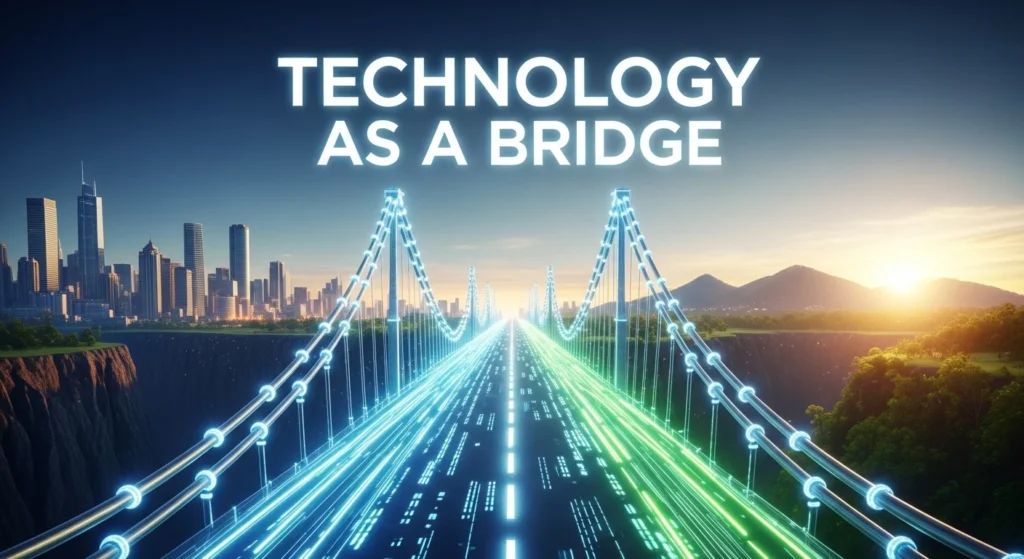
A bridge connects two separate places.
Meaning: Technology connects people, ideas, and cultures.
For instance: “The internet works as a bridge between distant communities.”
Through video calls and messages, families stay close. In addition, businesses grow by reaching new markets. This metaphor shows connection in a simple way.
Technology as a Fast-Moving River
A river flows quickly and never stops.
Meaning: Technology constantly changes and evolves.
Example: “Innovation moves like a fast river that never rests.”
New devices appear every year. Meanwhile, old systems disappear. As a result, people must adapt or risk falling behind.
Technology as a Toolbox
A toolbox contains different tools for different tasks.
Meaning: Technology provides solutions and practical help.
For example: “Smart devices serve as a toolbox for daily life.”
People use apps for banking, learning, and communication. Therefore, this metaphor highlights usefulness and flexibility.
Technology as a Web
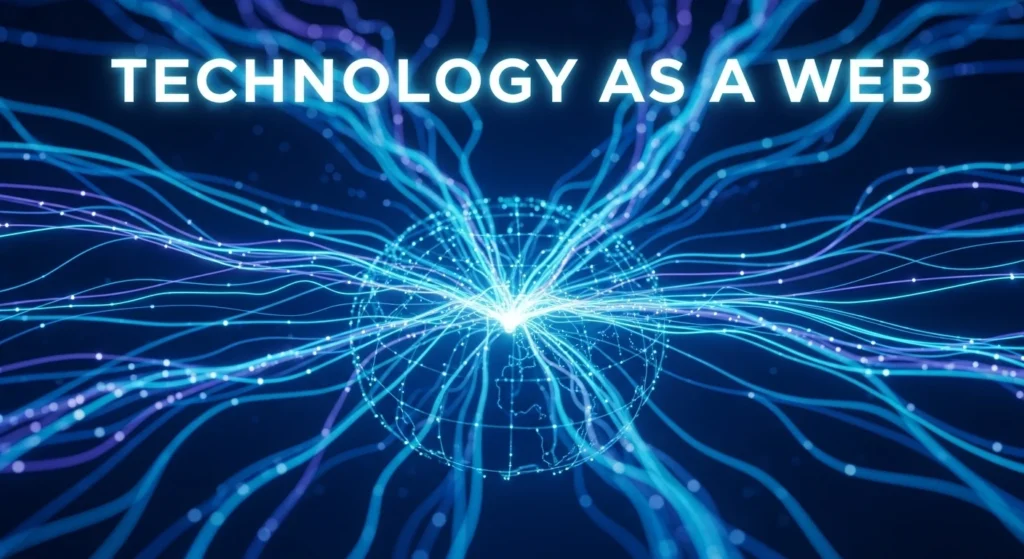
A web connects many small points together.
Meaning: Technology creates complex networks.
For instance: “Digital systems form a web that links the entire globe.”
One message can travel across continents in seconds. However, the same network can spread false information. Because of this, the metaphor also suggests complexity.
Technology as a Teacher
Technology helps people learn new skills.
Meaning: It represents knowledge and education.
Example: “Online platforms act like teachers in every home.”
Students watch tutorials and attend virtual classes. In addition, adults learn new skills through online courses. This comparison feels positive and hopeful.
Technology as a Mirror
A mirror reflects what stands in front of it.
Meaning: Technology reflects human behavior.
For example: “Social media works like a mirror of society.”
If people share kindness, technology spreads kindness. On the other hand, if people spread anger, it spreads that too. Therefore, the metaphor reminds us that technology depends on human choices.
Technology as a Machine with Many Gears

A machine runs when all parts work together.
Meaning: Technology depends on cooperation and systems.
For instance: “The digital world turns like a machine with countless gears.”
Developers, engineers, and users all play a role. If one part fails, the whole system can slow down. This metaphor shows structure and teamwork.
Technology as a Light in the Dark
Light helps people see clearly.
Meaning: Technology can provide solutions during difficult times.
Example: “During emergencies, technology becomes a guiding light.”
Doctors use machines to save lives. Rescue teams use GPS to find people. As a result, this metaphor highlights hope and support.
Technology as a Storm
A storm can feel powerful and uncontrollable.
Meaning: Technology can sometimes overwhelm society.
For example: “New trends hit the market like a digital storm.”
Constant updates and notifications may create pressure. Moreover, rapid change can feel stressful. This metaphor shows the intense side of innovation.
Why Writers Use Metaphors for Technology
Technology can feel complex. Many systems operate in ways that people cannot see. Therefore, metaphors make it easier to understand.
For example, calling technology a “bridge” feels clearer than explaining network systems in detail. Similarly, describing it as a “river” helps readers imagine constant movement.
Simple comparisons improve clarity. In addition, they make writing more engaging.
How to Use Technology Metaphors Clearly
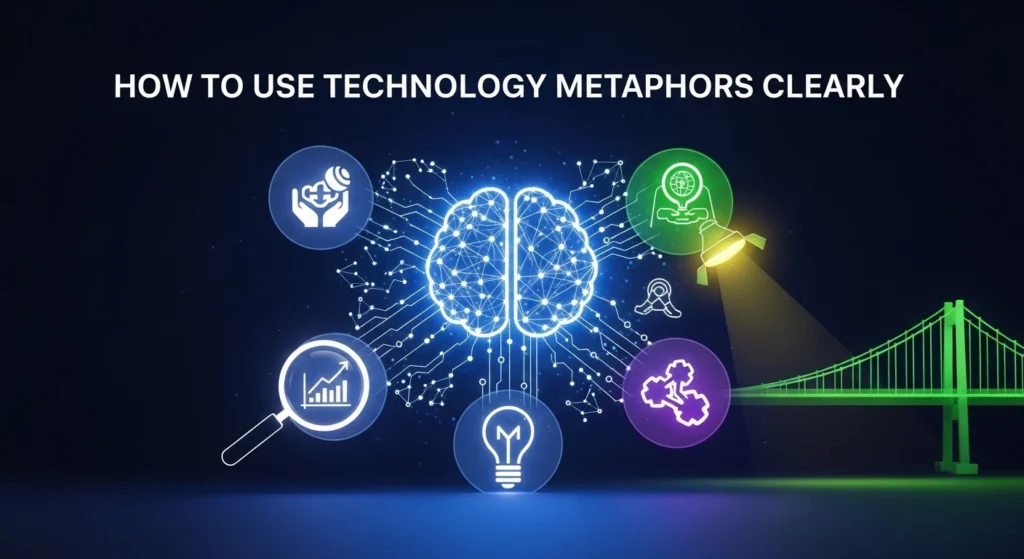
Keep the language simple. Choose one clear comparison at a time. Do not mix too many images in one sentence.
Weak example: “Technology is like a stormy river of bright lights and endless bridges.”
Stronger example: “Technology flows like a fast river.”
Short and clear sentences improve readability. Moreover, natural transitions help ideas connect smoothly.
Emotional Side of Technology Imagery
Technology can feel exciting. At the same time, it can feel isolating. Because of this, writers choose metaphors carefully.
For instance, describing technology as a “bridge” creates a positive mood. However, calling it a “storm” creates tension. The metaphor shapes the emotion of the message.
As a result, understanding different metaphors for technology helps writers communicate clearly.
A Moment to Reflect
Think about your own experience.
Does technology feel like a helpful tool? Does it feel like a fast river that moves too quickly? Or does it feel like a mirror of your daily habits?
Your perspective shapes the metaphor you choose.
Conclusion
In today’s digital world, language matters more than ever. While technology keeps growing, your ability to explain it clearly becomes even more important. Idioms for technology help you turn complex ideas into simple, relatable expressions. They add life, emotion, and clarity to your words. As you practice and use these idioms in daily conversations, writing, and social media, you will notice a big change. Your communication will feel smoother, more natural, and more engaging.
So, keep learning, keep practicing, and keep using these phrases. Because in the end, it’s not just about technology—it’s about how you connect with people through words.
FAQs
Why do writers use metaphors for technology?
Because technology can feel complex, and metaphors make it easier to explain.
Is technology always positive in metaphors?
Not always. Some metaphors show benefits, while others show risks.
Why should I learn tech idioms?
They help you understand modern conversations, improve your communication, and make your language more natural and engaging.
Can technology represent change?
Yes. It often symbolizes fast progress and constant evolution.
Are tech idioms used worldwide?
Yes, many tech idioms are used globally, especially in English-speaking online communities.
How can I remember these idioms easily?
Practice daily, use them in sentences, and notice them in social media or conversations.
How can I create my own metaphor for technology?
Think about how technology feels to you. Then compare it to something with a similar effect, such as a tool, a river, or a bridge.



