
The chairs scrape lightly across the floor. Papers shuffle. Someone taps a pen, while another person leans forward with bright eyes and a hopeful smile. You can almost feel the quiet energy in the room—different minds, different ideas, all moving toward one shared goal. A voice speaks, another responds, and slowly, like pieces of a puzzle, everything starts to fit together.
This is teamwork.
It is not just about people working side by side. Instead, it is about connection, trust, and shared effort. And interestingly, language plays a powerful role in shaping that connection. Idioms—those colorful phrases we use every day—help us express teamwork in vivid and meaningful ways. They turn simple ideas into strong images that people can feel and remember.
In this article, we will explore idioms for teamwork, understand their meaning, and learn how to use them in real life. Along the way, you will discover how these expressions can make your communication clearer, warmer, and more powerful.
Teamwork as a Well-Tuned Orchestra
An orchestra includes many instruments. Each one plays a different part. However, together they create one beautiful sound.
Meaning: Every member has a role, and harmony comes from cooperation.
For example: “The team moved like a well-tuned orchestra.”
If one instrument plays too loudly, the music suffers. In the same way, teamwork requires balance. Everyone must listen and adjust.
Teamwork as Pieces of a Puzzle
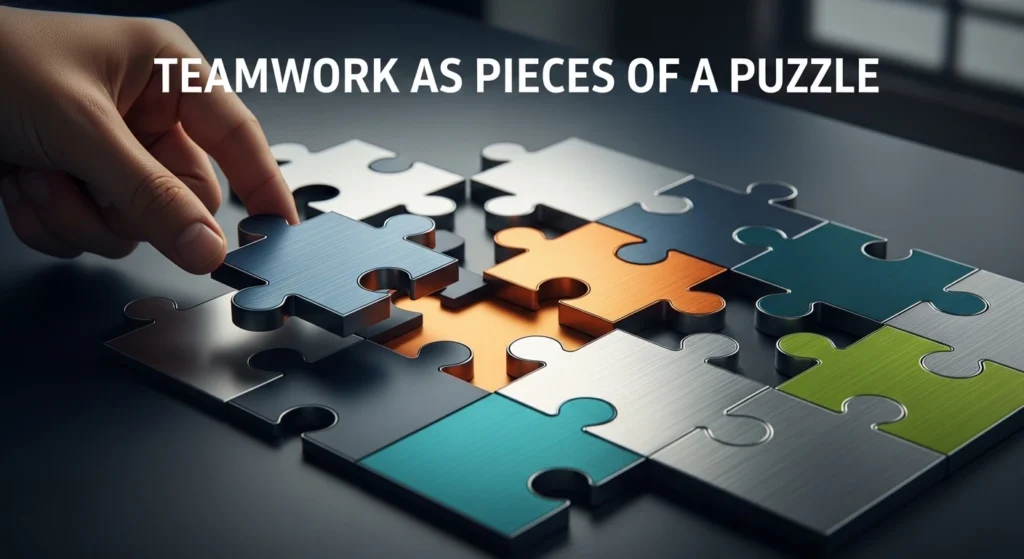
A puzzle looks incomplete when pieces are missing.
Meaning: Each person adds something important.
For instance: “Every member fit like a piece of a puzzle.”
One piece alone may seem small. However, when combined, the full picture appears. This metaphor highlights the value of every contribution.
Teamwork as a Rowing Boat
In a rowing boat, everyone must move their oars at the same time.
Meaning: Success depends on coordination.
Example: “They pulled forward like rowers in the same boat.”
If one person rows faster, the boat turns off course. Therefore, teamwork requires rhythm and shared effort.
Teamwork as a Chain
A chain consists of connected links.
Meaning: Strength comes from unity.
For example: “The group stood strong like an unbroken chain.”
However, if one link weakens, the chain may fail. This comparison reminds people to support each other.
Teamwork as a Garden
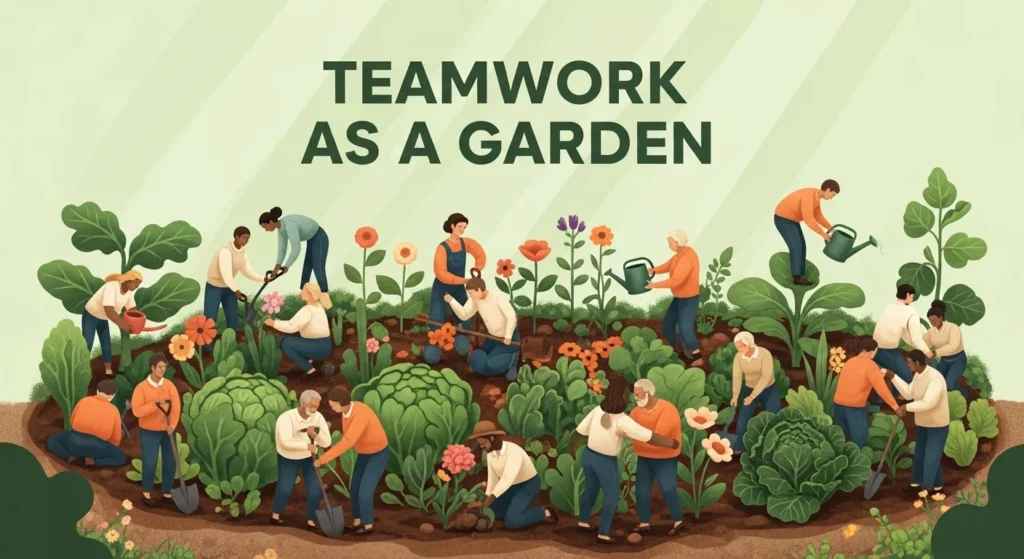
A garden grows when different plants share the same soil.
Meaning: Growth happens through cooperation.
For instance: “Their ideas bloomed like flowers in a shared garden.”
Some plants grow tall. Others stay small. Yet together they create beauty. In addition, teamwork allows different talents to grow side by side.
Teamwork as a Sports Team
In sports, players pass the ball and defend together.
Meaning: Victory requires shared strategy.
Example: “They played like a united team chasing one goal.”
One player may score, but many players create the opportunity. As a result, teamwork focuses on the group rather than one person.
Teamwork as a Bridge
A bridge stands because many parts support it.
Meaning: Collaboration creates stability.
For example: “Their cooperation built a bridge over every obstacle.”
Each beam supports the structure. Likewise, each team member supports progress.
Teamwork as a Beehive

Bees work together to build and protect their hive.
Meaning: Hard work and unity create success.
For instance: “The office buzzed like a busy beehive.”
Every bee has a task. In the same way, clear roles improve teamwork.
Teamwork as a Machine with Moving Parts
A machine works when every gear turns smoothly.
Meaning: Systems function through coordination.
Example: “The project ran like a well-oiled machine.”
If one part stops, the system slows down. Therefore, teamwork depends on reliability.
Teamwork as a Mountain Climb
Climbing a mountain feels challenging.
Meaning: Support makes difficult goals possible.
For example: “They climbed toward success together.”
One person may slip. However, others can offer a helping hand. This metaphor shows trust and encouragement.
Why Writers Use Metaphors for Teamwork
Teamwork may seem simple, yet it involves many emotions. Trust, patience, and respect all play a role. Because these ideas can feel abstract, metaphors make them easier to understand.
For example, comparing teamwork to a puzzle clearly shows how different parts create one result. Similarly, comparing it to an orchestra shows harmony.
Simple images help readers connect with the message quickly.
How to Use Teamwork Metaphors Clearly
Keep comparisons direct and natural. Avoid mixing too many images at once.
Weak example: “The team was like a machine, a puzzle, and a boat all at once.”
Better example: “The team worked like a well-tuned orchestra.”
Short and focused metaphors improve clarity. In addition, they prevent confusion.
Emotional Impact of Teamwork Imagery

Teamwork metaphors often create positive feelings. They show unity and shared purpose. However, they can also reveal challenges.
For instance, calling a team a “chain” highlights strength. On the other hand, it also reminds people that weak links need attention. As a result, metaphors encourage responsibility.
When used correctly, these images inspire cooperation.
A Moment to Reflect
Think about your own experience.
Does your team feel like a puzzle coming together? Does it move like a rowing boat in rhythm? Or does it still need tuning like an orchestra?
Your experience shapes the metaphor you choose.
Conclusion
Teamwork grows through effort, trust, and communication. Idioms help express these ideas in a simple and powerful way. They turn ordinary sentences into meaningful messages. When you use phrases like “many hands make light work” or “pull your weight,” you create clarity and connection. Moreover, these expressions make your speech lively and easy to understand. So practice them, use them, and let your words bring people together.
FAQs
Why are metaphors useful for describing teamwork?
Because they turn abstract ideas like cooperation into clear images.
What does teamwork usually symbolize?
It often symbolizes unity, shared responsibility, and collective success.
Can teamwork metaphors show challenges?
Yes. Some metaphors highlight the need for balance and support.
Why should I use teamwork idioms?
They make your communication clearer, more engaging, and easier to understand.
What is the most common teamwork idiom?
“Many hands make light work” is one of the most popular and easy-to-use teamwork idioms.
How can I create my own teamwork metaphor?
Think about how your team works. Then compare it to something that requires cooperation, such as a puzzle, a boat, or a machine.



