
The bell rings, and a soft wave of movement fills the room. Pages flip. Pens tap. Sunlight slips through the window and lands gently on open notebooks. A student stares at a blank page, thinking, searching, almost reaching for the right idea.
In that moment, learning does not feel like rules or facts. Instead, it feels like a journey, a climb, a spark waiting to glow. This is where metaphors step in. They turn hard ideas into living pictures. They help students see, feel, and understand what once seemed confusing. In simple terms, metaphors compare one thing to another, yet they do much more than that. They bring life to learning, and they make knowledge easier to hold and remember.
Students as Seeds Growing Beneath the Soil
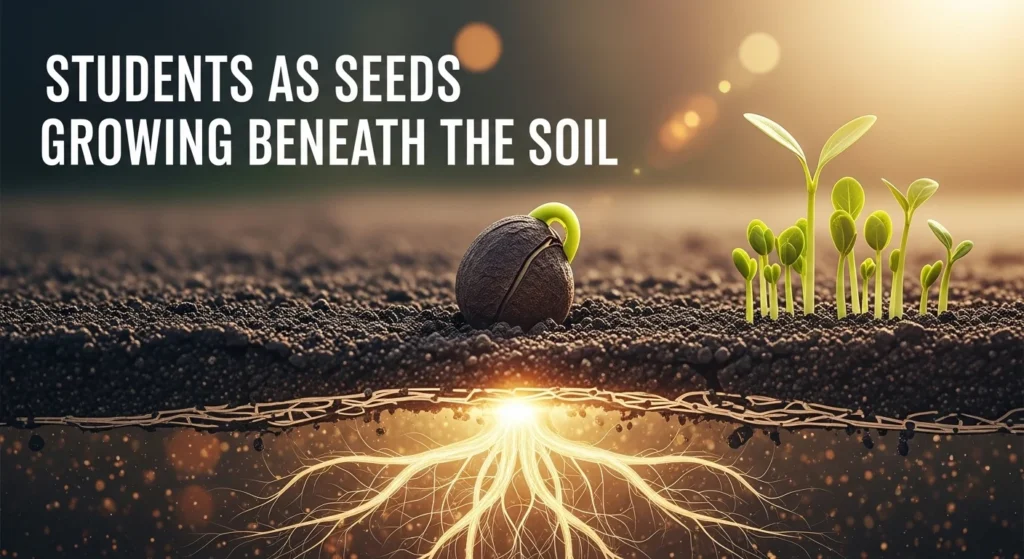
A seed rests quietly under the soil before anyone sees growth. It takes time, water, sunlight, and care before it becomes a plant.
Meaning: Students develop slowly through guidance and patience.
For example: “Each student is a seed waiting for the right season to grow.”
This metaphor reminds us that learning does not happen overnight. Growth often begins unseen. Teachers, parents, and mentors act like gardeners who provide support. In addition, the environment plays a key role. When conditions feel safe and encouraging, students bloom more confidently.
However, just like seeds, students grow at different speeds. Some rise quickly. Others need more time. Yet every seed carries potential.
Students as Travelers on a Long Road
A traveler does not reach the destination in one step. The road may include turns, hills, and unexpected stops.
Meaning: Students move through a journey of knowledge and experience.
For instance: “The students walked a long road toward understanding.”
This image highlights effort and direction. A traveler learns from each mile. Similarly, students learn from each lesson and mistake. Moreover, the journey matters as much as the destination. Exams and grades are part of the road, but they are not the whole journey.
Students as Sponges Absorbing Knowledge
A sponge soaks up water when placed in it.
Meaning: Students absorb information from their surroundings.
Example: “Young minds absorb ideas like sponges.”
This metaphor shows openness. Students often pick up not only facts but also attitudes and values. Therefore, positive learning environments shape strong habits. However, just as a sponge can become full, students also need time to process and rest.
Students as Blank Pages Ready to Be Written

A blank page invites words, stories, and ideas.
Meaning: Students hold unlimited possibilities.
For example: “Each student is a blank page filled with potential.”
This comparison suggests opportunity. What appears on the page depends on experiences, effort, and support. In addition, it reminds educators to write carefully and responsibly on young minds.
Students as Builders of Tomorrow
Builders create structures brick by brick.
Meaning: Students shape the future step by step.
For instance: “Today’s students are the architects of tomorrow.”
This metaphor emphasizes responsibility. What students learn today influences the world they will create later. Every lesson adds another brick to the foundation of their future.
Students as Explorers Searching for Treasure
Explorers move into unknown spaces to discover something valuable.
Meaning: Students search for understanding and meaning.
Example: “Curious students explore ideas like treasure hunters.”
Learning requires curiosity. Without curiosity, exploration stops. Therefore, teachers often encourage questions and creativity. The “treasure” may be knowledge, skill, or confidence.
Students as Clay Ready to Be Shaped
Clay can take many forms depending on how it is shaped.
Meaning: Students grow through guidance and experience.
For example: “Young learners are like clay in the hands of experience.”
This metaphor shows flexibility. However, shaping must happen carefully. Too much pressure can cause cracks. Gentle and steady guidance creates strength.
Students as Rising Suns

A sunrise marks the beginning of a new day.
Meaning: Students represent hope and new beginnings.
For instance: “Every classroom holds a rising sun.”
This image feels optimistic. It suggests energy and promise. Just as the sun brings light, students bring fresh ideas and new perspectives.
Students as Athletes in Training
Athletes practice daily before competing.
Meaning: Students improve through practice and discipline.
Example: “Learning is training for the race of life.”
Mistakes during practice prepare athletes for success. Likewise, errors in learning help students improve. Therefore, patience becomes essential.
Students as Branches Growing From a Strong Trunk
A tree’s branches grow in different directions.
Meaning: Students develop unique talents from shared foundations.
For example: “From one school trunk, many branches grow.”
Each branch may follow a different path. However, the foundation remains important. Strong basic education supports future growth.
Why Metaphors for Students Matter
The word “student” may sound simple. Yet behind it lies growth, struggle, discovery, and ambition. Because these ideas feel complex, metaphors make them easier to understand.
For example, calling students “seeds” highlights patience and care. Comparing them to “travelers” emphasizes journey and progress. These images create emotional connection and clarity.
Moreover, simple metaphors improve readability. They allow readers to imagine learning in everyday terms.
How to Use Student Metaphors Effectively
Choose one clear comparison at a time. Keep the language natural and direct.
Weak example: “Students are seeds, travelers, suns, and builders all at once.”
Better example: “Students grow like seeds beneath careful guidance.”
Short and focused images create stronger impact. In addition, clear transitions help ideas flow smoothly.
The Emotional Side of Being a Student
Being a student often involves uncertainty. There are exams, expectations, and responsibilities. However, there are also moments of excitement and discovery.
For instance, the “traveler” metaphor shows adventure. Meanwhile, the “seed” metaphor shows patience. Together, these images reveal both challenge and hope.
Students are not finished products. They are works in progress.
Take a Moment to Reflect
If you are a student, which metaphor feels closest to you?
Do you feel like a traveler on a long road? Do you see yourself as a seed waiting to bloom? Or do you feel like a rising sun full of energy?
Your answer may change over time. That is part of growth.
Conclusion
Metaphors for students are more than just figures of speech. They act like bridges, guiding young minds from confusion to clarity. When students use metaphors, they begin to see learning not as a burden, but as a journey filled with meaning and growth. Simple comparisons like “learning is a climb” or “the mind is a garden” turn abstract ideas into clear and vivid images. As a result, students understand faster, remember longer, and express themselves with greater confidence. Moreover, metaphors add beauty and emotion to both writing and thinking, making education feel alive rather than mechanical.
In daily life, these powerful tools help students speak clearly, write creatively, and think deeply. Whether in schoolwork, conversations, or social media, metaphors allow ideas to shine in a natural and engaging way. With regular practice, any student can master this skill and transform ordinary words into meaningful expressions. So, keep exploring, keep imagining, and let your thoughts grow through metaphors, because learning, after all, is not just about facts—it is about seeing the world in new and brighter ways.
FAQs
Why are students often compared to seeds?
Because they need time, care, and guidance to grow fully.
Can student metaphors show struggle?
Yes. Metaphors like travelers or athletes highlight effort and discipline.
Do all students grow at the same pace?
No. Just like plants, each student develops differently.
How can I create my own metaphor for students?
Think about how learning feels to you. Then compare it to something that grows, moves, or develops over time.
How can beginners start using metaphors?
Beginners can start by comparing simple things, like “learning is a journey” or “books are windows.” Practice daily to improve.
Can metaphors improve memory?
Yes, metaphors improve memory because they create mental images. These images help students remember ideas more easily.
What mistakes should students avoid when using metaphors?
Students should avoid overusing metaphors or mixing different images in one sentence. Keeping metaphors simple and clear works best.



