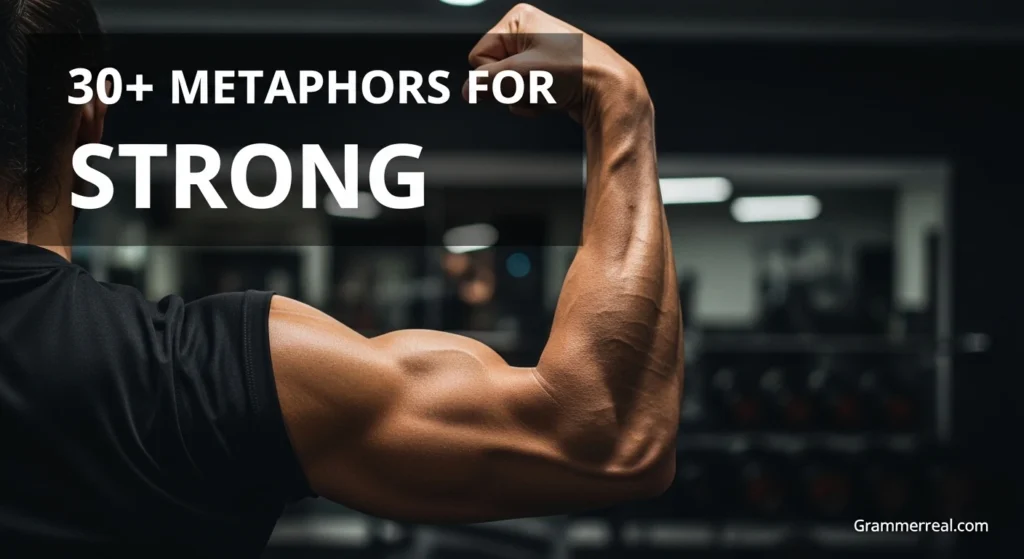
The wind pushes hard against your face. It carries dust, heat, and a quiet challenge. You stand still. Your feet press into the ground. Your hands tighten just a little. In that moment, you do not just feel strong—you understand it. Strength is not only about muscles. It lives in your breath, your choices, and your will to stay when things get hard.
Now think about words. Sometimes, simple words feel too small to hold big ideas. That is where metaphors come in. They give shape to strength. They turn it into something you can see, touch, and feel.
This article explores metaphors for strong in a friendly and clear way. You will learn what they mean, why they matter, and how to use them in writing, speaking, and daily life.
Strong as a Mountain That Never Moves

A mountain stands tall through wind, rain, and storms. Seasons change around it, yet it remains steady.
Meaning: Strength represents stability and firmness.
For example: “She stood like a mountain in the face of criticism.”
This metaphor highlights emotional balance. A strong person does not collapse when problems appear. Instead, they stay firm and calm. Moreover, mountains do not shout about their power. They simply exist. In the same way, true strength often speaks through quiet confidence rather than noise.
Strong as an Oak Tree With Deep Roots
An oak tree grows slowly, but its roots spread deep into the ground.
Meaning: Strength grows from a solid foundation.
For instance: “His values were rooted like an old oak tree.”
When storms arrive, shallow trees fall quickly. However, deep roots protect the oak. This comparison shows that strong people build their power through experience, learning, and resilience. Strength develops over time, not overnight.
Strong as Steel Forged in Fire
Steel becomes strong after passing through intense heat.
Meaning: Strength develops through hardship.
Example: “Her spirit was forged like steel in fire.”
This metaphor shows transformation. Difficult experiences may feel painful, yet they shape character. In addition, steel does not fear pressure. It becomes harder because of it. Similarly, strong individuals grow through challenges instead of avoiding them.
Strong as a River That Carves Through Rock

A river does not look powerful at first glance. However, over time, it shapes even the hardest stone.
Meaning: Strength can be gentle but persistent.
For example: “His determination flowed like a river carving stone.”
This image shows steady effort. Rather than using force, the river relies on consistency. Therefore, strength sometimes means refusing to give up.
Strong as a Lion Guarding Its Territory
A lion moves with confidence and authority.
Meaning: Strength represents courage and leadership.
For instance: “She faced the challenge like a lion.”
This metaphor highlights bravery. A strong person does not hide from fear. Instead, they confront it directly. However, true strength also includes control. Lions do not waste energy without purpose.
Strong as a Bridge That Holds Heavy Weight
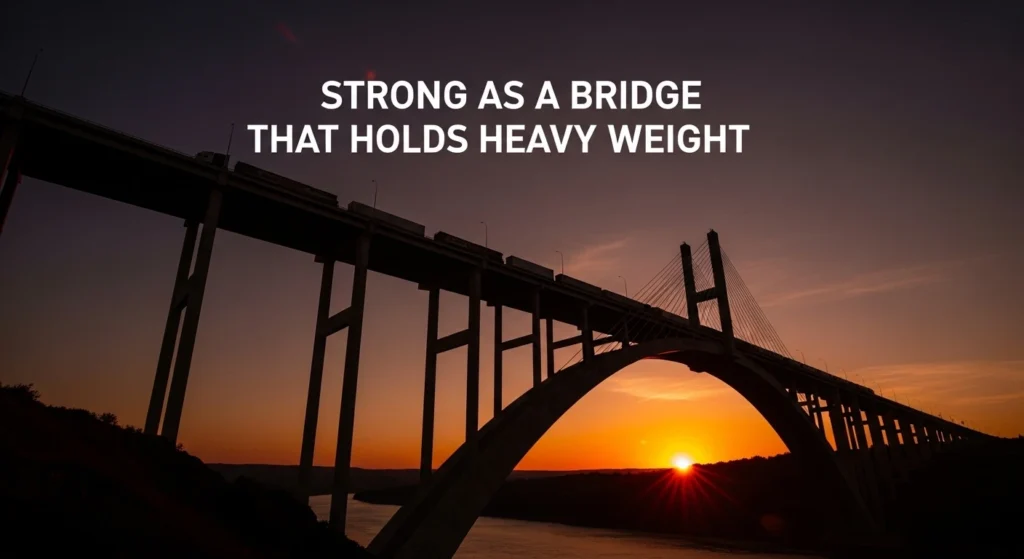
A bridge carries cars, people, and pressure every day.
Meaning: Strength supports others.
Example: “He became the bridge that carried his family through hardship.”
This comparison focuses on responsibility. Strength is not only about standing alone. It also means helping others stand firm.
Strong as the Ocean During a Storm
The ocean can look calm. Yet during a storm, it shows enormous force.
Meaning: Strength includes hidden power.
For example: “Her anger rose like a stormy ocean.”
This metaphor shows intensity. However, it also suggests depth. The ocean’s power comes from its vastness. Likewise, inner strength often comes from deep emotional awareness.
Strong as a Wall That Protects a City
Ancient cities built thick walls for protection.
Meaning: Strength offers safety and security.
For instance: “His loyalty stood like a protective wall.”
This metaphor shows defense. Strong individuals protect their values and loved ones. However, walls must remain balanced. Too much distance can block connection.
Strong as a Diamond Formed Under Pressure
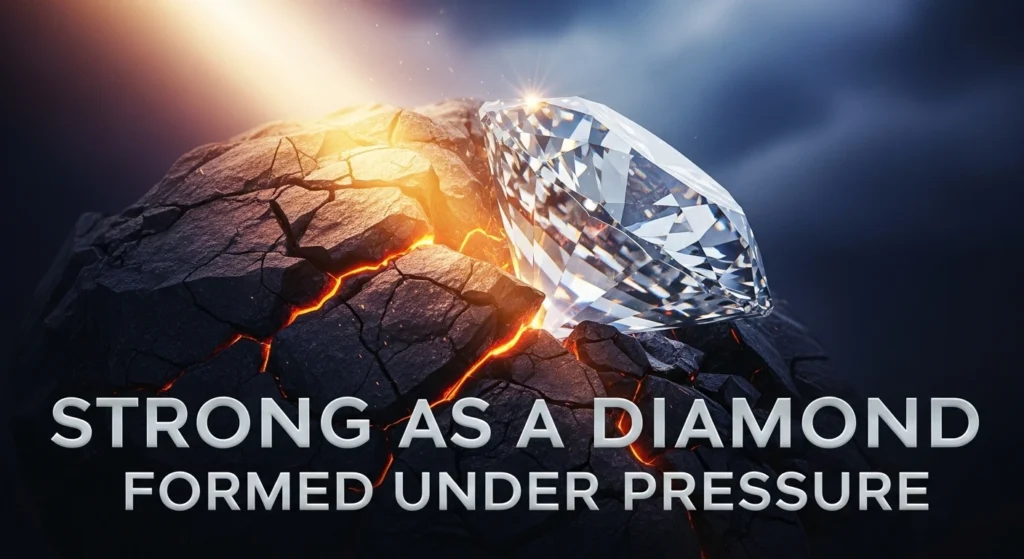
Diamonds form deep underground through intense pressure.
Meaning: Strength emerges from difficulty.
Example: “Her resilience shone like a diamond under pressure.”
This comparison highlights endurance. Pressure does not always break a person. Sometimes it reveals their brightest qualities.
Strong as a Lighthouse in the Dark
A lighthouse stands firm against waves and wind.
Meaning: Strength guides and supports others.
For example: “He remained a lighthouse during uncertain times.”
This metaphor shows leadership and reliability. Even when storms rage, a lighthouse continues shining.
Strong as an Unbreakable Chain
A chain holds when each link stays firm.
Meaning: Strength depends on unity and connection.
For instance: “Their friendship was as strong as an unbreakable chain.”
This metaphor shows that shared strength can feel even more powerful than individual strength.
Strong as the Sun That Rises Every Day
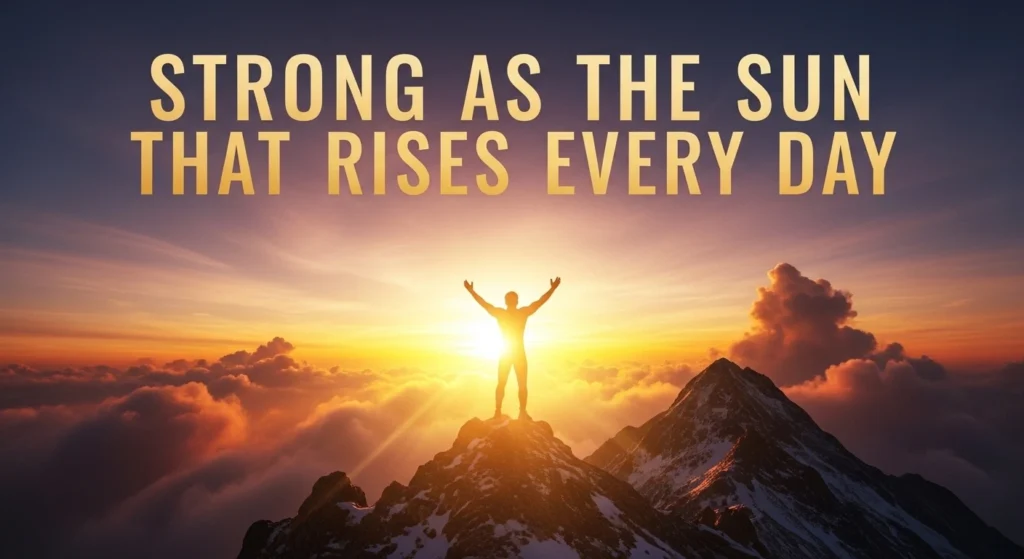
The sun rises consistently, regardless of yesterday’s storms.
Meaning: Strength includes consistency and renewal.
Example: “Her hope rose like the morning sun.”
This image suggests emotional endurance. No matter how dark the night feels, strength returns.
Why Writers Use Metaphors for Strong
The word “strong” alone may feel simple. However, strength appears in many forms: physical, emotional, mental, and moral. Because these forms differ, metaphors help clarify them.
For example, calling someone a “mountain” highlights stability. Describing someone as “steel” emphasizes resilience. Comparing a person to a “river” shows persistence.
Clear metaphors improve understanding. Moreover, they create stronger emotional impact than plain statements.
Different Types of Strength
Strength is not always visible. Sometimes it means:
- Staying calm during conflict
- Standing up for what is right
- Admitting mistakes
- Continuing after failure
- Supporting others quietly
Therefore, metaphors allow writers to describe these deeper forms without long explanations.
How to Use Metaphors for Strong Effectively
Keep your comparison focused. Avoid combining too many images in one sentence.
Weak example: “She was like a mountain, a lion, and a river at the same time.”
Better example: “She stood like a mountain during every storm.”
Short sentences create stronger impact. In addition, clear wording improves readability.
The Emotional Power Behind Strength
Strength often connects with hope. It shows survival, courage, and resilience. However, strength can also feel lonely. Mountains stand alone. Steel faces fire alone. As a result, metaphors sometimes reveal both power and isolation.
Understanding this balance makes writing deeper and more meaningful.
Take a Moment to Reflect
What kind of strength speaks to you?
Are you strong like a mountain — calm and steady? Are you strong like a river — persistent and patient? Or are you strong like steel — shaped by fire?
Strength looks different for everyone.
Conclusion
Strength lives in many forms, and metaphors help us see it clearly. Through images like mountains, lions, and steel, we understand that strength is not only physical but also emotional and mental. When you use metaphors for strong, your words gain depth, your message feels alive, and your ideas connect more deeply with others. As you practice these comparisons, you will notice your writing becoming more vivid and powerful, while your ability to express complex feelings becomes easier and more natural. Keep exploring, keep creating, and let your words carry the weight and beauty of true strength.
FAQs
Why use metaphors for strong instead of just saying strong?
Because metaphors create clear images that explain the type of strength more deeply.
Does strength always mean physical power?
No. It can also mean emotional, mental, or moral resilience.
Can strength grow over time?
Yes. Like steel or diamonds, strength often develops through pressure and experience.
How can I create my own metaphor for strong?
Think about what strength feels like to you. Then compare it to something powerful, steady, or resilient in nature or daily life.
Why should I use metaphors in writing?
Metaphors make your writing more engaging, emotional, and easier to understand because they create strong mental images.
Can I create my own metaphors for strength?
Yes, you can. Just connect the idea of strength with something powerful in real life, like nature or objects.
Are simple metaphors better than complex ones?
Yes, simple metaphors often work better because they are easy to understand and feel more natural.
How can I practice using metaphors daily?
You can write short sentences, describe feelings, or turn simple ideas into metaphors during journaling or social media writing.



