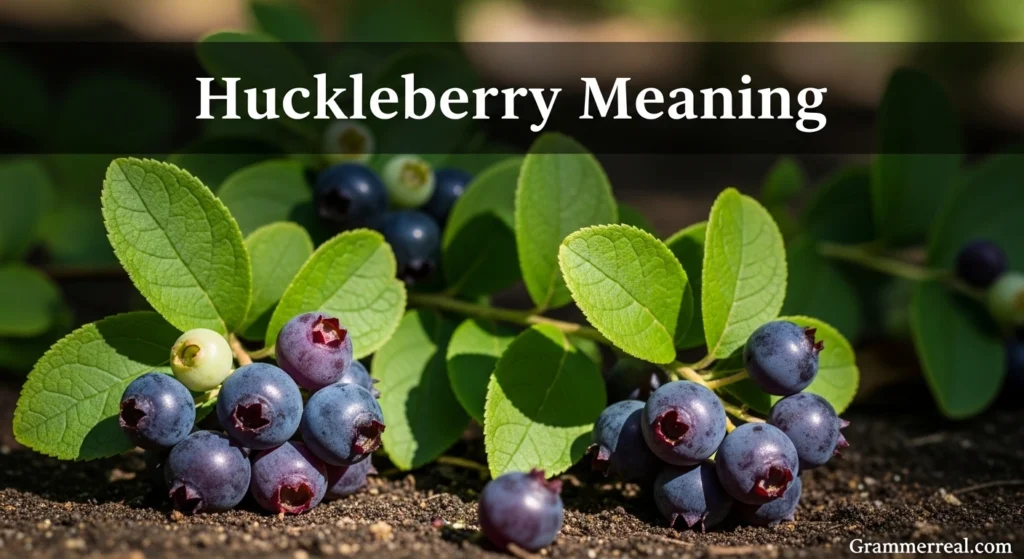
The phrase huckleberry meaning can confuse many readers because the word huckleberry has more than one use. It can name a small wild berry, describe a person who is exactly right for a task, or appear in old sayings and popular culture.
Many people hear the phrase “I’m your huckleberry” and wonder what it really means. Others see the word in books or songs and want a clear explanation. This article explains the huckleberry meaning in very simple language so it is easy to understand. You will learn where the word comes from, how people use it today, and what mistakes to avoid. You will also see examples in daily speech, differences between American and British English, and useful expressions. Each section uses clear sentences and easy wording. By the end, you will feel confident using and understanding the word huckleberry.
What Is the Basic huckleberry meaning?
The most direct huckleberry meaning is a type of small berry. Huckleberries are round fruits that grow on shrubs in North America. They often look like blueberries, but they are different plants. Some huckleberries are dark blue, purple, red, or black.
People use huckleberries to make:
- Jam
- Pie
- Syrup
- Muffins
- Juice
- Desserts
So, in food and nature, the huckleberry meaning is simply a berry.
Example sentences:
- We picked fresh huckleberries in the forest.
- My grandmother made huckleberry pie.
- The jam has a sweet huckleberry flavor.
This is the easiest and most literal meaning of the word.
huckleberry meaning as an Idiom
The word also has an idiomatic meaning. In this use, huckleberry meaning refers to the right person for something. It can mean “the perfect choice” or “the person who can do the job.”
Example:
- Need help with math? Sarah is your huckleberry.
- If you want a skilled driver, Tom is your huckleberry.
- Need someone calm in a crisis? Maria is your huckleberry.
In these examples, the word does not mean fruit. It means the best person for the task.
This use became popular in older American speech. It still appears today, often in a playful or confident tone.
Where Did the Word Come From?
Language experts connect the word huckleberry to names for small berries used many years ago. Over time, people also used the berry name in figurative speech. Since huckleberries are small, the word sometimes described something minor or small in size.
Later, it developed another meaning: someone suited to a job. Language often changes in this way. A simple noun can grow into an expression with deeper meaning.
This happens in many languages. Words begin with one purpose and later gain new uses through culture, humor, and daily conversation.
Contextual Examples of huckleberry meaning
Understanding context is very important. The sentence tells you which huckleberry meaning is correct.
Example 1: Food Context
- We baked huckleberry muffins this morning.
Meaning: real berries.
Example 2: Nature Context
- Huckleberries grow in mountain areas.
Meaning: real berries.
Example 3: Person Context
- Need a team leader? James is your huckleberry.
Meaning: James is the right person.
Example 4: Confident Statement
- I can solve that problem. I’m your huckleberry.
Meaning: I am ready and qualified.
Example 5: Old-Fashioned Tone
- Looking for a challenger? I’m your huckleberry.
Meaning: I accept and I am the one you need.
Always read the full sentence before deciding the meaning.
The Famous Phrase: “I’m Your Huckleberry”
Many people know the phrase “I’m your huckleberry.” This line became famous in films and modern culture. In common use, it means:
- I am the right person.
- I accept the challenge.
- I am ready for this.
- You found the person you need.
It often sounds bold, playful, or confident.
Example:
- Need someone to speak first? I’m your huckleberry.
- Need a chess partner? I’m your huckleberry.
This phrase is memorable because it is unusual and colorful.
Common Mistakes About huckleberry meaning
Many learners misunderstand the word. Here are common mistakes and simple corrections.
Thinking It Always Means Fruit
Wrong idea: Every use means a berry.
Correct idea: Sometimes it means the right person.
Using It in Serious Formal Writing
The idiom sounds informal or playful. It may not fit legal or academic writing.
Less suitable:
- The manager is our huckleberry for quarterly operations.
Better:
- The manager is the best choice for quarterly operations.
Using It Without Context
If listeners do not know the phrase, they may feel confused.
Better:
- I’m your huckleberry—I can fix the computer.
Wrong Tone
The phrase can sound humorous. Use it carefully in serious moments.
Wrong Spelling
Correct spelling: huckleberry
Wrong spellings:
- huckelberry
- hucklebery
- huckle berrry
American vs British English Differences
The huckleberry meaning is more common in American English than in British English.
In American English
People may know both meanings:
- A berry
- The right person for the job
The phrase “I’m your huckleberry” is more recognizable in the United States.
In British English
Many speakers understand the fruit meaning less often because the berry is not central to daily life there. The idiom may sound unusual or unfamiliar.
A British speaker might ask:
- What does huckleberry mean?
- Why did you call yourself a huckleberry?
Practical Tip
If you speak with an international audience, explain the phrase.
Example:
- I’m your huckleberry, meaning I’m the right person to help.
This avoids confusion.
Idiomatic Expressions Related to huckleberry meaning
The word appears in several informal styles.
1. I’m Your Huckleberry
Meaning: I am the right one.
2. A Huckleberry Over My Persimmon
This is an old American saying. It means a little beyond something else, or slightly better.
It is rare today.
3. My Huckleberry Friend
Sometimes people use huckleberry warmly to describe a close friend, especially in creative or playful speech.
4. Huckleberry Finn Reference
Many people connect the word with the famous book character Huckleberry Finn. In that case, it is part of a name, not the idiom.
huckleberry meaning in Literature and Culture
The word became widely known through literature, film, and music. When people hear huckleberry, they may think of adventure, freedom, nature, or old American life.
Because of this cultural history, the word can feel warm and memorable. It sounds more vivid than simple words like “helper” or “candidate.”
Writers often choose colorful words because they create stronger images in the reader’s mind.
Example:
- He was no ordinary guide; he was our huckleberry for the journey.
This sentence feels more lively than:
- He was our guide.
Practical Tips for Using huckleberry meaning Correctly
Know Your Audience
If people know American expressions, the phrase may work well. If not, explain it.
Use It in Friendly Conversation
The idiom suits casual speech better than formal reports.
Use Tone Carefully
It can sound confident. Make sure confidence does not become arrogance.
Add Context
Say what you mean.
- I’m your huckleberry for this repair job.
Keep It Natural
Do not repeat the word too often in one conversation.
Use the Fruit Meaning Clearly
If you mean the berry, place it in food or nature context.
- We bought huckleberry jam.
Why the Word Is Interesting
The huckleberry meaning is interesting because one small word carries several ideas:
- Fruit
- Skill
- Readiness
- Humor
- Old-style charm
- Cultural memory
This shows how language grows over time. A word can start in nature and later describe people and situations.
That is why learning vocabulary through context is so helpful.
Easy Sentence Patterns You Can Use
Here are simple sentence models.
Fruit Use
- I like huckleberry pie.
- We found huckleberries on the trail.
- She made huckleberry tea.
Idiom Use
- Need help? I’m your huckleberry.
- He is your huckleberry for the project.
- If you need a singer, she is your huckleberry.
Comparison Use
- He is the best option. He is your huckleberry.
These patterns make speaking easier.
Grammar and Writing Notes Shown in This Article
This article uses clear grammar and easy structure to help reading. Several writing rules were applied:
Correct Verb Tense
Past events use past tense:
- The phrase became famous.
General truths use present tense:
- Huckleberries grow on shrubs.
Subject-Verb Agreement
Singular subject:
- The phrase means confidence.
Plural subject:
- Huckleberries grow in forests.
Clear Modifiers
Instead of vague wording, specific words were used:
- small wild berry
- playful informal phrase
- confident statement
Varied Sentence Length
Some sentences are short for clarity. Others are longer for flow. This balance keeps reading smooth.
Active and Passive Voice
Active voice:
- People use the phrase today.
Passive voice:
- The phrase is often used playfully.
Both forms help style when used carefully.
How Learning This Word Improves Writing
Studying the huckleberry meaning helps writing in useful ways.
Better Vocabulary
You learn one word with several uses.
Stronger Context Skills
You practice finding meaning from surrounding words.
More Natural Style
Idioms can make writing sound lively when used well.
Better Tone Control
You learn when casual phrases fit and when they do not.
More Reader Interest
Colorful expressions often hold attention better than plain wording.
Quick Summary Table
UseMeaningExampleFruitA small berryWe ate huckleberries.IdiomRight personI’m your huckleberry.CulturalOld American styleThe word feels classic.
Conclusion
The huckleberry meaning depends on context. It can mean a real berry that people eat, or it can mean the perfect person for a task. The phrase “I’m your huckleberry” usually means “I am ready” or “I am the right one.” This expression is more common in American English and may sound unusual elsewhere. When using it, think about audience, tone, and clarity. In casual speech, it can sound fun, confident, and memorable. In formal writing, simpler wording may be better. Learning words like huckleberry improves vocabulary, grammar awareness, and understanding of context. It also shows how language changes over time. With these tips, you can now use and understand huckleberry with confidence.
FAQs
1. What is the main huckleberry meaning?
It usually means either a small berry or the right person for a job.
2. Does huckleberry always mean fruit?
No. In idioms, it can describe a suitable person.
3. What does “I’m your huckleberry” mean?
It means I am the person you need, or I accept the challenge.
4. Is huckleberry used in formal writing?
Usually no. The idiom is more casual and playful.
5. Is the word common in British English?
It is less common than in American English.
6. Are huckleberries the same as blueberries?
No. They may look similar, but they are different berries.
7. Why is the phrase popular?
It sounds unique, confident, and memorable.
8. Can I use huckleberry at work?
Yes, in friendly informal settings, but use care.



