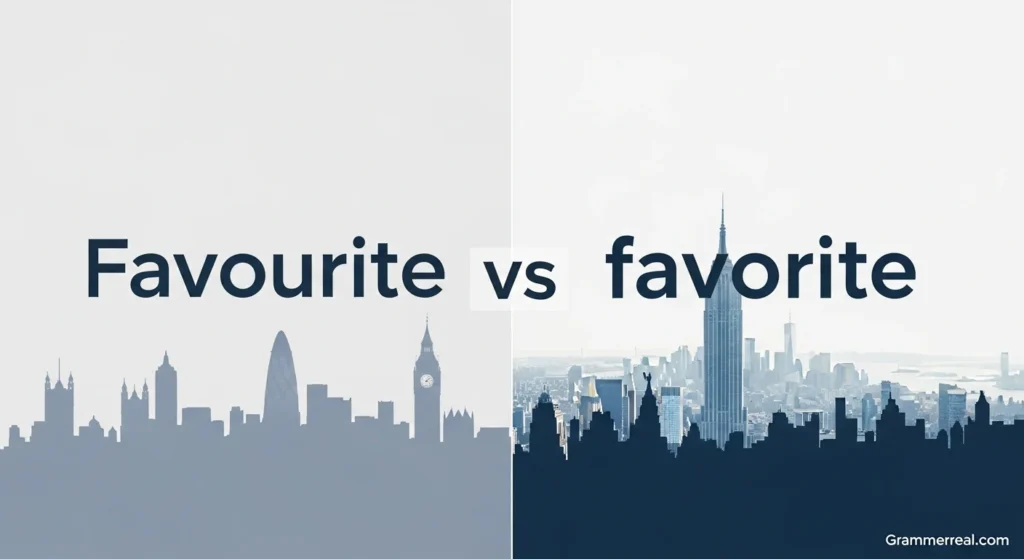
Many English learners ask about favourite vs favorite because both words look correct, yet they are spelled differently. This topic is simple once you know the rule. The short answer is that both forms have the same meaning, but they belong to different varieties of English.
Favourite is common in British English, while favorite is common in American English. People often worry that one spelling is wrong, but that is not true. Your choice depends on the country, audience, or style guide you follow. If you write for school, work, or online readers, using one style consistently is important. In this article, you will learn the meaning, history, grammar, examples, common mistakes, and useful tips about favourite vs favorite. By the end, you will feel confident when choosing the right spelling.
What Does Favourite vs Favorite Mean?
Both favourite and favorite mean the same thing. They describe something or someone that you like more than others.
It can be used as:
- A noun: a person or thing liked best
- An adjective: preferred above others
Examples as a Noun
- Blue is my favourite color.
- Blue is my favorite color.
- She is the teacher’s favourite.
- He became the crowd favorite.
Examples as an Adjective
- This is my favourite book.
- This is my favorite book.
- We visited our favourite restaurant.
- They played their favorite song.
The meaning stays the same. Only the spelling changes.
Favourite vs Favorite: The Main Difference
The key difference in favourite vs favorite is regional spelling.
British English
In the United Kingdom and many countries influenced by British English, people usually write favourite.
Examples:
- My favourite sport is cricket.
- That is her favourite dress.
American English
In the United States, people usually write favorite.
Examples:
- My favorite sport is baseball.
- That is her favorite dress.
Other Countries
Some countries use British spelling more often, such as:
- Pakistan
- India
- Australia
- New Zealand
- South Africa
So, in many of these places, favourite is more common.
Why Are There Two Spellings?
The reason for favourite vs favorite comes from language history.
British English kept many older spellings from French and Latin. That is why words like favourite, colour, and honour kept the -our ending.
American English later simplified many spellings. Writers and dictionary makers preferred shorter forms like:
- favourite → favorite
- colour → color
- honour → honor
- labour → labor
Neither style is wrong. They simply developed in different places.
How to Choose the Correct Form
When deciding between favourite vs favorite, think about your readers.
Use Favourite If:
- You follow British English rules
- Your school uses British spelling
- You write for readers in the UK, Pakistan, India, or Australia
- Your company style guide prefers British English
Use Favorite If:
- You follow American English rules
- You write for readers in the United States
- Your client or teacher requests American spelling
- Your publication uses American style
Most Important Rule: Be Consistent
Do not mix styles in one document.
Wrong:
- My favourite movie is old, but my favorite actor is new.
Better British style:
- My favourite movie is old, but my favourite actor is new.
Better American style:
- My favorite movie is old, but my favorite actor is new.
Consistency makes writing look polished and clear.
Grammar Use of Favourite and Favorite
Both words follow the same grammar rules.
As a Noun
A noun names a person, place, thing, or idea.
Examples:
- Mango is my favourite.
- Mango is my favorite.
- She became the audience favorite.
As an Adjective
An adjective describes a noun.
Examples:
- My favourite meal is biryani.
- My favorite meal is biryani.
- His favourite teacher helped him.
Singular and Plural Forms
Singular:
- This is my favorite.
- This is my favourite.
Plural:
- These are my favorites.
- These are my favourites.
Possessive Form
- My sister’s favorite bag is missing.
- My brother’s favourite pen broke.
Common Sentence Examples
Here are clear examples of favourite vs favorite in daily life.
Food
- Pizza is my favorite food.
- Tea is my favourite drink.
Movies
- That is my favorite movie of all time.
- This is her favourite actor.
People
- He is my grandmother’s favorite grandson.
- She is the coach’s favourite player.
Places
- The beach is our favorite place.
- The park is our favourite place to relax.
Subjects
- Math is his favorite subject.
- English is her favourite subject.
Common Mistakes in Favourite vs Favorite
Many learners make small errors. Here are common ones.
1. Mixing Spellings
Wrong:
- My favorite colour is blue.
This mixes American and British styles.
Better American:
- My favorite color is blue.
Better British:
- My favourite colour is blue.
2. Using the Wrong Audience Style
If you write for a British school, favorite may look unusual. If you write for an American company, favourite may seem less natural.
3. Forgetting Plurals
Wrong:
- These are my favoritees.
Correct:
- These are my favorites.
- These are my favourites.
4. Wrong Subject-Verb Agreement
Wrong:
- My favorite books is here.
Correct:
- My favorite books are here.
5. Missing Articles
Wrong:
- He is favorite student.
Correct:
- He is the favorite student.
Articles like a, an, and the help sentences sound complete.
American vs British English Differences Beyond This Word
The favourite vs favorite difference is part of a larger spelling pattern.
British English Often Uses -our
- favourite
- colour
- honour
- neighbour
American English Often Uses -or
- favorite
- color
- honor
- neighbor
British English Often Uses -re
- centre
- metre
American English Often Uses -er
- center
- meter
Learning these patterns helps you write more accurately.
Idiomatic Expressions with Favourite or Favorite
Both spellings appear in common expressions.
Old Favorite / Old Favourite
Something you liked for a long time.
- This song is an old favorite of mine.
- That café is an old favourite of hers.
Crowd Favorite / Crowd Favourite
Something many people like.
- The singer became a crowd favorite.
- The dessert was a crowd favourite.
Personal Favorite / Personal Favourite
Something you especially like.
- This book is a personal favorite.
- That poem is my personal favourite.
Teacher’s Favorite / Teacher’s Favourite
A student who seems especially liked.
- He was called the teacher’s favorite.
These phrases are common in speech and writing.
Practical Tips to Remember the Difference
Here are easy ways to remember favourite vs favorite.
Tip 1: Think of the Letter U
British spelling often keeps the letter u.
- favourite
- colour
- honour
If you use British English, remember the u.
Tip 2: Think Shorter for American Style
American spelling often removes extra letters.
- favorite
- color
- honor
Tip 3: Match Your Other Spellings
If you write:
- colour
- neighbour
- organise
Then use favourite.
If you write:
- color
- neighbor
- organize
Then use favorite.
Tip 4: Use One Dictionary Style
Choose one trusted dictionary and follow it.
Tip 5: Proofread Your Work
Search your document for both spellings. Make sure only one style appears unless you are comparing them.
Favourite vs Favorite in Formal Writing
Many people ask if one form sounds more professional. The answer is simple: both can be professional when used correctly.
In Academic Writing
Use the spelling required by your school or citation style.
In Business Writing
Use the spelling your company uses.
In Creative Writing
Choose the style that fits your setting or audience.
In Online Writing
Think about who will read your work most often.
Professional writing values clarity and consistency more than one spelling choice.
Favourite vs Favorite in Spoken English
In speech, there is usually no difference in meaning. Pronunciation may vary slightly by accent, but listeners understand both forms.
Examples:
- What is your favorite movie?
- What is your favourite movie?
The question means the same thing.
How This Topic Improves Your Writing Skills
Learning favourite vs favorite teaches more than spelling.
1. It Builds Audience Awareness
You learn to write for different readers.
2. It Improves Consistency
Using one style across a document creates cleaner writing.
3. It Strengthens Grammar Habits
You notice articles, plurals, verb forms, and sentence patterns.
4. It Expands Vocabulary Awareness
You begin to see other spelling pairs like:
- travelled / traveled
- defence / defense
- programme / program
5. It Increases Confidence
You stop guessing and start choosing correctly.
Writing Techniques Used for Clear Sentences
This article follows simple writing principles that also help students.
Correct Verb Tense
- Present tense explains facts.
- Past tense explains history.
Example:
- British English kept older forms.
- American English uses shorter forms.
Subject-Verb Agreement
Singular subjects take singular verbs.
- My favorite book is new.
Plural subjects take plural verbs.
- My favorite books are new.
Clear Modifiers
Modifiers describe words clearly.
Better:
- My favorite red bag is missing.
This sentence clearly shows the bag is red.
Sentence Variety
Short sentences add force. Longer sentences add detail. A mix creates smooth reading.
Active and Passive Voice
Active:
- Writers use American spelling often.
Passive:
- American spelling is used often.
Both styles can be useful.
Quick Comparison Table
FeatureFavouriteFavoriteMeaningSameSameRegionBritish EnglishAmerican EnglishCorrect?YesYesCommon in PakistanYesSometimesFormal UseYesYes
Conclusion
The question of favourite vs favorite is easy once you know the pattern. Both words are correct, and both mean something liked more than others. Favourite is the usual British spelling, while favorite is the usual American spelling. Your best choice depends on your audience, school, workplace, or writing style. The most important rule is to stay consistent in one piece of writing. This topic also helps you improve grammar, spelling awareness, and reader focus. When you understand small differences like this, your writing becomes clearer and stronger. Now you can choose either spelling with confidence.
FAQs
1. Is favourite wrong?
No. Favourite is correct in British English and many other regions.
2. Is favorite wrong?
No. Favorite is correct in American English.
3. Which spelling is used in Pakistan?
Many schools and institutions use British English, so favourite is common.
4. Do both words mean the same thing?
Yes. They have the same meaning.
5. Can I use both in one article?
It is better to choose one style and stay consistent.
6. Which spelling is shorter?
Favorite is shorter because it does not include u.
7. Which spelling should students use?
Use the spelling required by your teacher or school style.
8. Is favorite more modern?
Not exactly. It is simply the common American spelling.



