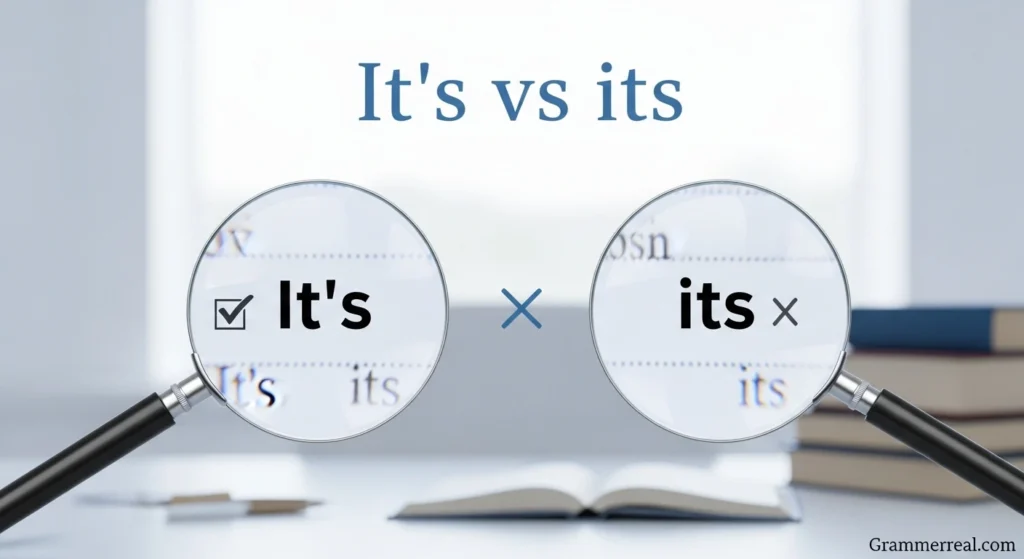
Many writers stop for a moment when they need to choose between it’s vs its. These two small words look almost the same, but they do very different jobs in a sentence. Because the spelling is close, many students, professionals, and native speakers mix them up.
The good news is that this grammar point is easier than it seems. Once you learn one clear rule, you can often choose the correct word in seconds. In this guide, you will learn the meaning of each form, how to use them in real sentences, and how to avoid common mistakes. You will also see examples from daily life, school writing, business writing, and casual conversation. We will look at differences in American and British English, common expressions, and simple memory tricks. By the end, it’s vs its will feel clear, natural, and easy to remember.
Understanding the Basic Difference
The easiest way to understand it’s vs its is to know the job each word does.
- It’s = it is or it has
- Its = shows ownership or belonging
That is the whole core rule.
Examples of it’s
- It’s raining today. (It is raining today.)
- It’s a beautiful garden. (It is a beautiful garden.)
- It’s been a long week. (It has been a long week.)
Examples of its
- The dog wagged its tail.
- The company changed its logo.
- The tree lost its leaves.
In these examples, its shows that something belongs to the dog, company, or tree.
Why People Confuse it’s vs its
Many people confuse it’s vs its because apostrophes often show possession.
Examples:
- Sarah’s book
- Ahmed’s phone
- The teacher’s desk
So people expect it’s to mean “belonging to it.” But English is different here. The possessive form is its, with no apostrophe.
This happens because it’s already has another job: it is the short form of it is or it has.
That one exception causes many mistakes.
A Simple Rule to Remember
When choosing between it’s vs its, test the sentence.
Ask yourself:
Can I replace the word with “it is” or “it has”?
- If yes, use it’s.
- If no, use its.
Examples
- It’s cold outside. (It is cold outside.) ✔
- The bird built its nest. (The bird built it is nest.) ✘
So the second sentence must use its.
This test works in most situations.
How to Use It’s Correctly
1. It’s = It Is
Use it’s when you mean it is.
Examples:
- It’s late now.
- It’s my turn.
- It’s hard to learn alone.
- It’s time to leave.
- It’s clear that we need help.
2. It’s = It Has
Use it’s when you mean it has.
Examples:
- It’s been a great year.
- It’s already started.
- It’s become more common lately.
- It’s never happened before.
In speech, people use this form often.
How to Use Its Correctly
Use its when something belongs to a thing, animal, group, place, or idea.
Examples:
- The cat cleaned its paws.
- The car lost its mirror.
- The school updated its rules.
- The city improved its roads.
- The phone needs its battery replaced.
More Context Examples
- Every country has its own culture.
- Each plant needs its own care.
- The machine stopped because its motor failed.
it’s vs its in Daily Writing
This grammar point appears in many types of writing.
School Writing
- The book changed its cover design.
- It’s important to check your work.
Work Emails
- The company announced its new plan.
- It’s good to hear from you.
Social Media
- It’s amazing!
- My laptop lost its charger port.
Creative Writing
- The moon hid behind its clouds.
- It’s a night full of mystery.
Common Mistakes and How to Fix Them
Many errors happen because writers move too fast. Below are common mistakes.
Using It’s for Ownership
❌ The dog hurt it’s leg. ✔ The dog hurt its leg.
Why? The leg belongs to the dog.
Using Its for It Is
❌ Its raining now. ✔ It’s raining now.
Why? You mean “It is raining.”
Not Proofreading
❌ The company changed it’s name because its growing. ✔ The company changed its name because it’s growing.
First word = ownership. Second word = it is.
Guessing by Sound
Both words sound the same. You cannot hear the difference. You must check the meaning.
Quick Practice Sentences
Choose the correct word in each sentence.
- ___ a sunny day. Answer: It’s
- The tree dropped ___ fruit. Answer: its
- ___ been a busy month. Answer: It’s
- The robot lost ___ arm. Answer: its
- ___ easy once you know the rule. Answer: It’s
American vs British English Differences
When discussing it’s vs its, there is almost no difference between American and British English. The grammar rule stays the same in both forms of English.
In American English
- The company changed its policy.
- It’s going to snow.
In British English
- The company changed its policy.
- It’s going to rain.
The spelling and grammar are the same. The only difference may be style choices in other grammar areas, but not here.
Note About Collective Nouns
British English sometimes uses plural verbs with group nouns.
Example:
- The team are playing well.
American English often uses singular verbs:
- The team is playing well.
But even here, its remains the possessive form:
- The team changed its captain.
So the rule for it’s vs its does not change.
it’s vs its with Animals and Objects
People often ask if its should be used for animals or objects. Yes, it often is.
Animals
- The horse shook its head.
- The bird opened its wings.
Objects
- The laptop needs its screen fixed.
- The house lost its roof in the storm.
Organizations
- The bank changed its hours.
- The store updated its prices.
Idiomatic and Common Expressions
You may see it’s in many fixed expressions.
Common Uses of It’s
- It’s okay.
- It’s true.
- It’s possible.
- It’s enough.
- It’s up to you.
- It’s no problem.
- It’s a shame.
- It’s worth it.
Common Uses of Its
Its is less common in fixed expressions, because it mainly shows possession.
Examples:
- Every story has its lesson.
- Each era has its style.
- Every tool has its use.
Memory Tricks for it’s vs its
Simple tricks help many learners remember grammar.
Expand the Word
If you can say it is or it has, use it’s.
Think of Ownership
If something belongs to “it,” use its.
Ignore the Apostrophe Habit
Many possessive words use apostrophes, but this one does not.
- his
- hers
- its
Notice that these possessive pronouns have no apostrophe.
Read Backward Slowly
When proofreading, read each sentence slowly from the end to the start. This helps you notice grammar choices.
Sentence Patterns That Help
Here are common patterns where the answer becomes easy.
It’s + Adjective
- It’s cold.
- It’s useful.
- It’s strange.
It’s + Noun
- It’s a gift.
- It’s my idea.
Its + Noun
- Its color
- Its shape
- Its name
- Its purpose
If a noun follows the word, its is often correct because ownership is shown.
Examples:
- The phone lost its signal.
- The plant changed its color.
Advanced Notes in Simple Language
Even though this topic is basic, it appears in serious writing too.
Formal Writing
- The committee reviewed its decision.
- It’s clear that action is needed.
Academic Writing
- The study reached its conclusion.
- It’s important to compare results carefully.
Business Writing
- The brand improved its image.
- It’s good to see progress.
Correct grammar creates trust and clarity.
Editing Tips for Clean Writing
When you finish writing, check every use of it’s and its.
Step-by-Step Check
- Circle each word.
- Replace it’s with it is.
- If the sentence still works, keep it.
- If not, use its if ownership is meant.
Example Edit
Original:
- The company changed it’s logo because its growing fast.
Check:
- The company changed its logo because it’s growing fast.
Now the sentence is correct.
Mini Quiz
Choose the right answer.
- ___ my favorite movie. Answer: It’s
- The bird found ___ food. Answer: its
- ___ been a long journey. Answer: It’s
- The school updated ___ website. Answer: its
- ___ too late to start. Answer: It’s
Why This Small Rule Matters
Some people think it’s vs its is a tiny issue. But small grammar choices can change how readers see your writing.
Correct use can make writing:
- clearer
- more professional
- easier to read
- more trustworthy
- more polished
Repeated mistakes may distract readers. Good grammar keeps attention on your ideas.
Writing Techniques Used in This Guide
This article uses clear grammar rules and clean sentence structure to help learning.
Grammar Rules Applied
- Correct subject-verb agreement
- Correct tense use
- Clear pronoun reference
- Accurate articles such as a, an, and the
- Correct prepositions such as in, on, and with
- Proper punctuation and apostrophe use
Style Techniques Used
- Short and long sentences mixed together
- Clear headings for easy reading
- Real examples from daily life
- Repetition of the key rule for memory
- Friendly and simple tone
How This Helps Writing Growth
Practicing it’s vs its trains you to notice detail. When you learn one grammar rule well, you become more careful with others too. You start checking punctuation, spelling, sentence flow, and word choice. That habit improves all writing.
Conclusion
The difference between it’s vs its is simple once you know the rule. It’s means it is or it has. Its shows ownership. If you can replace the word with it is or it has, choose it’s. If something belongs to an object, animal, group, or idea, choose its. This rule is the same in American and British English. With a little practice, you will stop guessing and start choosing correctly every time. Keep proofreading your work, use the quick test, and this common grammar problem will soon disappear.
FAQs
1. What is the main difference between it’s and its?
It’s means it is or it has. Its shows possession.
2. Is it’s ever possessive?
No. It’s is never the possessive form.
3. Why does its have no apostrophe?
Because its is a possessive pronoun, like his and hers.
4. How can I test which word is correct?
Replace it’s with it is or it has. If it works, use it’s.
5. Which is correct: The dog wagged it’s tail or its tail?
Correct: The dog wagged its tail.
6. Which is correct: Its raining or It’s raining?
Correct: It’s raining.
7. Do American and British English use different rules?
No. The rule is the same in both.
8. Can its refer to companies and groups?
Yes. Example: The company changed its plan.



