The air feels heavy, like a room where the windows have been shut for too long. You step forward, yet something unseen presses against your chest. Voices hum around you, but none reach your ears in full. You are present, yet somehow pushed aside—like a shadow that refuses to belong to its own body. That quiet, suffocating feeling mirrors what discrimination often does: it creates invisible barriers that shape how people move, speak, and exist.
Discrimination is not always loud. It does not always shout or slam doors. Often, it whispers. It lingers. It builds quiet walls. Because of this subtlety, metaphors become powerful tools. They give shape to something that can feel abstract or hidden. They allow writers, speakers, and everyday people to express experiences that plain language sometimes struggles to hold.
In this article, we will explore metaphors for discrimination in a vivid, creative, and practical way. You will not only understand them—you will feel them, use them, and even create your own.
Why Metaphors for Discrimination Matter in Writing and Life
Discrimination can be difficult to explain to someone who has never faced it. Metaphors help because they:
- Make injustice easier to imagine
- Add emotional depth to writing
- Create empathy through vivid images
- Give voice to lived experience
Metaphors do not replace reality, but they shine light on it.
Discrimination as More Than Unfair Treatment
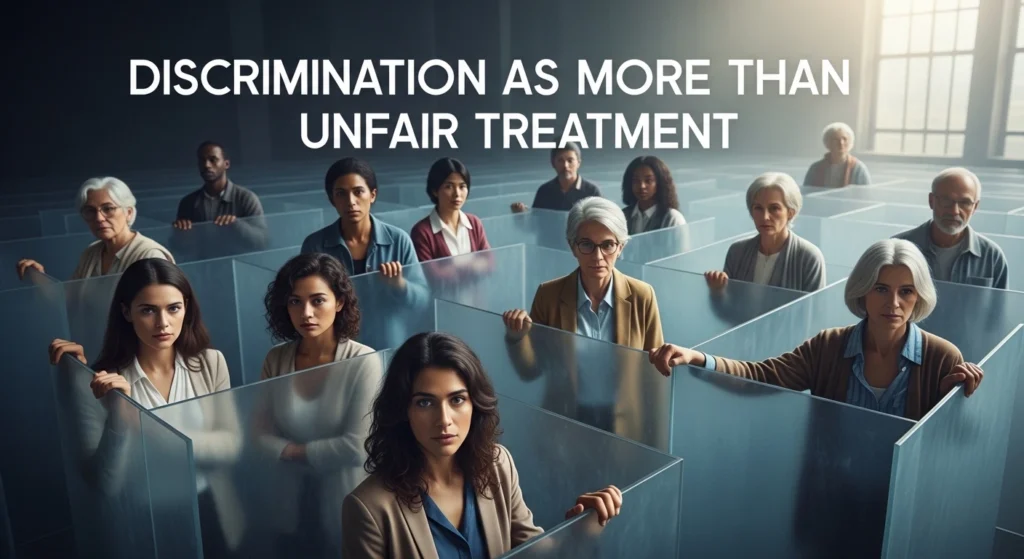
Discrimination is not only about unequal rules. It is about unequal humanity.
It can appear as:
- Exclusion
- Stereotyping
- Barriers to opportunity
- Violence or neglect
- Quiet daily disrespect
Discrimination is the act of treating someone as less worthy.
How Metaphors Help Us Understand Injustice and Bias
Metaphors allow us to describe discrimination as something physical:
- “A wall that keeps people out”
- “Chains of prejudice”
- “A shadow over someone’s life”
These comparisons make the harm more real and immediate.
Metaphors for Discrimination in Literature and Culture
Writers and activists have long used metaphor to expose injustice.
In history:
- Segregation was called a “color line”
- Oppression was described as “shackles”
- Racism was portrayed as a “poison” in society
Metaphors become tools of truth and resistance.
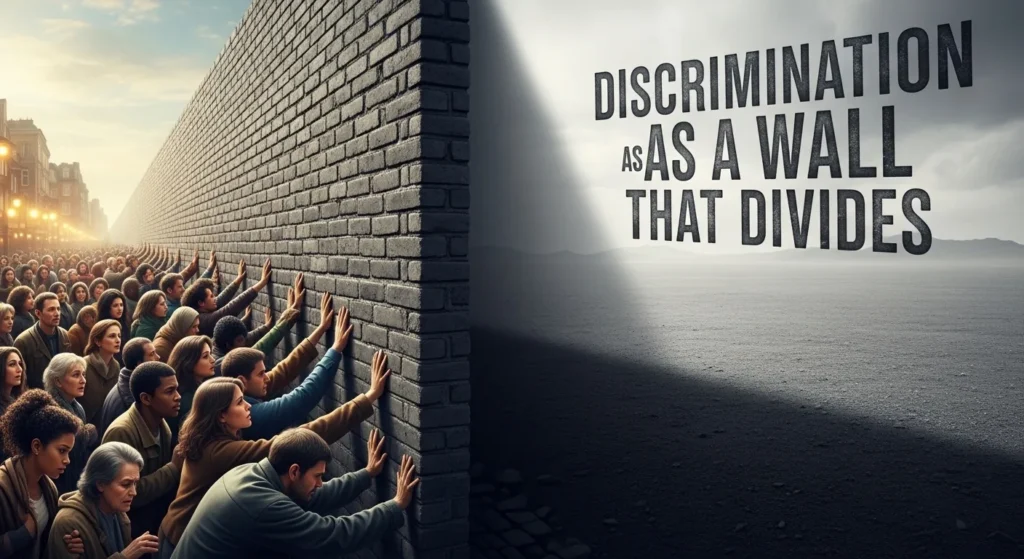
Discrimination as a Wall That Divides
Meaning & Explanation
Discrimination is like a wall because it separates people unfairly, keeping some inside privilege and others outside opportunity.
It symbolizes:
- Exclusion
- Separation
- Barriers built by prejudice
Example Sentence
“Discrimination is a wall built from bias, dividing neighbors who should have stood together.”
Alternative Ways to Express It
- “A fence of injustice”
- “A barrier of hatred”
- “A gate locked against belonging”
Sensory or Emotional Detail
Walls feel cold, solid, unmovable. They create loneliness on the outside.
Mini Storytelling Touch
Imagine a child watching others enter freely while they are stopped at the edge. That silent wall is discrimination made visible.
Using Wall Metaphors for Social Commentary
This metaphor works strongly in essays and speeches:
- “Tear down the walls of prejudice.”
- “No one should be left outside.”
- “Justice means opening gates, not building fences.”
Bonus tip: Pair wall imagery with ideas of bridges and openness.
Discrimination as Poison in the System
Meaning & Explanation
Discrimination is like poison because it spreads quietly, harming individuals and communities over time.
It represents:
- Toxic beliefs
- Long-lasting damage
- Hidden injustice
Example Sentence
“Discrimination is poison in the bloodstream of society, weakening trust and humanity.”
Alternative Ways to Express It
- “A toxin of hatred”
- “Corruption of fairness”
- “Venom in everyday life”
Sensory or Emotional Detail
Poison may not be seen immediately, but it changes everything inside. Discrimination often works the same way—slow, destructive, pervasive.
Cultural Reference
Many social justice writers describe racism and prejudice as diseases that must be healed, not ignored.
Identify the Poison

Exercise: Imagine discrimination as poison.
Ask:
- What does it damage most?
Sample Answers:
- “It damages confidence and self-worth.”
- “It harms opportunities and futures.”
- “It destroys trust between communities.”
Example Sentence: “Discrimination poisons not only the victim, but the society that allows it.”
Discrimination as Chains That Restrict Freedom
Meaning & Explanation
Discrimination is like chains because it limits movement, opportunity, and dignity.
It symbolizes:
- Oppression
- Restriction
- Unequal freedom
Example Sentence
“Discrimination is a chain around the ankle, making some people carry weight others never feel.”
Alternative Ways to Express It
- “Shackles of prejudice”
- “Invisible restraints”
- “Burden of injustice”
Sensory or Emotional Detail
Chains clink, drag, and exhaust. This metaphor captures the heavy daily struggle of discrimination.
Real-Life Resonance
Even when discrimination is not physical, it can feel like something constantly holding you back.
Metaphors for Discrimination in Everyday Life
Discrimination often shows up as:
- “Closed doors”
- “Unequal playing fields”
- “A spotlight of judgment”
Example: “Every interview felt like a door half-closed before she even spoke.”
These metaphors highlight subtle, daily injustice.
Metaphors for Discrimination in Emotional Experience
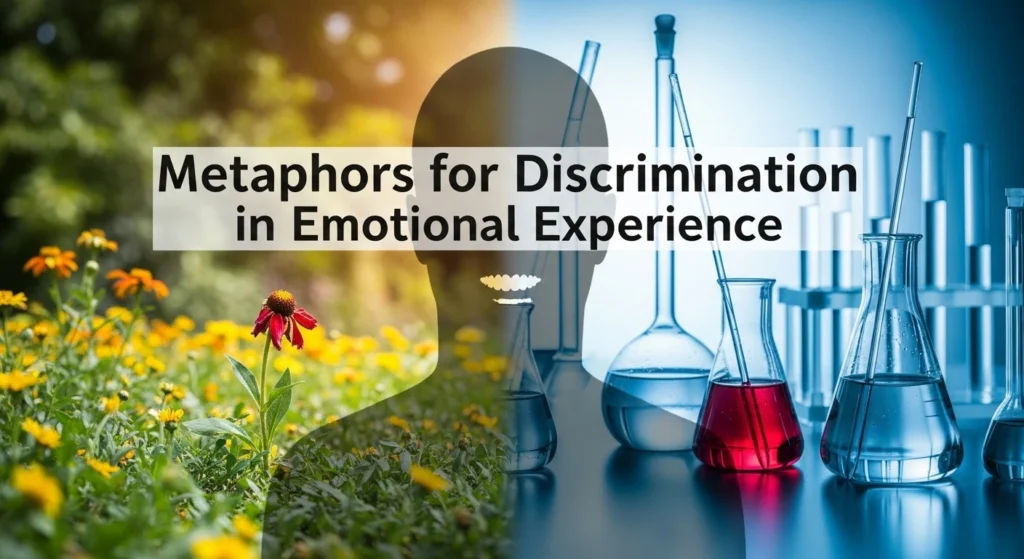
Discrimination is not only structural—it is personal.
It can feel like:
- Being erased
- Being silenced
- Being constantly watched
- Carrying an unwanted label
Mini scenario: A man enters a room and feels eyes judging him before words. Discrimination becomes an atmosphere, not just an action.
Create Your Own Metaphors for Discrimination
Try: Discrimination is like ___ because ___
Examples with answers:
- Discrimination is like a wall because it divides unfairly.
- Discrimination is like poison because it spreads harm quietly.
- Discrimination is like chains because it restricts freedom.
Reader example answer: “Discrimination is like a storm cloud because it darkens someone’s life even on sunny days.”
Using Discrimination Metaphors in Writing and Daily Life
These metaphors can be powerful in:
- Essays
- Advocacy writing
- Poetry
- Social media awareness posts
Caption ideas:
- “Tear down the walls.”
- “No more chains.”
- “Heal the poison with justice.”
Writing tip: Balance metaphor with truth—don’t over-romanticize suffering, but illuminate it with care.
Metaphors for Discrimination Across History and Culture
Throughout history, discrimination has been described as:
- Shackles
- Darkness
- Disease
- Barriers
- Silence
Metaphors have helped movements express injustice and inspire change.
Language becomes part of resistance.
Conclusion
Discrimination often hides behind silence, subtlety, and complexity. However, metaphors bring it into the light. They turn invisible struggles into visible images. They transform confusion into clarity. Through metaphors like invisible walls, locked doors, and broken bridges, we begin to understand not just the concept—but the human experience behind it.
As you move forward, try to notice the metaphors already present in your life. Create new ones. Share them. Use them to express, connect, and reflect. Because sometimes, one powerful image can say what a thousand plain words cannot.
FAQs
1. Why are metaphors useful for describing discrimination?
Because discrimination is complex and emotional, metaphors make it vivid and relatable.
2. What is a strong metaphor for exclusion?
Discrimination as a wall is powerful because it shows separation and unfair barriers.
3. Can discrimination metaphors help build empathy?
Yes. They allow readers to imagine the emotional weight of injustice.
4. How do writers use metaphors in social justice writing?
They use imagery like chains, poison, and darkness to expose harm and inspire action.
5. How can I create my own metaphor for discrimination?
Think about what discrimination does—divides, harms, restricts—and compare it to something physical and familiar.