The air feels sharp and clean. A single snowflake lands softly on your sleeve, then another, and another. At first, the ground remains bare. Nothing seems to change. However, within minutes, the world transforms. White layers gather quietly, steadily, and almost magically. Soon, what began as something small becomes something impossible to ignore. Roads vanish. Trees bend. The landscape reshapes itself.
This quiet transformation captures the essence of the snowball effect—a simple idea growing into something powerful, often faster than expected.
Meaning of Snowball Effect
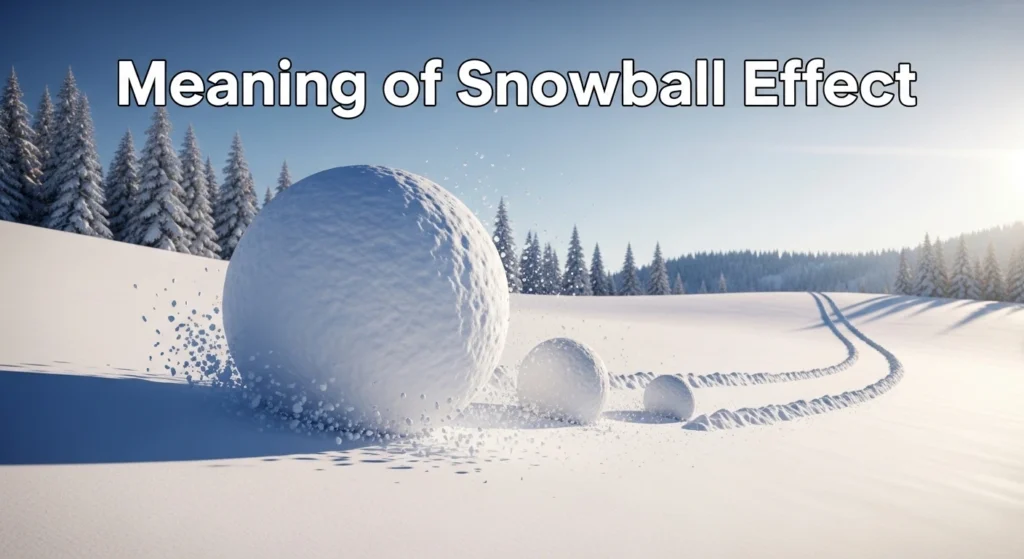
The snowball effect means a process where something small starts to grow larger and larger over time. One action leads to another action, and the result becomes stronger or bigger.
In simple words, the snowball effect describes growth that increases step by step.
Examples:
A small saving habit can create a snowball effect in personal finance. A rumor can start small but create a snowball effect in a community. Daily practice can create a snowball effect in learning a skill.
In each example, a small beginning leads to larger results.
Origin of the Snowball Effect
The phrase comes from the image of a snowball rolling down a hill. When snow covers the ground, people can make a small ball of snow with their hands. If they push that ball down a hill, it rolls and collects more snow. As it continues to roll, it becomes bigger and heavier.
Over time, people began to use this image as a metaphor for growth and increasing results. The phrase became common in English writing and conversation. Today, it appears in discussions about business, education, psychology, and everyday life.
Snowball Effect in Daily Life
People see the snowball effect in many everyday situations. Small actions can lead to larger consequences.
For example, a person who reads ten pages every day may improve their knowledge quickly. At first, the progress may feel slow. However, after many days or weeks, the improvement becomes clear.
Another example appears in personal habits. A person who starts exercising for ten minutes a day may slowly increase their activity. Over time, that small habit can become a strong and healthy routine.
These examples show how small beginnings can grow into big changes.
Snowball Effect in Learning

Learning often follows the snowball effect. When a student understands one idea, it becomes easier to understand the next idea. Knowledge builds step by step.
For example, a student who studies vocabulary every day may remember a few words at first. After several weeks, that student may know hundreds of words. Each new word helps the student read and understand more information.
Because of this growth pattern, teachers often encourage consistent practice. Small daily effort can create strong progress over time.
Snowball Effect in Business
Businesses also experience the snowball effect. A small idea or product can grow into a large company if the idea spreads to more people.
For example, a small business may begin with only a few customers. If those customers share positive feedback, more people may learn about the product. As the number of customers grows, the business expands.
This type of growth often happens slowly at first. Later, the progress becomes faster because more people become involved.
Snowball Effect in Finance
The snowball effect is often used to explain financial growth. When people save or invest money regularly, their savings can grow larger over time.
For example, a person who saves a small amount each month may not see large results immediately. However, over several years, the total savings may become significant.
Financial experts often describe this process as a snowball effect because each new contribution increases the total amount.
Snowball Effect in Problems
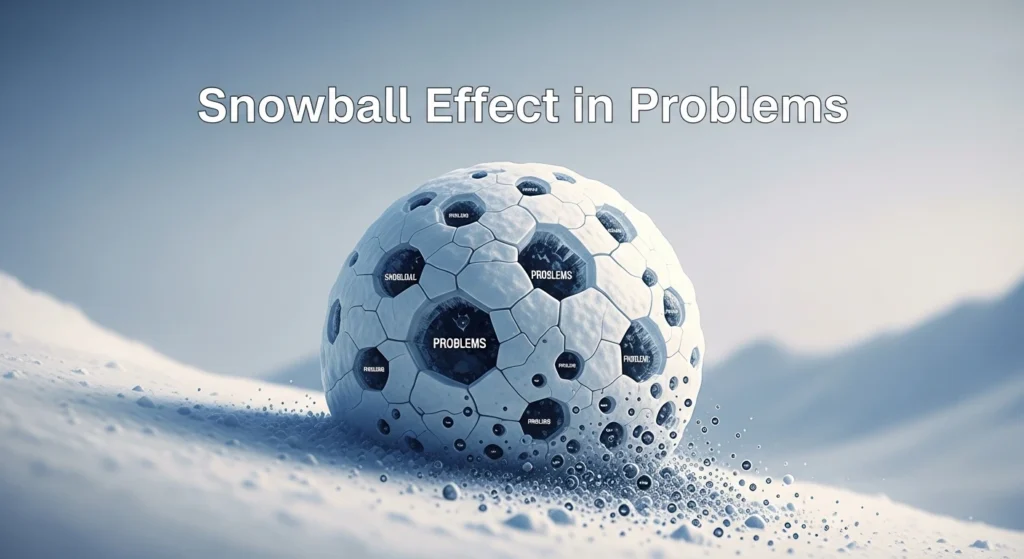
The snowball effect does not always describe positive growth. Sometimes problems also grow in this way.
For example, a small misunderstanding between two people may grow into a larger conflict if no one resolves it early. One problem leads to another, and the situation becomes more difficult.
Because of this possibility, it is important to address small problems before they grow larger.
Snowball Effect in Technology and Media
Modern technology also shows the snowball effect. Online content can spread quickly when many people share it.
For example, a simple video may start with a few views. If viewers share the video with others, the number of views may increase quickly. Soon, thousands or even millions of people may see it.
This rapid growth is another example of the snowball effect in action.
Grammar Structure of Snowball Effect
The phrase snowball effect usually appears as a noun phrase.
Common sentence patterns include:
Subject + create + a snowball effect Subject + cause + a snowball effect Subject + lead to + a snowball effect
Examples:
Small actions can create a snowball effect. Positive habits may cause a snowball effect in personal growth. Good teamwork can lead to a snowball effect in productivity.
The phrase can also appear after prepositions.
Example:
The project grew because of the snowball effect.
Using Snowball Effect in Sentences

Here are several example sentences that show correct usage.
A small act of kindness can create a snowball effect in a community. Regular study can produce a snowball effect in academic success. Healthy habits can lead to a snowball effect in physical fitness.
These sentences show how the phrase describes gradual growth.
Snowball Effect in Positive Situations
The snowball effect often describes positive improvement. Small efforts can create meaningful progress.
Examples include:
learning a new language building healthy habits growing a business developing strong skills
In these situations, the snowball effect shows that patience and consistency can lead to success.
Snowball Effect in Negative Situations
The snowball effect can also describe negative growth.
For example:
A small error in a project can create a snowball effect of problems. A rumor may begin with one person but grow into a larger misunderstanding.
These examples remind us that small actions can have large consequences.
Common Mistakes When Using Snowball Effect
Learners sometimes make simple mistakes when using this phrase.
One mistake is changing the word order incorrectly. The phrase should remain snowball effect.
Another mistake is using the phrase without explaining the growth process. The idea of gradual increase should always appear in the context.
Some writers also repeat the phrase too often in the same paragraph. It is better to balance the usage so the writing remains clear and natural.
Practical Tips for Using Snowball Effect
Use the phrase when describing growth that increases step by step.
Explain the small starting point and the larger result.
Use clear examples so readers understand the process.
Avoid repeating the phrase too many times in a short section.
Remember that the snowball effect can describe both positive and negative situations.
Sentence Structure and Clarity
Clear sentence structure improves readability.
Short example:
The idea created a snowball effect.
Longer example:
The idea started with a small group of people, but it created a snowball effect that reached many communities.
Avoid sentence fragments and long run-on sentences. Balanced sentence length helps readers understand the explanation easily.
Conclusion
The snowball effect reminds us that small actions carry great power. A single step can begin a journey. A tiny habit can change a life.
Instead of waiting for big opportunities, create small ones. Build momentum slowly. Stay consistent, even when progress feels invisible.
Over time, your efforts will grow. What starts as something small will become something meaningful, strong, and lasting.
FAQs
What does the snowball effect mean?
The snowball effect means a small action grows into a larger result over time.
Where does the phrase snowball effect come from?
It comes from the image of a snowball rolling down a hill and becoming bigger as it collects more snow.
Can the snowball effect describe negative situations?
Yes, it can describe problems that grow larger over time.
Is the snowball effect used in business discussions?
Yes, people often use the phrase to explain growth in business or marketing.
Why is the snowball effect important to understand?
It helps people understand how small actions can lead to large results in many areas of life.