The air cracks before the words even land. A sharp voice slices through the room like a sudden storm, rattling windows, stiffening shoulders, and leaving echoes that hang long after the noise fades. You can almost feel it—heat rising, tension tightening, sound pushing outward like a wave that refuses to be ignored. Yelling isn’t just heard; it’s experienced. It pulses through space, turning quiet into chaos in a heartbeat.
And yet, language gives us a way to shape that chaos. Instead of simply saying “he yelled,” we can paint the moment. We can turn noise into imagery, emotion into texture, and volume into something almost tangible. That is where metaphors for yelling come in—transforming ordinary expression into something vivid, memorable, and alive.
What Yelling Represents Beyond Loudness
Yelling is not only about being loud. Often, it represents a breaking point. It can be the moment patience snaps, the moment fear becomes urgent, or the moment someone feels unheard and tries to force attention.
In relationships, yelling can symbolize conflict, miscommunication, or emotional overflow. In stressful moments, it can also be a desperate attempt to regain control. Metaphors help reveal what yelling truly means beneath the sound.
Why Metaphors Capture Yelling So Strongly
Yelling is sensory. It hits the ears, tightens the chest, changes the atmosphere instantly. A calm room becomes tense. A quiet conversation becomes a battlefield. Metaphors help translate that invisible shift into something we can picture.
Instead of simply saying “He yelled,” a metaphor like “His voice was thunder” immediately creates mood—fear, shock, intensity. Metaphors allow yelling to be felt, not just heard.
Yelling as Thunder
Thunder is one of the clearest metaphors for yelling.
Meaning: Yelling can feel sudden, powerful, and impossible to ignore, like a storm breaking overhead.
Example idea: “His voice thundered through the hallway, shaking the calm apart.”
Alternative expressions:
- A storm of sound
- Thunder in the air
- A booming roar
Sensory detail: Thunder makes the body flinch, the same way yelling often does.
Yelling as a Siren
Sirens are sharp and urgent.
Meaning: Yelling can feel like an alarm—something demanding attention immediately.
Example idea: “Her yelling was like a siren, slicing through the silence of the room.”
Alternative expressions:
- An alarm of anger
- A warning cry
- A distress signal
Real-life touch: Like an ambulance siren, yelling often creates panic, even if you don’t know what’s wrong yet.
Yelling as Fire
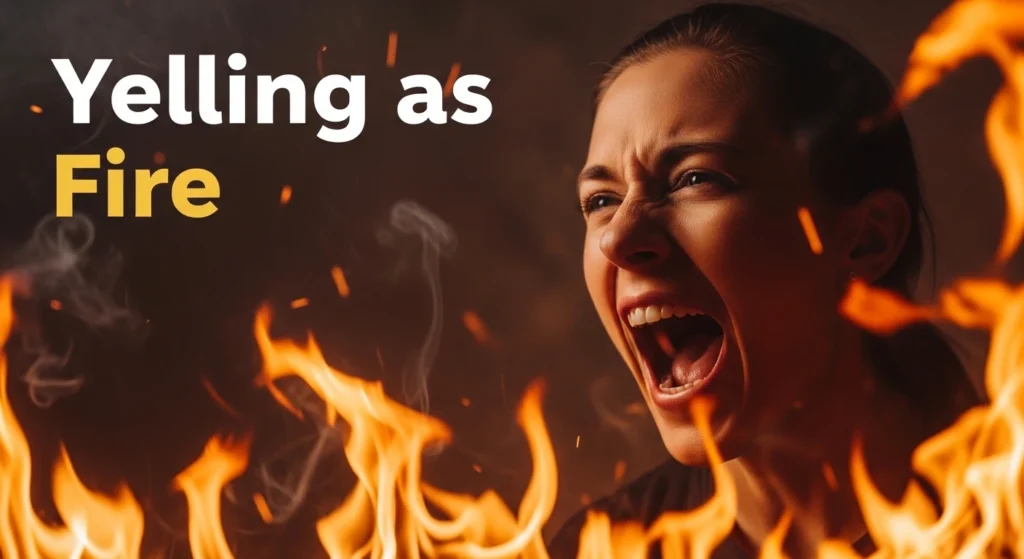
Fire metaphors show heat and intensity.
Meaning: Yelling can burn with anger, spreading quickly and leaving damage behind.
Example idea: “His words were fire, scorching everyone who stood too close.”
Alternative expressions:
- Flames of shouting
- A voice burning bright
- Wildfire of emotion
Emotional detail: Fire doesn’t only destroy—it also shows how uncontrollable anger can feel.
Yelling as Breaking Glass
Breaking glass is sudden and jarring.
Meaning: Yelling can shatter peace instantly, even if it lasts only seconds.
Example idea: “The shouting cracked the calm like glass breaking in the night.”
Alternative expressions:
- Shattering silence
- Sharp emotional fracture
- A crash of noise
Sensory detail: Glass leaves fragments behind, just as harsh yelling can leave emotional pieces.
Yelling as a Roaring Lion
Animal metaphors show raw emotion.
Meaning: Yelling can feel primal, fierce, instinctive—like something unleashed.
Example idea: “He roared like a lion, anger spilling out without restraint.”
Alternative expressions:
- Beast of rage
- Wild voice unleashed
- Predator’s cry
This metaphor emphasizes power, dominance, and intensity.
Yelling as a Wave Crashing
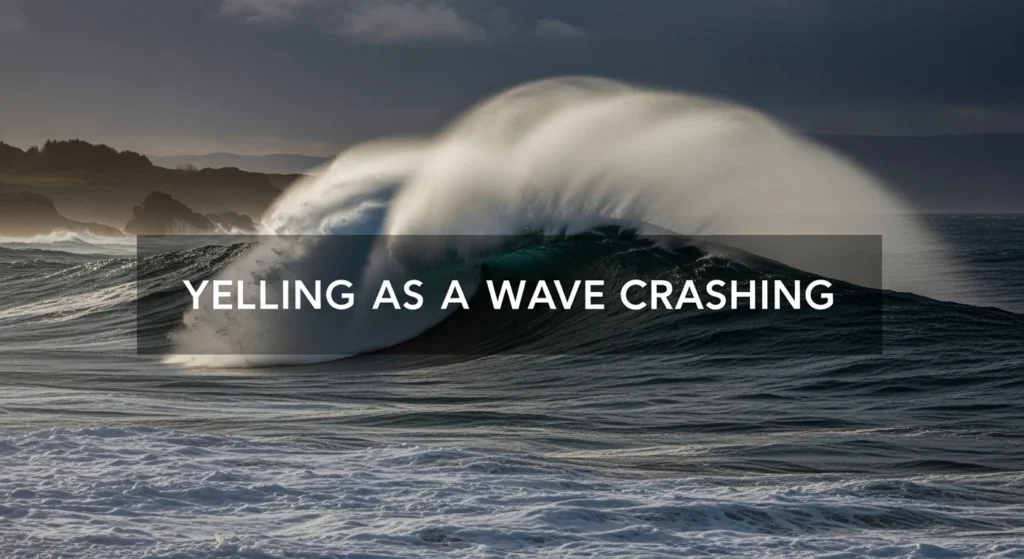
Waves can overwhelm and knock you off balance.
Meaning: Yelling can feel like emotional force crashing over someone, drowning out reason.
Example idea: “Her yelling came like a wave, washing away every calm thought.”
Alternative expressions:
- Flood of noise
- Ocean of anger
- Tide of shouting
Mini storytelling: Imagine standing on a shore, calm for a moment—then suddenly a wave hits harder than expected. That’s how yelling often feels.
Yelling as a Volcano Erupting
Volcano metaphors show pressure building over time.
Meaning: Yelling often happens when emotions have been trapped too long.
Example idea: “His shouting was a volcano finally erupting after days of silence.”
Alternative expressions:
- Explosion of emotion
- Lava of frustration
- Burst of rage
Emotional detail: Volcanoes remind us that yelling is often the surface of deeper feelings underneath.
Yelling as a Whip
A whip metaphor shows yelling as sharp and painful.
Meaning: Words can strike, leaving invisible wounds.
Example idea: “Her yelling lashed through him like a whip, stinging long after.”
Alternative expressions:
- Verbal strike
- Cutting voice
- Words that slap
This metaphor highlights the harm yelling can cause.
Yelling as Wind Howling

Howling wind creates unease and chaos.
Meaning: Yelling can feel unsettling, loud, and uncontrollable.
Example idea: “The argument rose like wind howling through cracks in a door.”
Alternative expressions:
- Gust of shouting
- Stormy voice
- Noise that rattles
This metaphor feels atmospheric and emotional.
When Yelling Comes From Fear
Not all yelling is anger. Sometimes it is fear or urgency.
Metaphors for fearful yelling:
- A scream in the dark
- A flare shot into the sky
- A desperate alarm
Example idea: “Her shout was a flare, signaling she was overwhelmed.”
These metaphors show vulnerability beneath loudness.
When Yelling Becomes Hurtful
Yelling can leave emotional damage, especially when it carries blame or cruelty.
Metaphors for hurtful yelling:
- Words like knives
- Fire that scars
- Glass that shatters trust
Example idea: “His shouting was a knife, cutting deeper than silence ever could.”
These images remind us that yelling is not just sound—it can become pain.
How Writers Use Metaphors for Yelling
Writers rarely say “He yelled” again and again. Instead, they create atmosphere:
- Voices like thunder
- Shouts like alarms
- Silence shattered by sound
Metaphors make scenes more alive, helping readers feel tension in their own bodies.
In novels and dramas, yelling often marks turning points: a relationship cracking, a truth bursting out, an emotion finally unleashed.
A Small Exercise to Create Your Own Yelling Metaphor
Fill in the blank:
“Yelling feels like ______.”
Sample answers:
- Thunder breaking overhead
- Glass shattering in the dark
- A siren screaming through silence
- Fire bursting out of control
- A wave crashing over calm
Now try using one in a sentence:
Example: “His anger was thunder, and the room went still beneath it.”
This activity helps you express yelling creatively and clearly.
Using Yelling Metaphors in Daily Life
Metaphors can help you describe difficult moments without repeating the word “yell.”
Instead of: “He yelled at me.” Try: “His voice hit like thunder.”
Instead of: “She was shouting.” Try: “Her words came like an alarm.”
These expressions add emotion while staying vivid.
Keeping Yelling Metaphors Balanced
Not every raised voice is a volcano. Sometimes yelling is only a gust, not a hurricane. Choose metaphors that match the intensity of the moment.
One strong metaphor is more powerful than many dramatic ones.
Conclusion
Yelling may begin as raw sound, but language transforms it into something meaningful. Through metaphors, noise becomes imagery, emotion becomes visible, and moments gain depth. Instead of simply describing volume, you create experiences that readers can feel and remember.
Moreover, metaphors offer flexibility. You can shape them to match any tone—angry, playful, urgent, or dramatic. As you practice, your ability to express emotion grows stronger, and your writing becomes more vivid.
FAQs
Why are metaphors for yelling useful?
They help describe the emotional intensity of shouting more vividly than plain words.
What is the most common metaphor for yelling?
Thunder is very common because yelling can feel sudden, loud, and powerful.
Can yelling metaphors show fear instead of anger?
Yes. Siren and flare metaphors capture urgency and desperation.
What metaphor works best for hurtful yelling?
Whip, knives, and fire metaphors show how yelling can emotionally wound.
How can I create my own yelling metaphor?
Think about how yelling feels—sharp, overwhelming, explosive—and compare it to something sensory like storms, alarms, or waves.



