The air bites first. It slips under your sleeves, grazes your skin like a quiet warning, and settles into your bones. The ground hardens underfoot, every step sounding sharper, clearer, as if the world itself has been carved into glass. Breath turns visible, drifting away like fleeting thoughts, while the sky stretches pale and distant, holding its silence like a secret. Winter does not simply arrive—it takes over, slowly, steadily, until everything feels wrapped in its cold, steady grip.
And yet, beneath that stillness, winter speaks. It speaks in images, in feelings, in moments that demand interpretation. That is where metaphors come in. A metaphor turns winter from a season into a story. It transforms frost into emotion, snow into memory, and silence into meaning.
Learning metaphors for winter is not just about writing beautifully. Instead, it helps you express feelings that ordinary words cannot carry. It sharpens your imagination, deepens your storytelling, and gives your voice a poetic edge—whether you are writing, speaking, or even posting online.
So, let’s step into winter’s quiet world and explore how its metaphors can bring warmth to your words.
What Winter Represents Beyond Cold Weather
Winter can symbolize:
Stillness Rest Loneliness Reflection Hardship Patience Clarity Preparation
Moreover, winter often marks transition. It stands between what has ended and what has not yet begun. Because of this in-between feeling, writers frequently use winter as a symbol for emotional or life changes.
Why Metaphors Capture Winter So Well
When someone says, “It feels like winter,” they may not mean temperature. Instead, they may describe a mood—quiet, distant, or reflective.
In addition, winter creates strong sensory images: frost on windows, bare trees, long nights, soft snow. These details make metaphor easy and vivid. As a result, winter becomes a powerful symbol in both poetry and everyday language.
Winter as Silence
Winter quiets the landscape. Snow absorbs sound. Wind whispers through empty branches.
Meaning: Winter can represent emotional stillness or solitude.
Example idea: “After the argument, their relationship felt like winter silence.”
Alternative expressions: Frozen quiet Hushed world Silent season
This metaphor highlights calm or distance.
Winter as Sleep
Nature rests during winter. Seeds stay hidden beneath the soil.
Meaning: Winter can symbolize rest or recovery before growth.
Example idea: “She treated her difficult months as winter sleep before blooming again.”
Alternative expressions: Season of rest Dormant period Hidden growth
This image focuses on preparation and renewal.
Winter as a Blank Page
Snow covers everything in white. The world looks clean and untouched.
Meaning: Winter can represent a fresh start or emotional reset.
Example idea: “The new year felt like a winter field—blank and waiting.”
Alternative expressions: Clean slate Fresh canvas Untouched ground
This metaphor emphasizes new beginnings.
Winter as a Test of Strength

Cold weather challenges both people and nature. Survival requires endurance.
Meaning: Winter can symbolize hardship or resilience.
Example idea: “That year was his winter, testing his strength.”
Alternative expressions: Season of trial Cold challenge Frost of difficulty
This image reflects endurance.
Winter as a Paused Clock
Days feel shorter. Movement slows. Time seems heavy.
Meaning: Winter can represent waiting or stagnation.
Example idea: “Life felt paused, like a clock frozen in winter.”
Alternative expressions: Time standing still Slow season Held breath
This metaphor captures delay or reflection.
Winter as a Quiet Teacher
Winter teaches patience. It reminds us that not everything blooms at once.
Meaning: Winter can symbolize learning through stillness.
Example idea: “Winter became her teacher, showing her how to wait.”
Alternative expressions: Lesson in patience Season of wisdom Cold reminder
This image highlights growth through calm.
Winter as Loneliness
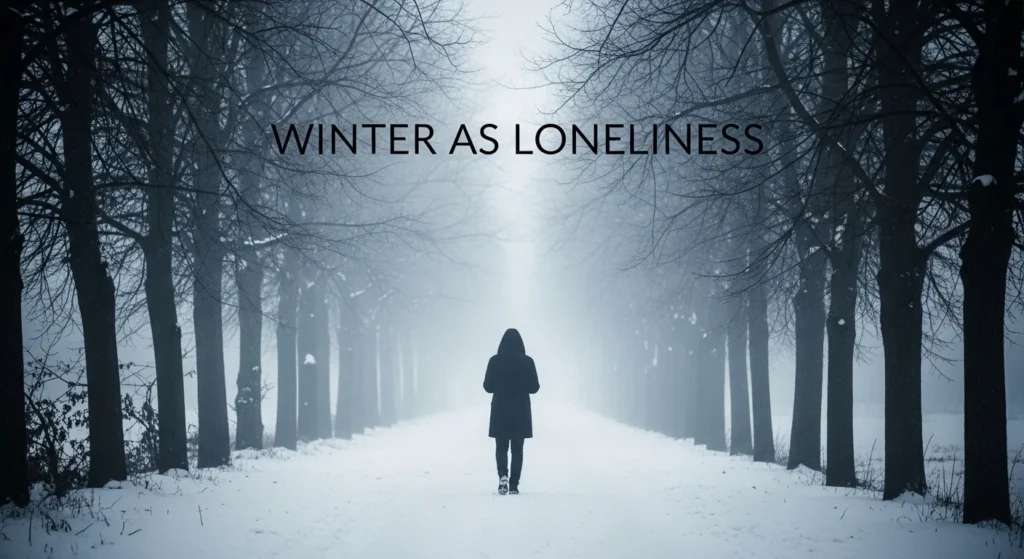
Bare trees and empty fields can feel isolating.
Meaning: Winter can represent emotional distance or solitude.
Example idea: “After the loss, his heart felt like a winter forest.”
Alternative expressions: Empty landscape Cold distance Leafless season
This metaphor emphasizes emotional quietness.
Winter as Beauty in Simplicity
Snow transforms ordinary streets into peaceful scenes.
Meaning: Winter can represent quiet beauty and clarity.
Example idea: “She found beauty in winter, where everything looked simple and still.”
Alternative expressions: Crystal morning Silver silence White calm
This image reflects peaceful elegance.
When Winter Feels Heavy
At times, winter feels like:
Walking through deep snow Holding cold hands Watching long dark nights
In these moments, winter symbolizes fatigue or emotional heaviness.
When Winter Feels Peaceful

At other times, winter feels like:
Sitting by a warm fire Watching snow fall softly Drinking tea beside a window
Here, winter represents comfort and calm reflection.
How Writers Use Winter Metaphors
Writers frequently connect winter with endings and transformation. Because winter naturally follows autumn and leads to spring, it fits stories about loss, waiting, and renewal. Additionally, winter imagery creates strong contrast with warmth and light, making emotional shifts more powerful.
A Simple Reflection Exercise
Complete this sentence:
“Winter feels like ______.”
You might write:
A silent forest A blanket of white A paused clock A sleeping garden A test of strength
Your answer depends on how winter feels to you—cold and lonely, or calm and beautiful.
Using Winter Metaphors in Daily Life
Metaphors for winter work well in poetry, personal journals, speeches, and storytelling. Instead of saying, “This phase of life feels hard,” you might say, “I am walking through winter.” That phrase feels softer yet meaningful.
Similarly, when describing calm or reflection, winter imagery adds depth without complexity.
Conclusion
Winter metaphors open a door to deeper expression. They allow you to turn cold into comfort, silence into storytelling, and stillness into strength. As you practice, your words will grow richer, more vivid, and more alive.
Keep experimenting. Keep observing. And most importantly, keep feeling—because the best metaphors come from real emotion.
FAQs
Why is winter often used as a metaphor?
Winter naturally represents endings, rest, and reflection, making it a strong symbolic season.
Does winter always symbolize something negative?
No. Winter can represent peace, clarity, and preparation for new growth.
What is the most common winter metaphor?
Winter as a season of rest or hardship is very common in literature.
Why compare emotional phases to winter?
Because winter reflects waiting and transition, it fits many life experiences.
How can I create my own winter metaphor?
Think about how winter feels to you—quiet, cold, peaceful, or challenging—and compare it to an emotional situation in your life.



