The crack comes first—sharp, sudden, like a branch snapping under too much weight. Then follows the silence, thick and uneasy, as if the air itself hesitates to move.
You can almost taste the tension, metallic and bitter, lingering on the tongue. In moments like these, violence does not only exist in action; it echoes in feeling, memory, and language. Words try to catch it, to hold it still, and often they turn to metaphor—those vivid bridges between what we see and what we feel.
Violence, after all, rarely stays confined to fists or weapons. It spills into speech, into thought, into the stories we tell. Because of that, metaphors for violence become powerful tools. They allow us to express intensity without always naming it directly. They soften harsh realities or, at times, sharpen them further. And more importantly, they help writers, speakers, and everyday communicators describe emotional or psychological conflict with depth and color.
What Violence Represents Beyond Physical Harm
Violence is more than a single act. It often represents power, fear, control, rupture, and suffering. It can appear in wars, in homes, in institutions, in words, and even in silence.
Violence also represents loss—loss of safety, trust, innocence, stability. Metaphors help express these deeper layers without reducing violence to a simple event.
Why Metaphors Help Us Speak About Violence
Violence can be overwhelming to describe directly. Metaphors offer distance while still conveying intensity. They help communicate emotional truth, not just factual detail.
For example, saying “Violence spread like fire” captures both speed and destruction. The metaphor creates an image that stays with the reader.
Metaphors can also highlight consequences: violence does not vanish—it lingers.
Violence as a Wildfire
Wildfire metaphors show uncontrollable destruction.
Meaning: Violence can spread rapidly and consume everything in its path.
Example idea: “The violence moved through the streets like wildfire, leaving ash behind.”
Alternative expressions:
- Flames of cruelty
- Firestorm of harm
- Burning chaos
Sensory detail: Wildfire suggests heat, smoke, panic, and helplessness.
Violence as a Storm
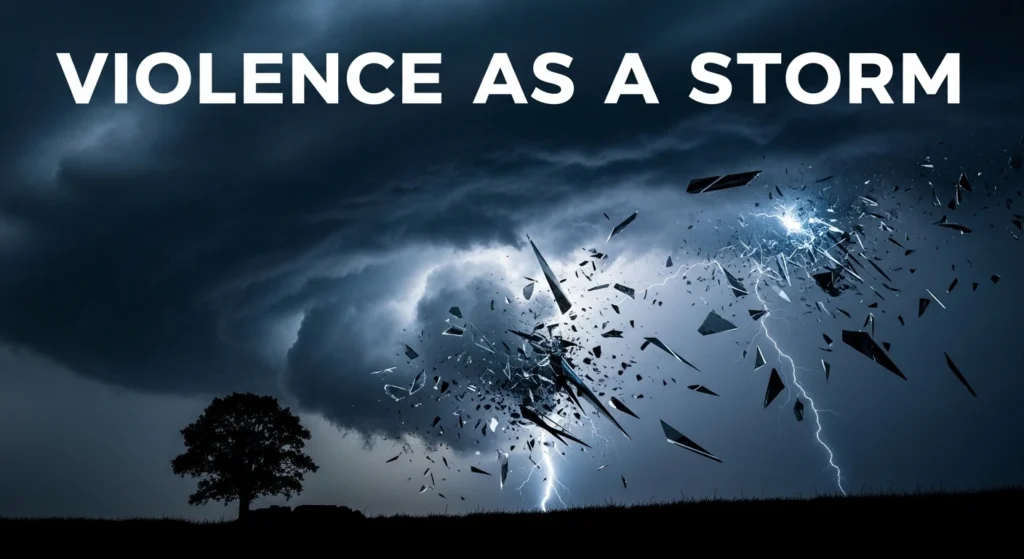
Storm metaphors show sudden force.
Meaning: Violence can arrive quickly, violently, and leave damage behind.
Example idea: “The fight erupted like a storm, tearing through calm in seconds.”
Alternative expressions:
- Tempest of anger
- Thunder of destruction
- Hurricane of pain
Mini storytelling: Like a storm, violence often leaves people rebuilding afterward.
Violence as a Poison
Poison metaphors emphasize lasting harm.
Meaning: Violence contaminates not only bodies, but relationships and societies.
Example idea: “Violence is a poison that seeps into generations.”
Alternative expressions:
- Toxic cruelty
- Venom of hatred
- Corruption of harm
This metaphor highlights how violence lingers long after the moment.
Violence as a Shadow
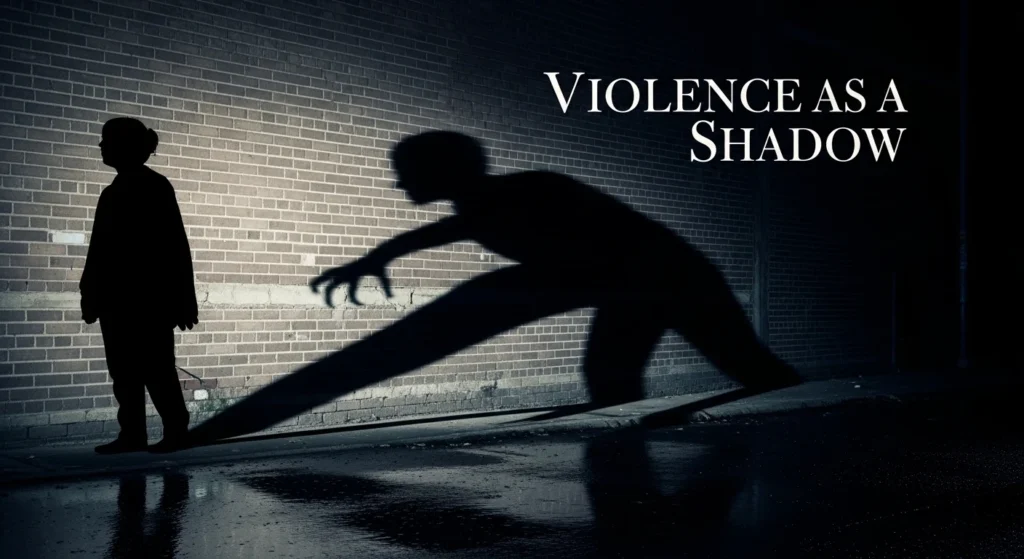
Shadow metaphors show fear and haunting presence.
Meaning: Violence can follow people even when it is not happening directly.
Example idea: “The shadow of violence hung over the neighborhood.”
Alternative expressions:
- Darkness of threat
- Haunting presence
- Cloak of fear
This metaphor feels quiet but heavy.
Violence as an Earthquake
Earthquake metaphors show sudden rupture.
Meaning: Violence shakes foundations and changes life permanently.
Example idea: “The attack was an earthquake, splitting normal life apart.”
Alternative expressions:
- Tremor of trauma
- Shattering disruption
- Cracking foundation
This metaphor emphasizes how violence transforms everything.
Violence as a Cage
Cage metaphors highlight control and confinement.
Meaning: Violence can trap victims emotionally and physically.
Example idea: “Living under violence felt like being locked in a cage.”
Alternative expressions:
- Prison of fear
- Chains of abuse
- Captivity of harm
This metaphor shows oppression.
Violence as a Knife in the Fabric of Life
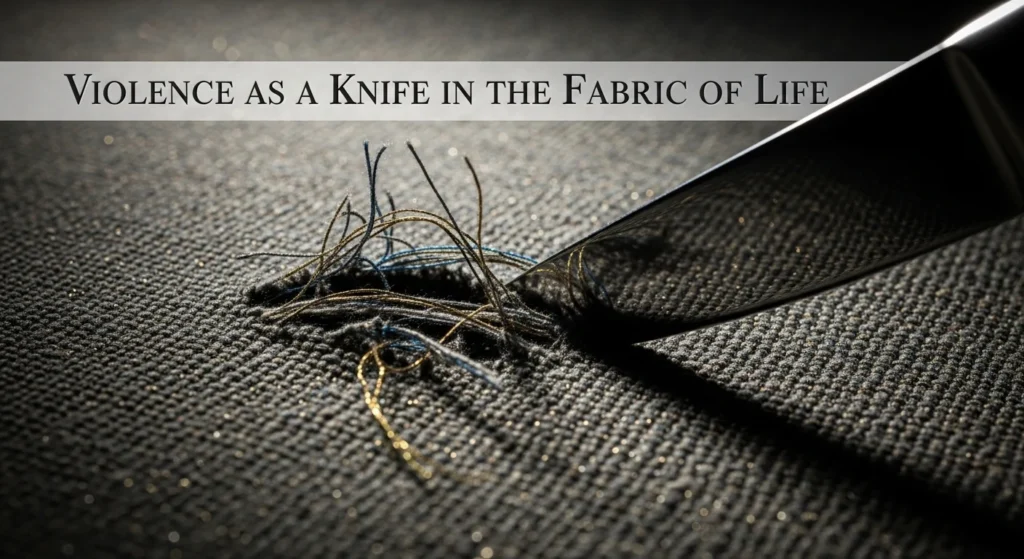
Fabric metaphors emphasize tearing.
Meaning: Violence rips through communities and relationships.
Example idea: “Violence is a knife cutting through the fabric of trust.”
Alternative expressions:
- Torn connection
- Shredded peace
- Broken weave of society
This metaphor feels personal and communal.
Violence as Fire in the Mind
Sometimes violence is internalized.
Meaning: Violence can live as trauma, rage, or memory.
Example idea: “The violence stayed like fire in his mind, refusing to go out.”
Alternative expressions:
- Burning memory
- Flames of trauma
- Heat of fear
This metaphor captures psychological aftermath.
Violence as a Machine
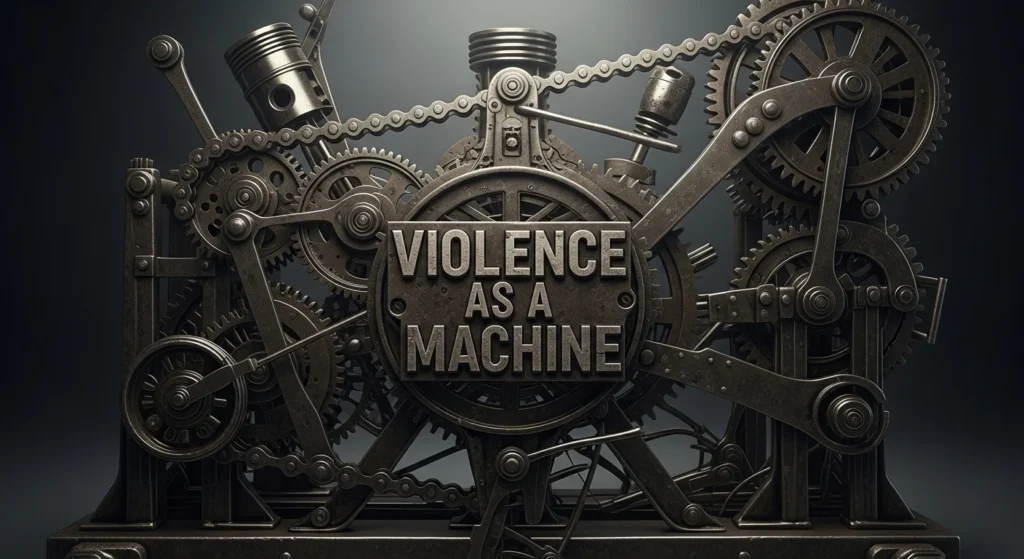
Machine metaphors show systemic harm.
Meaning: Violence can be organized, repeated, institutional.
Example idea: “War became a machine of violence, grinding lives into loss.”
Alternative expressions:
- Engine of destruction
- System of cruelty
- Mechanism of harm
This metaphor highlights violence beyond individuals.
Violence as a Broken Mirror
Mirror metaphors show fractured identity.
Meaning: Violence can shatter how people see themselves and the world.
Example idea: “After violence, life feels like looking into a broken mirror.”
Alternative expressions:
- Fractured reflection
- Shattered self
- Split reality
This metaphor is emotional and intimate.
When Violence Is Quiet
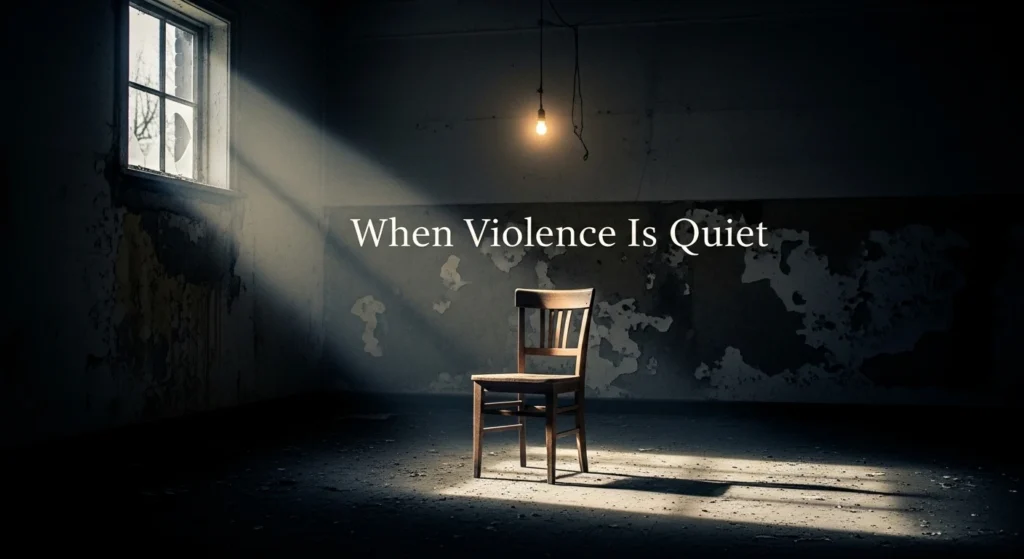
Not all violence is loud. Some violence is:
- A slow erosion
- A silent wound
- A whisper of threat
Example idea: “Violence can be quiet, like erosion wearing down a soul.”
These metaphors help describe hidden harm.
Writing About Violence With Care
Metaphors for violence should be used thoughtfully. They are powerful, but violence is real suffering, not decoration.
Writers often use metaphors to explore trauma, history, injustice, and survival. The goal is clarity and empathy, not sensationalism.
A good metaphor does not glorify violence—it reveals its cost.
A Small Exercise to Reflect on Metaphors for Violence
Fill in the blank:
“Violence is like ______ because it ______.”
Sample answers:
- Violence is like wildfire because it spreads and destroys quickly.
- Violence is like poison because it lingers long after contact.
- Violence is like an earthquake because it breaks foundations.
- Violence is like a shadow because it haunts even in silence.
Now write one sentence:
Example: “Violence is like poison, seeping into the air until even peace feels unsafe.”
Using These Metaphors in Writing and Conversation
These metaphors can help in:
- Literature and storytelling
- Social discussions about injustice
- Personal reflection and healing writing
- Describing emotional realities
Instead of saying “Violence caused trauma,” you might say “Violence left cracks in the foundation of his life.”
That creates an image the reader feels.
Choosing the Right Metaphor for the Right Context
Some metaphors emphasize sudden destruction (storm, earthquake). Others emphasize lingering harm (poison, shadow). Some highlight oppression (cage). Some highlight systemic cruelty (machine).
Choose metaphors that match the truth of what you are describing.
Conclusion
Metaphors for violence offer a powerful way to express intensity, conflict, and emotion. They transform simple statements into vivid experiences, making language more engaging and meaningful. By understanding how to use them thoughtfully, you can enhance your writing, communication, and storytelling.
At the same time, balance and awareness remain essential. Strong imagery should serve the message, not overwhelm it. When you choose your metaphors carefully, you create clarity, depth, and impact.
So experiment, observe, and refine. Let your words carry both strength and intention.
FAQs
Why are metaphors for violence important?
They help express the emotional and societal impact of violence more vividly than plain words.
What is the most common metaphor for violence?
Wildfire and storm metaphors are common because they show destruction and intensity.
Can metaphors for violence describe emotional harm too?
Yes. Poison, shadow, and cage metaphors often capture psychological or systemic violence.
How can writers use violence metaphors responsibly?
By focusing on empathy, truth, and consequences rather than glorifying harm.
How do I create my own metaphor for violence?
Think about what violence feels like—sudden, lingering, destructive, oppressive—and compare it to something vivid such as fire, poison, or earthquakes.



