Morning light spills across the leaves, and each branch hums with a quiet kind of life. The air smells faintly of damp earth and green bark, while the wind moves through the canopy like a soft, secret language. You hear the rustle before you see it, a gentle ripple of sound that feels almost like breathing. Trees stand still, yet they seem to move with time itself—stretching, reaching, remembering.
In moments like these, trees become more than just living things. They turn into symbols, reflections, and stories. That is where metaphors begin.
What Trees Symbolize
Trees often represent:
Growth Stability Patience Resilience Wisdom Family connection Renewal Strength through change
Although trees appear still, they are always changing. Rings form quietly inside them. Leaves fall and return. Seasons pass, yet the trunk remains. Because of this quiet endurance, trees symbolize long-term strength rather than sudden power.
Why Trees Work So Well as Metaphors
Unlike abstract ideas, trees are easy to picture. Everyone has seen one. You know how it feels to sit under shade or hear leaves move in the wind. When someone says, “She is rooted like a tree,” you instantly understand stability.
Moreover, trees contain both vulnerability and strength. A storm can shake branches, yet deep roots hold firm. This balance makes tree metaphors especially rich and flexible.
Trees as Symbols of Growth
A tree begins as a small seed. Over time, it expands upward and outward.
Meaning: Growth takes patience and steady effort.
Example idea: “His confidence grew like a young tree reaching for light.”
Growth does not happen overnight. Instead, it unfolds slowly. Likewise, personal development requires time and care.
Trees as Roots of Stability
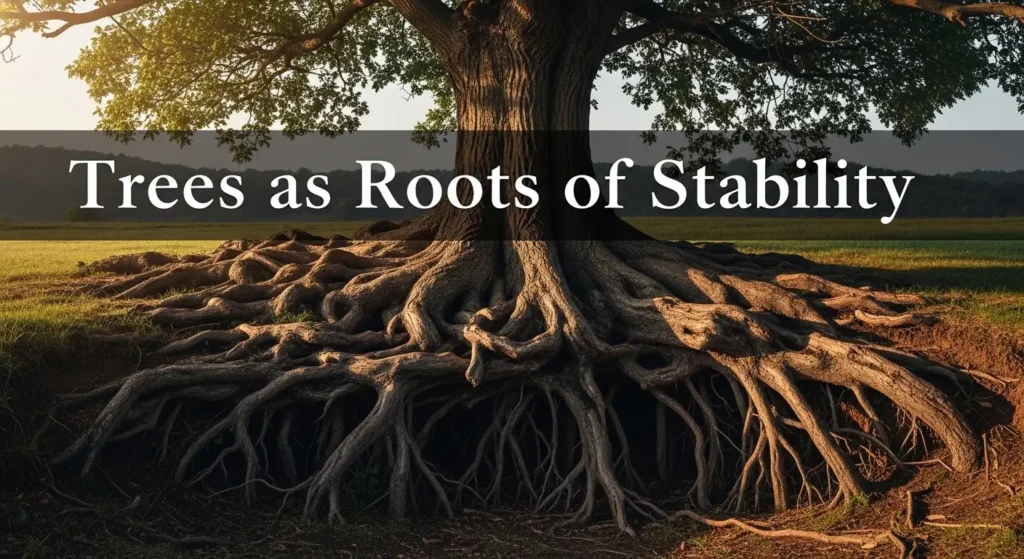
Roots anchor a tree firmly in the ground. They often spread wider than the branches above.
Meaning: Stability comes from strong foundations.
Example idea: “Her values were roots that kept her steady.”
Although roots remain hidden, they provide strength. In the same way, unseen principles support visible success.
Trees as Symbols of Resilience
During storms, trees bend. They sway with the wind rather than resist it completely.
Meaning: Resilience involves flexibility, not rigid resistance.
Example idea: “He bent like a tree in the storm but did not break.”
Flexibility often protects strength. A rigid branch snaps, but a flexible one survives.
Trees as Family Connection
Branches grow from a single trunk, yet they spread in many directions.
Meaning: Families share one source but follow different paths.
Example idea: “They were branches of the same tree.”
This metaphor highlights unity despite individuality.
Trees as Wisdom
Old trees carry rings that mark years of survival.
Meaning: Experience builds quiet wisdom.
Example idea: “His advice felt like sitting beneath an old oak.”
Age in a tree is not loud. It shows in texture and depth. Likewise, wisdom grows quietly over time.
Trees as Renewal
Leaves fall in autumn and return in spring.
Meaning: Loss can lead to renewal.
Example idea: “After hardship, her spirit bloomed like spring leaves.”
Even when a tree looks bare, life continues within. Renewal often hides beneath temporary endings.
Trees as Shelter
Trees provide shade and protection.
Meaning: Supportive people create safety.
Example idea: “Her kindness was shade on a hot day.”
Shelter does not demand attention. It simply protects.
The Strength Within Stillness

Trees appear motionless, yet life flows constantly within them. Sap moves. Cells grow. Roots expand. Similarly, strength does not always look dramatic. Sometimes it looks like quiet endurance.
Even when winter strips leaves away, the trunk stands firm. This steady presence mirrors inner resilience.
The Fragility of Trees
Despite their strength, trees can fall. Lightning can split them. Disease can weaken them. Therefore, tree metaphors also remind us that even strong beings require care and protection.
Strength does not eliminate vulnerability. Instead, it coexists with it.
How Writers Use Tree Metaphors
In literature and speech, trees often mark turning points. A character may “put down roots” in a new place. A family might be described as “a strong oak.” Through these images, writers communicate depth without lengthy explanation.
Tree imagery brings calm, grounding energy to storytelling. It slows the pace. It invites reflection.
A Personal Reflection
Think about your current stage in life.
Are you planting seeds? Are you growing upward? Or Are you shedding leaves to prepare for renewal?
Choosing a tree image can help you understand where you stand.
Expressing Ideas with Tree Metaphors
Rather than simply saying, “Stay strong,” you could say, “Stand like a tree in the wind.” To suggest building a stable life, try the phrase, “Grow deep roots,” instead of just stating it. When describing family connections, you might express it as, “We are branches of the same tree,” rather than merely saying, “Our family is connected.”
These expressions add warmth and imagery to ordinary communication.
Conclusion
As you write, imagine your words as seeds. With care and creativity, they grow into something meaningful. Tree metaphors give your writing depth, beauty, and life.
So, explore them. Experiment with them. Let them shape your voice. Over time, your writing will feel stronger, more rooted, and more alive—just like the trees that inspired it.
FAQs
Why are trees common metaphors in literature?
Because they represent growth, stability, and endurance in ways that are easy to visualize.
What does it mean to be “rooted like a tree”?
It suggests having strong foundations and stability.
Why are trees linked with resilience?
Because they survive storms by bending rather than breaking.
Can tree metaphors represent family?
Yes. Branches growing from one trunk symbolize shared origin and connection.
What does a tree shedding leaves symbolize?
It often represents change, letting go, or preparation for renewal.



