
The wind rushes past your ears. Leaves scatter across the road. Your heartbeat rises as something flashes by so fast your eyes struggle to follow. In that moment, speed is not just movement—it feels alive. It hums, it roars, it dances.
You sense it in racing cars, flying birds, and even in thoughts that come and go like sudden sparks. Speed has a rhythm, a pulse, and language tries its best to capture it. That is where metaphors step in. They help us describe something fast in a way that people can feel, not just understand.
What Are Metaphors for Speed?
Metaphors for speed compare fast movement to something familiar. Instead of saying “very fast,” you paint a picture. You might say “fast like lightning” or “quick as a blink.” These phrases give life to your words. They turn plain writing into something exciting and easy to imagine. In simple terms, a metaphor connects two ideas so that one helps explain the other.
Speed as Lightning Splitting the Sky
Lightning appears without warning. It flashes brightly and disappears within seconds.
Meaning: Speed represents sudden and intense movement.
For example: “He ran like lightning across the field.”
This metaphor emphasizes quick action. Lightning does not hesitate. It strikes instantly. In the same way, extreme speed leaves little time for reaction. Moreover, lightning carries energy and power, which adds drama to the image.
Speed as a Cheetah Chasing Its Prey
A cheetah moves with focused determination.
Meaning: Speed combined with precision and purpose.
For instance: “She finished the task like a cheetah on the hunt.”
This comparison shows controlled speed. The cheetah does not waste movement. Every step matters. Therefore, this metaphor highlights both quickness and efficiency.
Speed as a Rocket Launching Into Space
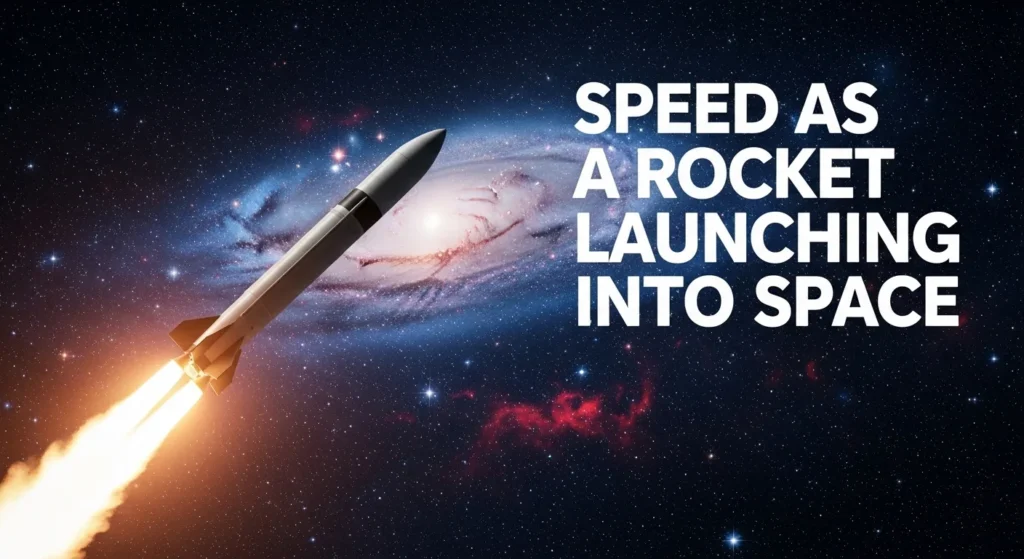
A rocket begins with fire and force, then rises rapidly.
Meaning: Speed represents powerful acceleration.
Example: “The company’s growth took off like a rocket.”
This metaphor often describes progress. It shows not only movement but also upward momentum. In addition, it suggests ambition and unstoppable energy.
Speed as the Wind Racing Through Trees
Wind moves freely and cannot be easily caught.
Meaning: Speed feels natural and unstoppable.
For example: “He disappeared like the wind.”
This image feels light and fluid. Unlike lightning, which feels sharp, wind feels smooth yet powerful. As a result, this metaphor suggests effortless motion.
Speed as a Racing Car on an Open Track
A racing car moves forward with intense focus and control.
Meaning: Speed guided by skill and direction.
For instance: “Her mind worked like a race car on a clear track.”
This metaphor shows mental quickness. Thoughts move rapidly, yet they remain controlled. Speed here feels sharp and precise.
Speed as Time Slipping Through Fingers

Sand slips quickly through an open hand.
Meaning: Speed represents time passing rapidly.
Example: “The weekend vanished like sand through fingers.”
This comparison highlights emotional speed. It does not describe physical movement. Instead, it shows how quickly moments can disappear.
Speed as a River After Heavy Rain
A river flows faster when rain increases its volume.
Meaning: Speed grows stronger under pressure.
For example: “Deadlines pushed her forward like a flooded river.”
This metaphor suggests urgency. It also shows how external pressure can increase momentum.
Speed as a Bullet Leaving the Barrel
A bullet moves instantly and directly toward its target.
Meaning: Speed combined with focus and impact.
For instance: “The news spread like a bullet through the crowd.”
This image feels intense and immediate. It emphasizes rapid transmission and strong effect.
Speed as Fire Spreading Through Dry Grass

Fire moves quickly when conditions allow it.
Meaning: Speed can expand rapidly and uncontrollably.
Example: “Rumors spread like wildfire.”
This metaphor highlights how quickly information or emotion can travel. It also suggests danger when speed lacks control.
Speed as a Digital Signal Traveling Across the World
Modern technology transfers data almost instantly.
Meaning: Speed in communication and innovation.
For example: “Messages moved at the speed of a digital signal.”
This metaphor connects speed with modern life. It shows how quickly information travels today compared to the past.
Speed as a Flash of Thought
Sometimes ideas appear instantly.
Meaning: Mental speed and creativity.
For instance: “The solution came like a flash.”
This image suggests clarity and sharp intelligence. Unlike physical speed, this metaphor focuses on quick understanding.
Why Writers Use Metaphors for Speed
The word “fast” feels simple. However, speed has many forms. It can feel smooth like wind. It can feel sharp like lightning and it can feel powerful like a rocket. Because these forms differ, metaphors help explain them clearly.
Moreover, metaphors add emotional depth. Describing a runner as “fast” sounds plain. Calling them “lightning across the sky” creates a stronger image. As a result, writing becomes more vivid and engaging.
Emotional Speed vs Physical Speed

Speed does not always mean running or driving.
Emotional speed describes how quickly feelings change. Mental speed describes how fast someone thinks. Progress speed describes rapid success or growth.
For example, falling in love may feel like “a sudden spark.” Losing time may feel like “a rushing river.” These images show how speed influences human experience beyond movement.
The Positive and Negative Sides of Speed
Speed can feel exciting. It brings energy, achievement, and action. However, it can also feel stressful. Life moving too quickly may create pressure.
For instance, speed as a “rocket” feels inspiring. On the other hand, speed as a “wildfire” may feel dangerous. Therefore, writers choose metaphors carefully depending on the tone they want to create.
How to Use Speed Metaphors Clearly
Choose one strong comparison. Avoid combining too many fast images in one sentence.
Weak example: “He moved like lightning, a rocket, and a racing car at once.”
Better example: “He moved like lightning across the stage.”
Clear and simple comparisons improve readability. In addition, short sentences make speed feel sharper.
A Quick Reflection
When you think about speed, what image appears first?
Is it lightning? Is it wind? Or is it time slipping away?
Your chosen image reveals how you understand movement and urgency.
Conclusion
Metaphors for speed bring energy, clarity, and emotion into your writing and daily speech. They turn simple ideas into vivid pictures that readers and listeners can easily imagine and feel. By using comparisons like lightning, wind, or rockets, you give life to your words and make your message more powerful and memorable. As you practice creating and using these metaphors, you build confidence and creativity, allowing your language to flow with ease and expression. Over time, even small changes in how you describe speed can make a big difference in how people understand and connect with your ideas.
FAQs
What makes a good metaphor for speed?
A strong metaphor uses a clear image that shows quick movement or rapid change.
Can speed describe emotions and thoughts?
Yes. Speed often describes fast thinking, sudden decisions, or time passing quickly.
Why do writers compare speed to natural elements?
Because lightning, wind, and rivers create strong visual images that readers easily understand.
Should speed metaphors always feel positive?
Not always. Some comparisons, like wildfire, show danger or loss of control.
Why should I use metaphors for speed?
They make your writing more engaging, emotional, and easier to understand.
Can I create my own speed metaphors?
Yes, you can create your own by comparing speed to anything fast and meaningful to you.
Are speed metaphors useful in daily conversation?
Yes, they make your speech more lively and expressive.
How can I improve my use of metaphors?
Practice regularly, observe real-life examples, and try writing your own creative comparisons.