The air feels cool against your skin. A soft breeze moves through the trees, and sunlight slips gently across the ground. Nothing rushes. Nothing forces. The world simply is. In that stillness, you notice something powerful—everything exists without resistance. The fallen leaf does not fight the ground. The fading night does not argue with the dawn.
Acceptance feels just like that quiet morning. It arrives softly, yet it changes everything. When you accept something, you stop wrestling with reality. Instead, you allow life to unfold as it already is.
So, what are metaphors for acceptance? They are creative ways to understand this calm surrender. They turn a complex emotion into something visible, something you can almost touch. And most importantly, they help you feel acceptance, not just think about it.
Because let’s face it—life does not always go as planned. However, when you learn to accept rather than resist, you gain peace, clarity, and emotional strength. That is why metaphors for acceptance matter. They guide you, comfort you, and remind you that letting go is not weakness—it is wisdom.
What Acceptance Represents Beyond Agreement

Acceptance goes deeper than simply saying “okay.” In reality, it reflects emotional maturity and inner balance.
At its core, acceptance represents:
Peace Understanding Release Resilience Emotional freedom
Moreover, acceptance often marks the turning point between suffering and healing. When you stop resisting reality, you reclaim your energy. Instead of battling the past, you begin building the present.
Why Metaphors Make Acceptance Easier to Understand
Emotions can feel abstract. Therefore, plain language sometimes falls short. When someone says, “I accept it,” the sentence sounds simple. Yet the emotional shift behind it is profound.
For example, saying “I opened my hands” instantly creates a physical image of release. Similarly, describing acceptance as “a storm finally passing” lets us feel calm after chaos. In this way, metaphors give shape to something invisible.
Acceptance as Opening Your Hands
Closed fists signal tension and control. By contrast, open hands suggest trust and release.
Meaning: Acceptance happens when you loosen your grip on what you cannot control.
Example idea: “She opened her hands and let the past fall gently away.”
Alternative expressions: Letting go softly Palms turned upward Releasing the weight
Sensory detail: Muscles relax, shoulders drop, and breath flows more freely.
Acceptance as a River Flowing
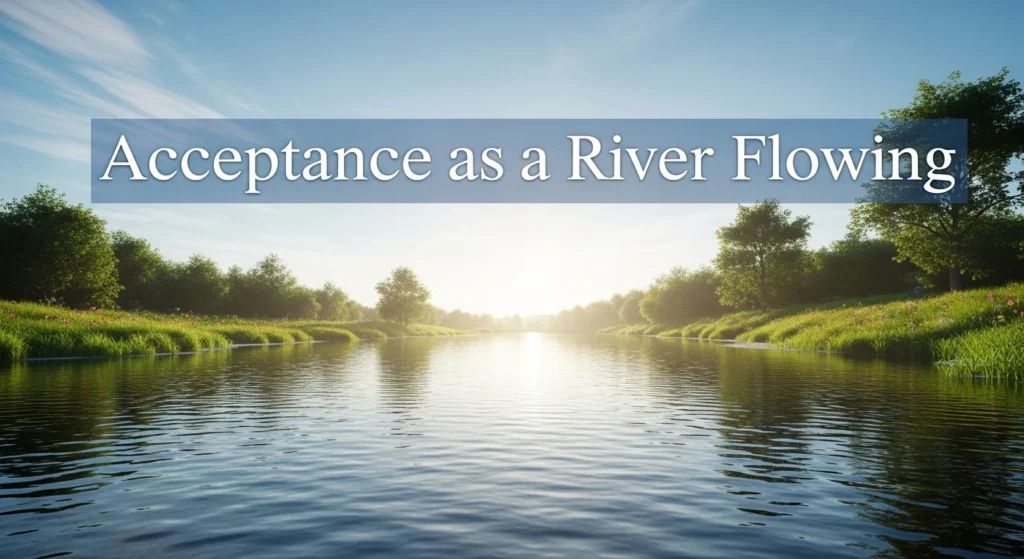
A river never argues with the landscape. Instead, it flows around obstacles and keeps moving forward.
Meaning: Acceptance means allowing life to move as it will, rather than swimming against it.
Example idea: “He stopped fighting the current and let the river carry him forward.”
Alternative expressions: Going with the flow Current of peace Water finding its path
This image highlights calm strength rather than defeat.
Acceptance as a Tree Bending in the Wind
Strong winds break rigid branches. However, flexible trees survive storms.
Meaning: Acceptance allows you to bend without breaking.
Example idea: “She bent like a willow in heavy wind, rooted yet flexible.”
Alternative expressions: Swaying with strength Flexible resilience Rooted but yielding
Here, acceptance becomes a quiet form of power.
Acceptance as the Sky After a Storm
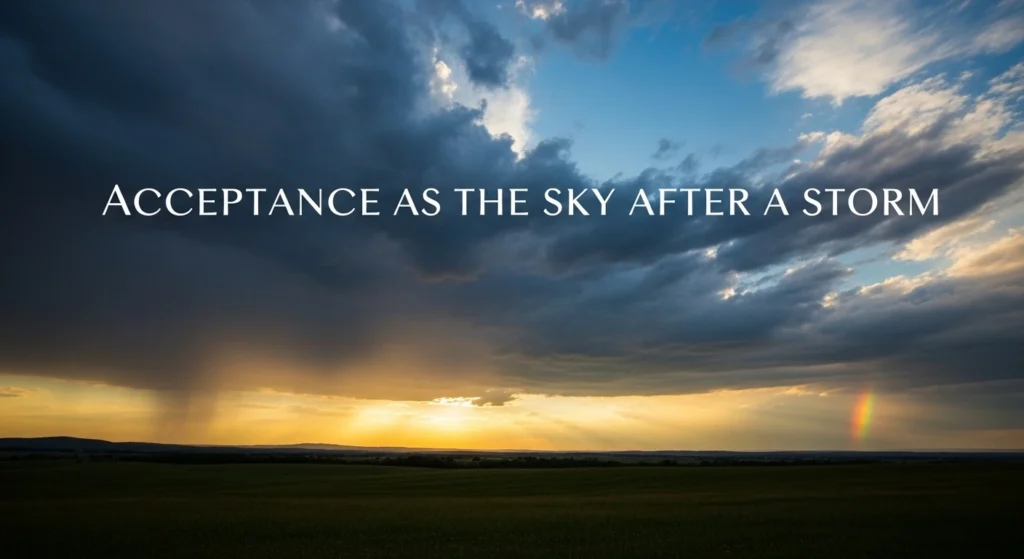
Storms bring noise, tension, and confusion. Eventually, clouds part and light returns.
Meaning: Acceptance feels like calm returning after emotional chaos.
Example idea: “After years of anger, his heart cleared like a sky after rain.”
Alternative expressions: Clouds drifting apart Rain finally ending Quiet horizon
As a result, the atmosphere feels lighter and easier to breathe.
Acceptance as Laying Down Armor
Armor protects, but it also weighs you down. When you remove it, you choose peace over constant defense.
Meaning: Acceptance requires vulnerability and courage.
Example idea: “She laid down her armor and stopped fighting invisible battles.”
Alternative expressions: Lowering the shield Setting aside the sword Ending the war within
In this metaphor, strength comes from softness.
Acceptance as Closing a Chapter
Every book contains multiple chapters. Eventually, one must end before another begins.
Meaning: Acceptance allows you to close a painful section of your story.
Example idea: “He closed that chapter gently and turned the page.”
Alternative expressions: Story laid to rest Final page turned Beginning anew
Therefore, acceptance creates space for growth.
Acceptance as Unlocking a Cage
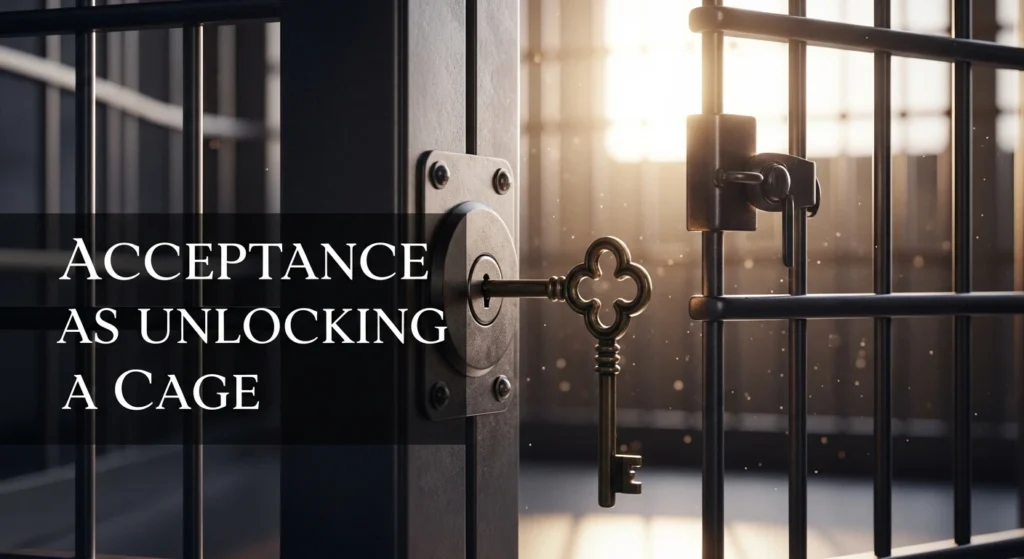
Sometimes resistance traps you more than the situation itself. Once you release blame or denial, freedom follows.
Meaning: Acceptance frees the mind from self-imposed limits.
Example idea: “Forgiveness unlocked the cage he had built around his heart.”
Alternative expressions: Breaking invisible bars Opening the inner door Freedom within
This metaphor emphasizes liberation.
When Acceptance Feels Gentle
Not every act of acceptance feels dramatic. Sometimes it resembles:
A soft exhale A sunset fading slowly A quiet nod to reality
For example, “Letting go felt like watching the sun dip below the horizon.” These images show tenderness rather than force.
When Acceptance Feels Painful
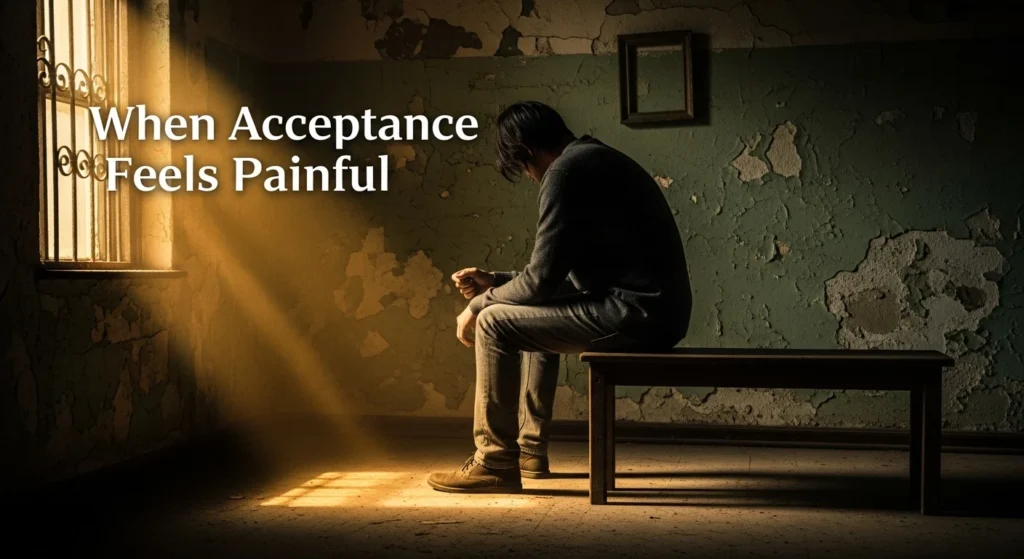
At the same time, acceptance can carry grief. It may feel like:
Waving goodbye at a station Watching a tide pull away Releasing a fragile thread
Even so, pain often signals growth. Through these metaphors, we acknowledge the ache without denying the peace that follows.
How Writers Use Metaphors for Acceptance
Writers frequently use rivers, storms, armor, and seasons to illustrate emotional surrender. Rather than portraying acceptance as weakness, they frame it as transformation. Characters often grow the most when they stop resisting reality. Consequently, acceptance becomes a turning point in many stories.
A Small Exercise to Describe Your Own Acceptance
Fill in the blank:
“Acceptance feels like ______.”
Sample answers:
A river flowing forward A storm clearing at last Hands opening gently A chapter closing peacefully
Now try it in a full sentence:
Example: “Acceptance felt like lowering my shield and stepping into calm air.”
Using Acceptance Metaphors in Daily Life
Metaphors for acceptance work beautifully in journaling, speeches, and personal reflection.
Instead of: “I moved on.” Try: “I turned the page.”
Instead of: “I stopped fighting it.” Try: “I let the river carry me.”
As a result, your words feel more thoughtful and emotionally honest.
Keeping Acceptance Metaphors Natural

While dramatic imagery can sound powerful, subtle metaphors often feel more authentic. Therefore, choose images that match the size of the moment. A quiet sunset may express more truth than a roaring storm.
Conclusion
Acceptance is not a single moment. It is a practice. A gentle, ongoing choice you make again and again.
Through metaphors, this practice becomes easier to understand and apply. You begin to see yourself as a river, a tree, or the open sky. These images stay with you. They guide you when life feels heavy.
Moreover, acceptance does not take away your strength—it reveals it. When you stop fighting reality, you gain the clarity to move forward with purpose. You respond with calm instead of chaos. You grow, even in difficult moments.
So, the next time life feels overwhelming, remember these metaphors. Let them ground you. Let them remind you that peace does not come from control—it comes from acceptance.
FAQs
Why are metaphors for acceptance useful?
They help express emotional release in ways that feel clear and relatable.
Is acceptance the same as giving up?
No. Acceptance means acknowledging reality, while giving up means abandoning effort.
Which metaphor shows acceptance as strength?
A tree bending in the wind captures resilience and flexibility.
Can acceptance be painful?
Yes. However, that pain often leads to growth and inner peace.
How can I create my own acceptance metaphor?
Think about how letting go felt—like opening hands, clearing skies, or flowing water—and build your image from there.