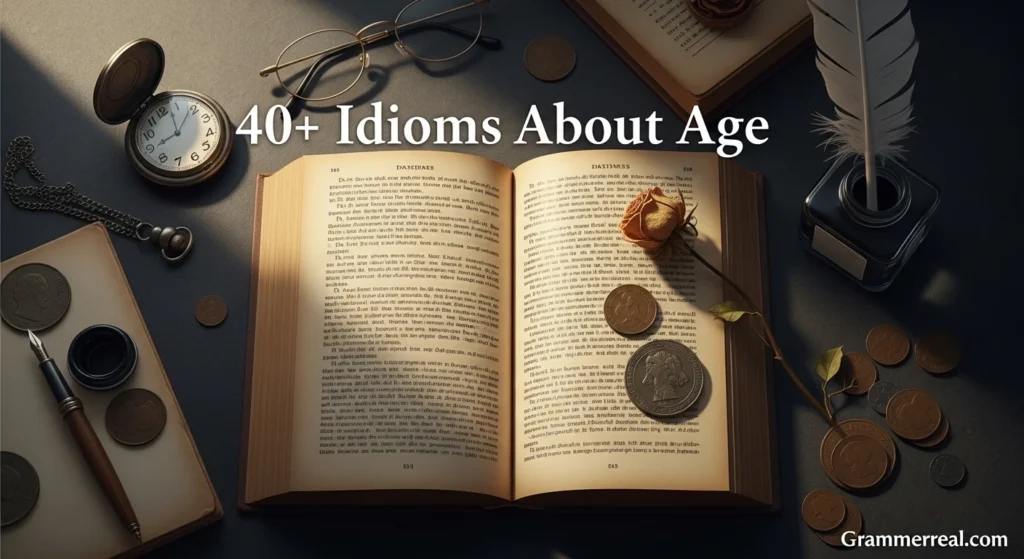
The smell of old paper drifts through a quiet room, where sunlight settles softly on a worn wooden table. A grandfather clock ticks in the corner, steady and patient, while laughter from another room carries the lightness of youth. In that single moment, time feels alive—stretching, bending, whispering stories. Language captures this dance of time beautifully, and nowhere is it more vivid than in idioms about age.
Idioms about age are phrases that go beyond literal meaning. They paint pictures of youth, wisdom, experience, and the passage of time. Instead of saying “he is very old,” we say “he is getting on in years.” Instead of “she is young and inexperienced,” we say “she is wet behind the ears.” These expressions make language richer, more emotional, and more human.
Understanding idioms about age matters because they help you speak naturally, write creatively, and connect deeply. Whether you are telling stories, writing essays, or posting on social media, these idioms give your words color and personality.
What Are Idioms About Age
Idioms about age are expressions that describe people’s age, maturity, or stage in life without stating it directly. They often rely on metaphor, imagery, and cultural meaning.
For example, when someone says, “He is over the hill,” they do not mean a literal hill. Instead, they suggest that the person has passed their peak.
These idioms appear in daily conversation, literature, films, and even jokes. Because of that, learning them helps you understand real-world English better.
Moreover, they add warmth and tone. Instead of sounding plain, your speech feels alive.
Why Idioms About Age Matter in Daily Life
Language shapes how we see people and time. When you use idioms about age, you express feelings, not just facts.
For instance, calling someone “young at heart” sounds kind and uplifting. In contrast, saying “too old” may feel harsh. Therefore, idioms give you softer, richer ways to speak.
In daily life, these expressions help you:
- Show respect
- Add humor
- Build emotional connection
- Tell better stories
Because of that, mastering them improves both communication and relationships.
The Beauty of Figurative Language and Time
Time is invisible, yet idioms make it visible. They turn age into images you can almost touch.
Think about phrases like:
- “In the prime of life”
- “Golden years”
- “Spring chicken”
Each one creates a mental picture. As a result, language feels like art.
Writers often use these idioms to show character growth, aging, and memory. Meanwhile, speakers use them to make conversations engaging.
Common Themes in Idioms About Age
Idioms about age usually follow a few key themes:
- Youth vs. experience
- Growth and change
- Decline or aging
- Wisdom and maturity
Because of these themes, idioms reflect how society views age. Some sound playful, while others sound serious.
Understanding these patterns helps you use idioms correctly and naturally.
Idioms That Describe Youth
Youthful idioms often feel energetic, playful, and light.
Examples include:
- “Wet behind the ears”
- “Green as grass”
- “A spring chicken”
These phrases suggest inexperience, freshness, or new beginnings.
Interestingly, they often carry a gentle tone. Instead of criticizing someone directly, they hint at it.
Idioms That Describe Middle Age
Middle age idioms focus on balance, experience, and maturity.
Common expressions include:
- “In one’s prime”
- “At the height of one’s powers”
- “Old enough to know better”
These idioms suggest strength, wisdom, and responsibility.
Because of that, they often sound respectful and positive.
Idioms That Describe Old Age
Idioms about old age can be warm, respectful, or sometimes humorous.
Examples include:
- “Getting on in years”
- “Over the hill”
- “Long in the tooth”
Some of these sound gentle, while others may feel blunt. Therefore, context matters.
Using them carefully helps you avoid sounding rude.
How Culture Shapes Age Idioms
Different cultures view age differently. As a result, idioms reflect those beliefs.
In many cultures, old age means wisdom and respect. Therefore, idioms sound positive.
However, in some contexts, youth gets more value. In those cases, idioms may sound critical of aging.
Because of this, always think about your audience.
Over the Hill
Meaning: Someone has passed their best years.
Explanation: This idiom compares life to climbing a hill. Once you reach the top, you begin to go down.
Example sentence: “He just turned fifty, but he jokes that he is over the hill.”
Alternative ways to express it:
- Past one’s prime
- No longer at peak performance
- Aging
Sensory/emotional detail: It feels like standing at sunset—beautiful, but quietly signaling the end of the day.
Mini storytelling: A retired athlete laughs with friends, remembering his glory days. His voice carries pride, not regret. He knows the hill was worth climbing.
Young at Heart
Meaning: Someone remains lively and joyful despite age.
Explanation: This idiom focuses on spirit, not years.
Example sentence: “My grandmother dances every morning. She is truly young at heart.”
Alternative ways:
- Full of life
- Energetic
- Spiritually youthful
Sensory/emotional detail: Bright laughter, quick steps, and eyes that sparkle like morning light.
Real-life example: Many artists and writers continue creating into old age. Their curiosity never fades.
Long in the Tooth
Meaning: Quite old.
Explanation: This phrase comes from how animals’ teeth appear longer as they age.
Example sentence: “That horse is getting a bit long in the tooth.”
Alternative ways:
- Elderly
- Advanced in age
- Aging
Sensory/emotional detail: A slow, steady rhythm—like footsteps echoing through time.
Tips for Using Idioms About Age Naturally
Using idioms correctly takes practice. However, a few simple tips can help.
First, match the tone. Some idioms sound playful, while others sound serious. Choose wisely.
Second, consider your audience. Avoid expressions that may sound rude or disrespectful.
Third, use idioms in context. They work best in stories, conversations, and descriptions.
Finally, practice often. The more you use them, the more natural they feel.
Avoiding Common Mistakes with Age Idioms
Many learners make small mistakes with idioms.
For example:
- Using them too literally
- Mixing idioms incorrectly
- Using them in the wrong tone
To avoid these errors:
- Learn the meaning clearly
- Practice with examples
- Listen to native speakers
As a result, your confidence will grow.
Creative Writing with Idioms About Age
Idioms bring writing to life.
Instead of writing: “She was old.”
Try: “She was getting on in years, but her eyes still held stories.”
This small change adds emotion, imagery, and depth.
Writers often use idioms to:
- Build characters
- Show time passing
- Add humor
Because of that, they become powerful tools in storytelling.
A Life in Idioms
He was once a “spring chicken,” running through fields without care. Then, slowly, he reached “the prime of life,” building dreams and chasing success. Now, he is “getting on in years,” sitting quietly with memories that glow like sunset.
His life, like language, moves through stages—each one meaningful.
Interactive Exercise: Fill in the Idiom
Try these:
- She may be seventy, but she is still ________ (full of youthful spirit).
- He is still ________ (young and inexperienced).
- That actor is ________ (past his peak years).
Answers:
- Young at heart
- Wet behind the ears
- Over the hill
Creative Prompt for Readers
Write a short paragraph about your life or someone you admire. Use at least two idioms about age.
For example: Describe a grandparent, a teacher, or even yourself.
This exercise helps you think creatively and use idioms naturally.
Using Age Idioms in Social Media and Daily Talk
Idioms make your posts and conversations more engaging.
Instead of saying: “My dad is old.”
Try: “My dad is getting on in years, but still young at heart.”
This sounds warmer and more expressive.
On social media, idioms:
- Catch attention
- Add personality
- Create emotional connection
Bonus Tips to Master Idioms About Age
Here are a few extra ideas:
- Keep a notebook of idioms
- Practice speaking aloud
- Watch movies and listen for idioms
- Use them in daily conversation
Additionally, try creating your own sentences. This builds confidence quickly.
Final Thoughts Before You Go
Time moves forward, but language keeps memories alive. Every idiom carries a piece of human experience. When you learn them, you carry those stories too.
So keep exploring, keep practicing, and most importantly—keep enjoying the journey.
Conclusion
Idioms about age do more than describe years—they tell stories. They capture laughter, memory, growth, and change. Through them, language becomes a mirror of life itself.
When you use these expressions, you connect with others in a deeper way. You move beyond simple words and step into meaning. Therefore, learning idioms about age is not just about language—it is about understanding people, time, and experience.
So, whether you are writing, speaking, or simply listening, let these idioms guide you. Let them add warmth, color, and life to your words.
FAQs
1. What are idioms about age?
Idioms about age are phrases that describe age, youth, or aging in a figurative way instead of using direct language.
2. Why should I learn idioms about age?
They help you speak more naturally, understand conversations better, and express ideas with emotion and creativity.
3. Are age idioms always polite?
Not always. Some idioms can sound rude, so you should choose them carefully based on context.
4. How can I remember idioms easily?
Practice regularly, use them in sentences, and connect them with real-life situations or stories.
5. Can I use idioms in formal writing?
You can, but use them carefully. They work best in creative writing or informal communication.