A journey is more than moving from one place to another. Life moves forward step by step. Roads change. Paths twist. People learn while traveling.
A journey may be short like a walk across a park. A journey may also be long like a trip across a country. Growth, learning, and change often happen during the process. Writers use metaphors to explain journeys in simple ways. These images help readers understand effort, hope, struggle, and discovery.
Below are different metaphors that describe a journey using clear pictures and easy words.
A Road That Never Stays Straight
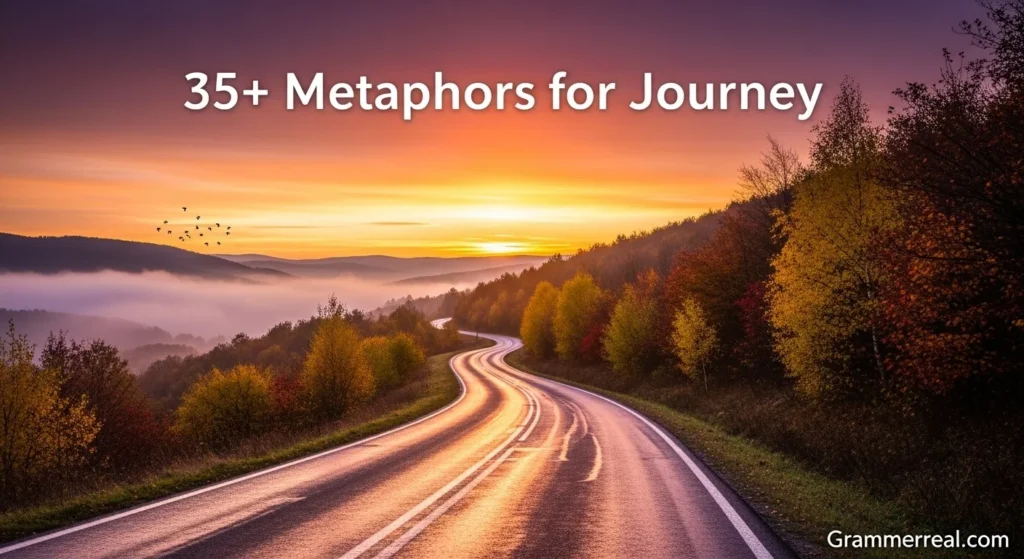
Picture a long road stretching far away. Some parts look smooth. Other parts bend and curve.
Meaning: A journey rarely follows a perfect path.
For example: “His career felt like a road that never stays straight.”
Life plans often change. People start in one direction and later move somewhere else. Unexpected turns appear along the way. Learning happens during those turns.
Traveling a winding road teaches patience. Each curve brings a new view and a new lesson.
A Climb Up a Tall Mountain
A mountain stands high and strong. Reaching the top requires effort.
Meaning: A journey may demand strength and determination.
For example: “Her education became a long mountain climb.”
Climbing slowly builds strength. Every step moves the traveler higher. Hard work may feel tiring, but progress appears little by little.
The view from the top makes the struggle worthwhile.
A River Flowing Toward the Sea
Rivers move steadily across land. Water travels around rocks and through valleys.
Meaning: A journey continues forward even when obstacles appear.
For example: “His life flowed like a river toward the sea.”
Rivers do not stop for small barriers. Water finds another direction. Progress works the same way.
Challenges appear during journeys. Persistence keeps movement alive.
A Train Moving Through Many Stations
Trains stop at many places before reaching the final stop.
Meaning: A journey contains many stages.
For example: “Her life felt like a train stopping at many stations.”
Each station represents a moment in life. Some stops feel short. Others last longer.
Travelers meet new people and learn new lessons along the way.
A Path Through a Dense Forest
A forest path may look narrow and quiet. Trees hide what lies ahead.
Meaning: A journey can feel uncertain and mysterious.
For example: “Starting his business felt like walking through a forest path.”
Limited visibility makes travelers cautious. Still, moving forward slowly reveals the next step.
Curiosity helps people continue when the path seems unclear.
A Long Bridge Over Deep Water
Bridges connect two separate places.
Meaning: A journey often links past experiences with future goals.
For example: “Graduation became a bridge to a new life.”
Walking across a bridge requires trust. The traveler leaves one side behind while moving toward another.
Change happens in that middle space.
A Garden Growing Through Seasons
Gardens do not grow overnight. Plants take time to bloom.
Meaning: A journey involves slow progress and patience.
For example: “His writing journey felt like growing a garden.”
Seeds turn into plants after care and time. Learning works the same way.
Small daily effort eventually creates strong results.
A Map Full of Unknown Roads
Maps show many possible routes.
Meaning: A journey involves choices and direction.
For example: “Her future looked like a map full of unknown roads.”
Travelers decide which path to follow. Some routes look easy. Others appear challenging.
Decision-making shapes the direction of every journey.
A Ship Crossing a Wide Ocean
Ships travel far across large waters.
Meaning: A journey may involve courage and adventure.
For example: “His dream felt like sailing across an ocean.”
Waves sometimes rise high. Storms sometimes appear. Navigation skills guide the ship safely forward.
Exploration brings discovery.
A Puzzle Slowly Coming Together
A puzzle starts with scattered pieces.
Meaning: A journey reveals understanding step by step.
For example: “Her life journey looked like a puzzle coming together.”
Each piece adds meaning. A full picture appears only after time.
Patience helps connect experiences.
A Ladder Rising Toward the Sky
Ladders allow people to climb higher.
Meaning: A journey may lead toward growth and improvement.
For example: “His career became a ladder toward success.”
Each step represents effort and learning.
Progress happens slowly but clearly.
A Candle Lighting the Way
A candle gives light in darkness.
Meaning: A journey may begin with small guidance.
For example: “His teacher became a candle lighting the way.”
One small source of help can guide someone through uncertainty.
Support makes difficult journeys easier.
A Story Written Chapter by Chapter
Books develop through many chapters.
Meaning: A journey unfolds over time.
For example: “Her life felt like a story with many chapters.”
Some chapters contain joy. Others show struggle.
Every part contributes to the final story.
A Footprint Trail Across Sand
Footprints appear behind a traveler walking on sand.
Meaning: A journey leaves memories and lessons.
For example: “His years of work left footprints behind him.”
Looking back shows how far someone has traveled.
Memories remind people of their growth.
A Kite Rising Higher in the Wind
Kites climb into the sky when the wind pushes them upward.
Meaning: A journey may lift someone higher with effort.
For example: “Her confidence rose like a kite in the wind.”
Wind may feel strong, yet it helps the kite rise.
Challenges sometimes create strength.
Why Journey Metaphors Matter
Journey metaphors help explain life experiences. Simple images make big ideas easier to understand. Travel images show movement, progress, and discovery.
People connect with these pictures because everyone experiences some type of journey. Education, careers, relationships, and dreams all follow paths.
Growth happens step by step. Progress appears slowly but clearly over time.
Conclusion
A journey can look like a road, a river, a mountain, or a ship crossing the sea. Each metaphor shows movement and change. Every step teaches something new.
Journeys rarely follow perfect plans. Obstacles appear. New paths open. Lessons grow from experience.
Moving forward matters more than reaching the destination quickly.
FAQs
Why is life often called a journey?
Life moves through stages, experiences, and changes just like traveling on a path.
What does a river metaphor show about journeys?
A river shows steady movement and the ability to flow around obstacles.
Why do writers use travel metaphors?
Travel images help readers easily imagine growth and progress.
Can journeys include challenges?
Yes. Difficult moments often teach the most important lessons.
What makes a journey meaningful?
Learning, growth, and experiences give value to the journey.