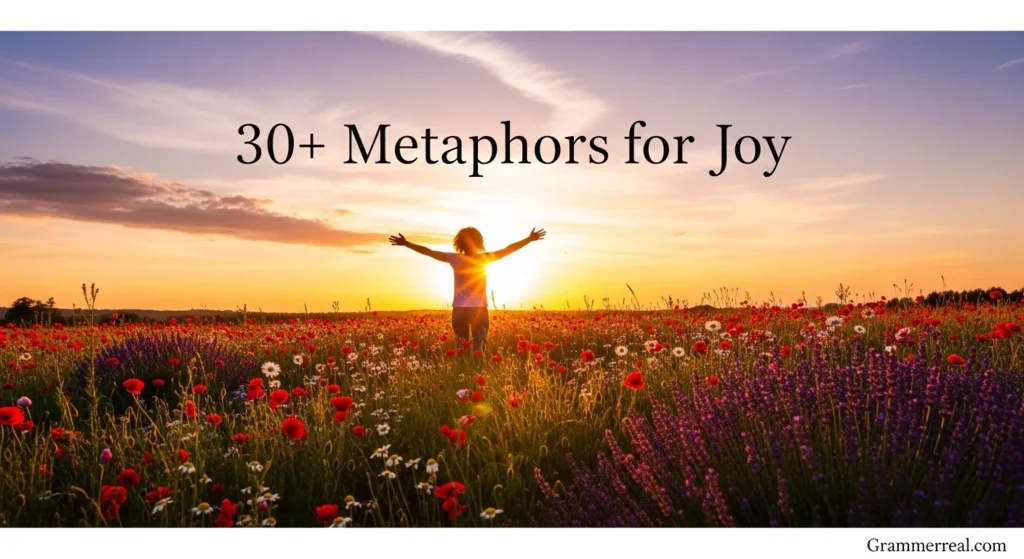
Joy is light. Joy is a warm feeling that spreads through the heart and mind. A happy moment can appear suddenly, just like sunshine after clouds. Smiles grow easily. Laughter rises without effort. People often search for ways to explain this powerful emotion.
Simple words sometimes feel too small to describe joy. Because of this, writers use metaphors. A metaphor connects joy with everyday images so readers can picture the feeling clearly. Through these comparisons, happiness becomes something we can almost see and touch.
Language does not need to be complex to show strong emotions. Clear images often work better than difficult words. The following metaphors use simple ideas that help explain the bright energy of joy.
Joy Like Sunshine on a Cold Morning
Cold mornings feel quiet and heavy. The body moves slowly when the air feels chilly. A sudden beam of sunlight can change that feeling quickly.
Meaning: Joy warms the heart.
Example: “Her laughter felt like sunshine on a cold morning.”
Warmth spreads across the body when sunlight touches the skin. Happiness works the same way. A joyful moment can melt sadness and bring comfort to the heart.
Sunshine also gives life to plants and people. In the same way, joy gives energy and motivation to continue moving forward.
Joy Like a Balloon Floating into the Sky
A balloon rises higher and higher without effort. The movement looks light and free.
Meaning: Joy lifts the spirit.
Example: “His heart floated like a balloon after hearing the good news.”
Heavy feelings often pull people down. Joy works in the opposite direction. A happy moment can make problems feel smaller.
Floating also suggests freedom. When people feel joyful, worries lose their tight hold.
Joy Like a Fountain of Sparkling Water
Water from a fountain jumps into the air again and again. The movement looks playful and alive.
Meaning: Joy feels lively and energetic.
Example: “Excitement bubbled like a fountain in her chest.”
Energy flows naturally when someone feels happy. Laughter, smiles, and bright expressions appear quickly. Joy spreads from one person to another just like splashing water spreads in every direction.
Joy Like Birds Dancing in the Sky
Birds fly freely above the ground. Their movement looks graceful and light.
Meaning: Joy brings a feeling of freedom.
Example: “His thoughts danced like birds in the open sky.”
Flying birds remind people that life can feel wide and open. Happiness removes emotional weight. A joyful mind feels calm and free.
Joy Like Fireworks in the Night
Fireworks burst with color and light. The sky becomes bright for a moment.
Meaning: Joy can feel exciting and powerful.
Example: “Her success exploded like fireworks.”
Some joyful moments arrive suddenly. Surprises, celebrations, and victories create strong bursts of happiness.
Fireworks do not last forever, yet their beauty stays in memory.
Joy Like Fresh Rain After Dry Days
Long dry days make the ground dusty and tired. Rain changes everything.
Meaning: Joy refreshes the spirit.
Example: “Kind words felt like rain after a long drought.”
Refreshing feelings help people breathe easier. Joy washes away stress and emotional dryness.
Nature shows that life grows stronger after rain. In the same way, happiness can renew a tired mind.
Joy Like Honey Dripping from a Spoon
Honey moves slowly and shines with sweetness.
Meaning: Joy can feel gentle and sweet.
Example: “Her voice carried joy like honey.”
Sweet moments often appear in small ways. Friendly smiles, warm hugs, and kind words create gentle happiness.
Life does not always need loud celebrations to feel joyful.
Joy Like a Child Running Through a Field
Children often run freely without worrying about time.
Meaning: Joy connects with pure happiness.
Example: “His heart ran like a child in a wide field.”
Simple pleasures often create the strongest joy. Playing, laughing, and enjoying nature can remind adults of childhood freedom.
Energy and excitement grow naturally in these moments.
Joy Like Music Filling a Room
Music can fill empty space with rhythm and emotion.
Meaning: Joy spreads through the environment.
Example: “Her happiness filled the house like music.”
One joyful person can brighten the entire atmosphere. Smiles spread quickly among groups of people.
Music creates harmony, and joy does the same within relationships.
Joy Like Light Breaking Through Clouds
Dark clouds may hide the sun for hours. Suddenly a ray of light appears.
Meaning: Joy can arrive after sadness.
Example: “Hope shone like light through clouds.”
Life includes difficult days. Happiness feels stronger when it appears after struggle.
Even a small moment of joy can change the entire mood.
Joy Like a Garden Full of Blooming Flowers
Gardens filled with flowers look colorful and alive.
Meaning: Joy represents beauty and growth.
Example: “Her success bloomed like a bright garden.”
Flowers do not appear instantly. Care and patience allow them to grow.
Joy often grows from effort, kindness, and patience.
Joy Like a Warm Campfire at Night
Campfires glow softly in the dark. The warmth brings comfort.
Meaning: Joy creates feelings of connection.
Example: “Their laughter felt like a warm campfire.”
People gather around fires to share stories. Happiness often grows when people spend time together.
Warmth and friendship create lasting joy.
Joy Like a Kite Dancing in the Wind
A kite moves freely in the sky while the wind guides it.
Meaning: Joy feels playful and light.
Example: “Her mood flew like a kite in the wind.”
Playfulness keeps the heart young. Moments of fun remind people that life is not only about work.
Joy grows when people allow themselves to enjoy simple experiences.
Joy Like Morning Dew on Fresh Grass
Morning dew sparkles when sunlight touches it.
Meaning: Joy can appear in quiet moments.
Example: “Peaceful joy rested like dew on his heart.”
Small moments often hold deep happiness. Calm mornings, soft sunlight, and quiet breathing can create gentle joy.
Not every joyful moment needs loud excitement.
Joy Like a River Flowing Smoothly
Rivers move steadily toward the ocean.
Meaning: Joy can feel calm and steady.
Example: “Contentment flowed through her like a quiet river.”
Happiness does not always rush or explode. Sometimes it moves slowly and peacefully.
Long-lasting joy often feels calm rather than loud.
Why Metaphors Help Explain Joy
Joy is powerful but sometimes difficult to describe directly. Metaphors connect emotions with clear images. Readers can imagine sunshine, balloons, gardens, and rivers more easily than abstract feelings.
Simple comparisons help people understand emotional experiences. Clear images make writing stronger and more memorable.
Language becomes vivid when emotions are linked with everyday objects and scenes.
Conclusion
Metaphors for joy help turn a feeling into a picture. Joy can shine like sunshine, float like a balloon, sparkle like fireworks, or bloom like flowers. Each metaphor reveals a different side of happiness.
Some joyful moments feel quiet and gentle. Other moments burst with excitement and energy. Both forms are valuable parts of life.
Joy grows through kindness, connection, and appreciation of simple moments.
FAQs
Why do writers use metaphors for joy?
Metaphors help readers imagine emotions through clear pictures.
Can joy feel calm instead of exciting?
Yes. Joy can feel peaceful like a slow river.
What makes joy powerful?
Joy spreads easily and lifts the spirit.
Can small moments create joy?
Yes. Simple experiences often bring deep happiness.
Is joy always loud and visible?
No. Joy can be quiet, gentle, and personal.



