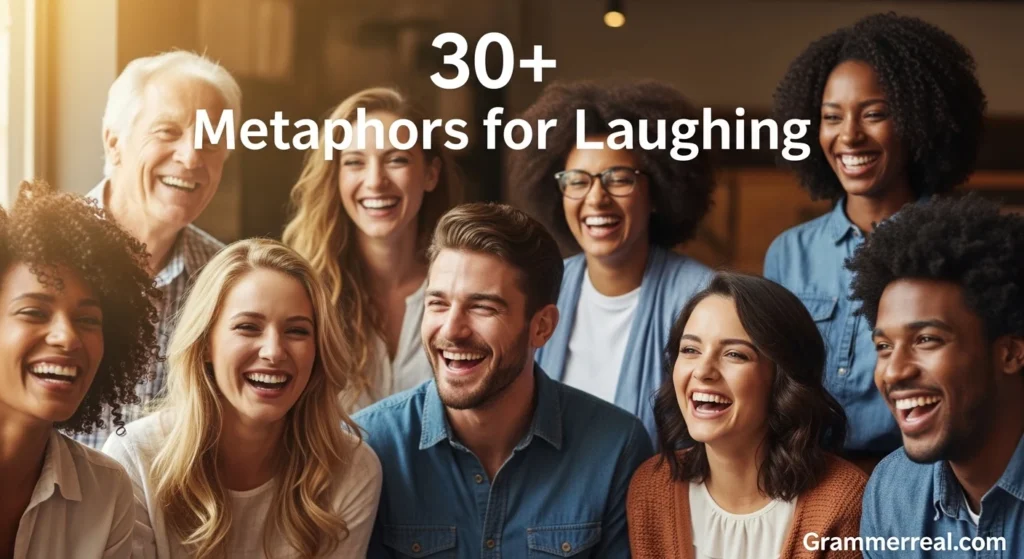
Laughing is a sound that feels alive. It can be soft like a whisper or loud like a drum. It can fill a small room or spread across a big field. Joy often shows itself through laughter. Hard days feel lighter when someone laughs. Heavy hearts feel less heavy when a smile turns into sound.
People laugh for many reasons. Some laugh because they feel happy. Others laugh because they feel nervous. Children laugh freely. Adults sometimes forget how simple laughing can be. Writers use metaphors to explain laughter in fun and clear ways. Easy images help young readers understand feelings better.
Below are many different metaphors for laughing. Each section explains the image, gives meaning, and adds simple details. The wording is longer, but the language stays easy.
Like Bubbles Floating in the Air
Bubbles rise quickly and shine in the light.
Meaning: Laughing can feel light and playful.
For example: “Her laughter floated like bubbles.”
Bubbles do not stay in one place. They move freely and pop with joy. Happy laughter feels the same way. It rises from the heart and spreads around. Playful moments often create this kind of sound.
Light laughter makes a room feel brighter.
Like Bells Ringing on a Sunny Morning
Church bells or small hand bells make clear, bright sounds.
Meaning: Laughing can sound cheerful and sweet.
For example: “His laugh rang like tiny bells.”
Bells are easy to hear. Their sound travels far. Cheerful laughter works the same way. It grabs attention in a happy way.
Bright sound brings bright feelings.
Like Water Splashing in a Clear Stream
Water jumps and splashes over small rocks.
Meaning: Laughing can be lively and full of energy.
For example: “The children’s laughter splashed like water.”
Streams move quickly and happily. Kids often laugh with that same fast energy. Playtime brings this kind of joyful sound.
Energy spreads when laughter flows.
Like Fireworks Lighting Up the Sky
Fireworks burst with color and noise.
Meaning: Laughing can explode with excitement.
For example: “His laugh burst like fireworks.”
Some laughs are small. Others are big and loud. Excited laughter fills the space just like bright fireworks fill the night sky.
Excitement grows when people laugh together.
Like a Warm Blanket on a Cold Day
Blankets bring comfort and safety.
Meaning: Laughing can make people feel relaxed and safe.
For example: “Her soft laugh felt like a warm blanket.”
Comforting laughter is gentle. It makes others feel welcome. Calm joy can heal sadness slowly.
Warm feelings often follow gentle laughter.
Like Wind Chimes in a Soft Breeze
Wind chimes create soft music when air moves them.
Meaning: Laughing can be light and musical.
For example: “Her giggle sounded like wind chimes.”
Wind chimes do not shout. Their sound feels peaceful. Soft giggles can calm a room.
Music hides inside happy sound.
Like Sunshine Breaking Through Clouds
Sunlight appears after gray clouds move away.
Meaning: Laughing can remove sadness.
For example: “His laugh was like sunshine after rain.”
Cloudy moods sometimes cover the day. A good joke can clear that feeling. Joy shines when laughter appears.
Hope grows brighter in happy moments.
Like a Train Whistle in the Distance
Train whistles are strong and clear.
Meaning: Laughing can be loud and powerful.
For example: “His big laugh sounded like a train whistle.”
Some people laugh with their whole body. Deep laughter shakes shoulders and fills the air.
Strong joy makes strong sound.
Like Popcorn Popping in a Pan
Popcorn jumps and pops quickly.
Meaning: Laughing can come in quick bursts.
For example: “Her giggles popped like popcorn.”
Short laughs sometimes come again and again. Funny stories can cause quick little bursts of sound.
Small pops can bring big smiles.
Like Birds Singing at Sunrise
Birds sing when morning begins.
Meaning: Laughing can signal happiness and new energy.
For example: “Their laughter was like birds at sunrise.”
Morning feels fresh. Birdsong feels hopeful. Happy laughter can mark the start of a good day.
Fresh energy rises with cheerful sound.
Like Waves Rolling Onto the Shore
Waves move forward again and again.
Meaning: Laughing can come in repeated waves.
For example: “Their laughter rolled like ocean waves.”
One laugh can lead to another. Group laughter often grows bigger over time.
Shared joy moves like water.
Like Leaves Rustling in Autumn
Leaves make soft sounds when wind touches them.
Meaning: Laughing can be quiet but steady.
For example: “Her soft laugh rustled like leaves.”
Not all laughter is loud. Gentle laughter still carries warmth.
Soft joy still matters.
Like a Drum Beating at a Festival
Drums create rhythm and excitement.
Meaning: Laughing can fill a place with life.
For example: “His laugh beat like a festival drum.”
Celebrations often include loud joy. Big laughter brings people together.
Energy increases with bold sound.
Like Ice Cracking on a Frozen Lake
Ice breaks with a sharp noise.
Meaning: Laughing can break tension.
For example: “Her joke cracked the silence like ice.”
Quiet rooms sometimes feel tight. A sudden laugh can break that pressure.
Tension melts when joy appears.
Like Stars Twinkling in the Night
Stars shine softly in darkness.
Meaning: Laughing can bring light to sad moments.
For example: “Her laughter twinkled like stars.”
Even small laughter can shine in hard times. Dark days feel less heavy when someone smiles.
Small light makes a difference.
Like a Kite Dancing in the Sky
Kites move freely in the wind.
Meaning: Laughing can feel free and full of life.
For example: “His laughter danced like a kite.”
Freedom shows in happy sound. Carefree joy lifts the spirit.
Light hearts laugh easily.
Why Metaphors Help Explain Laughing
Laughing is more than just noise. It shows emotion. It builds connection and it removes stress. Using simple comparisons makes it easier to describe different types of laughter.
Some laughs feel soft. Some feel loud and some feel comforting. Metaphors give each type a clear picture.
Easy language helps young readers understand feelings clearly.
Conclusion
Metaphors for laughing show how joyful and powerful it can be. Laughing can sound like bells, bubbles, fireworks, birds, waves, or wind chimes. Each image shows a different kind of happiness.
Joy spreads quickly. Smiles grow easily. Laughter connects hearts.
Sharing laughter makes life brighter and lighter.
FAQs
Why is laughing compared to bubbles?
Bubbles are light and playful, just like happy laughter.
Can laughter help people feel better?
Yes. Laughing can reduce stress and improve mood.
Why does group laughter grow louder?
One person’s joy often makes others laugh too.
Is soft laughter important?
Yes. Quiet laughter can still bring warmth and comfort.
Why do writers use metaphors for laughing?
Metaphors make feelings easier to picture and understand.