Lying can look small at first. Truth may feel simple, but lies make things messy. Honesty builds trust, while false words slowly break it.
People lie for many reasons. Fear can push someone to hide facts. Shame can make a person change a story. Sometimes someone lies to avoid trouble. Other times, a lie is told to protect feelings. Even when the reason feels small, the effect can grow big.
Writers use metaphors to explain lying because it is not always easy to see. False words may sound smooth. Hidden truth may stay buried for a while. Simple comparisons help us understand how lying works and why it causes harm.
Below are many clear metaphors for lying. Each one explains the idea in an easy way with more detail and a slightly different style.
Like a Cracked Mirror
A mirror with cracks cannot show a clear face.
Meaning: Lying distorts reality.
For example: “His story was like a cracked mirror.”
Broken glass changes the image. In the same way, lies change facts. The picture may look real at first glance. Looking closer reveals damage. Trust weakens when truth is not clear.
Like Building a House on Sand
Sand shifts under pressure.
Meaning: Lies create weak foundations.
For example: “Their friendship stood on sand.”
Strong houses need firm ground. False words create unstable support. Over time, the structure falls apart. Stability only comes from honesty.
Like a Snowball Rolling Downhill
A small snowball grows bigger as it rolls.
Meaning: One lie often leads to more lies.
For example: “Her excuse became a snowball.”
Small lies rarely stay small. Extra details are added to protect the first lie. The story grows harder to manage. Soon, it becomes too large to control.
Like a Shadow That Follows You
Shadows move wherever you go.
Meaning: Lies often return later.
For example: “The lie followed him like a shadow.”
Even if someone tries to forget, false words stay close. The truth often appears in time. Shadows cannot be escaped in light.
Like Rust on Metal
Rust slowly eats away at iron.
Meaning: Lying damages trust over time.
For example: “Secrets rusted their bond.”
Damage does not happen instantly. Small dishonesty weakens relationships step by step. Clean metal shines. Rusted metal breaks.
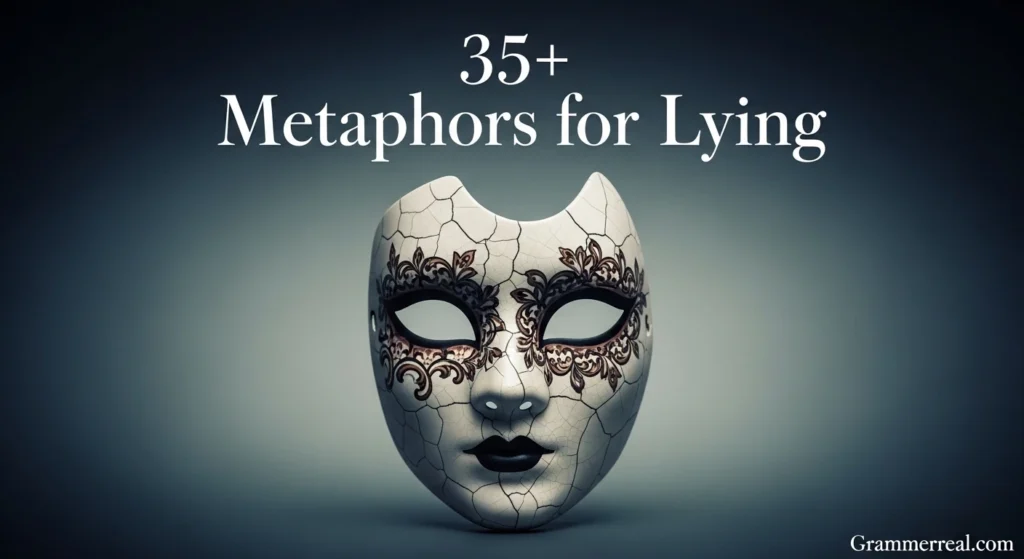
Like a Mask Covering the Face
Masks hide true expressions.
Meaning: Lies hide real feelings.
For example: “She wore a mask of fake smiles.”
Hiding truth may feel safe for a moment. Real identity remains underneath. Removing the mask allows honesty to breathe.
Like Smoke Filling a Room
Smoke clouds the air and blocks vision.
Meaning: Lies create confusion.
For example: “His words filled the room with smoke.”
Clear air allows easy sight. False stories blur reality. Confusion spreads quickly when facts are hidden.
Like a Spider Web
Webs look thin but trap insects easily.
Meaning: Lies trap the person who tells them.
For example: “He got stuck in his own web.”
Creating lies requires careful memory. One mistake can trap the liar. Escape becomes harder with each added detail.
Like Borrowed Clothes That Do Not Fit
Clothes that are not yours may feel uncomfortable.
Meaning: Lies feel unnatural.
For example: “The excuse fit him like borrowed clothes.”
False words may sound strange. Honest speech feels more natural. Discomfort often shows when someone is not telling the truth.
Like a Balloon Filled with Too Much Air
Overfilled balloons burst.
Meaning: Lies eventually explode.
For example: “The secret was a balloon ready to pop.”
Pressure builds when truth is hidden. Fear increases. When the truth comes out, damage may be sudden and loud.
Like Painting Over Dirt
Paint may cover stains for a while.
Meaning: Lies hide problems instead of fixing them.
For example: “He painted over the truth.”
Real cleaning removes dirt. Covering it does not solve anything. Problems return when they are not faced honestly.
Like a Fake Smile in a Photograph
A fake smile may look real in pictures.
Meaning: Lies create false appearances.
For example: “Her happiness was a photo smile.”
Surface images can trick people. Deep feelings tell a different story. Real joy does not need pretending.
Like a Weak Thread in a Shirt
One weak thread can cause tearing.
Meaning: Small lies can damage strong bonds.
For example: “That lie was a weak thread.”
Strong fabric needs strong threads. Relationships need honesty. One weak part may spread damage across the whole piece.
Like Fog Covering a Road
Fog makes driving dangerous.
Meaning: Lies make decisions harder.
For example: “The false story was thick fog.”
Clear roads allow safe travel. Fog hides obstacles. Confusion leads to mistakes.
Like a Locked Door Without a Key
Locked doors block entry.
Meaning: Lies block real connection.
For example: “Dishonesty locked the door between them.”
Honesty opens space for trust. False words close hearts. Communication becomes harder when truth is missing.
Like a Broken Compass
A compass shows direction.
Meaning: Lies lead people the wrong way.
For example: “His advice was a broken compass.”
Wrong direction creates bigger problems. Truth guides safely. False guidance causes loss.
Understanding Why People Lie
Fear often causes lying. Embarrassment may also push someone to hide facts. Desire for attention sometimes leads to false stories. Short-term gain can motivate dishonesty.
Even though reasons may seem understandable, results are often harmful. Trust once broken takes time to repair. Honesty rebuilds slowly.
Speaking truth may feel difficult at first. Long-term peace grows from honesty.
Conclusion
Metaphors for lying help explain the harm caused by false words. Lies can be like cracked mirrors, weak threads, foggy roads, rusted metal, or overfilled balloons. Each image shows how dishonesty creates confusion, damage, and instability.
False words may feel easy in the moment. Truth builds stronger bonds in the long run. Honesty clears the air. Trust grows with clear speech. Strong relationships stand on truth.
FAQs
Why do people lie?
People lie because of fear, shame, or the wish to avoid trouble.
Can one small lie cause damage?
Yes. Even small lies can grow bigger and weaken trust.
How can trust return after lying?
Trust returns slowly through honesty and changed behavior.
Why are lies compared to rust?
Rust slowly damages metal, just like lies slowly damage relationships.
Is telling the truth always better?
Yes. Truth may feel hard at first, but it creates stronger and healthier bonds.



