The air feels thick. Your shoulders rise without you noticing. Your heart taps faster, like rain hitting a metal roof. A small problem grows big in your mind, and your thoughts start to race in circles. You stare at the wall, yet your mind keeps moving.
This is stress. You cannot see it, but you feel it in your body, your breath, and your thoughts. Now imagine giving that feeling a shape, a sound, or a picture. Suddenly, it becomes easier to understand. That is where metaphors for stress come in. They turn invisible pressure into something you can see, name, and manage.
Stress as a Heavy Backpack Filled With Stones
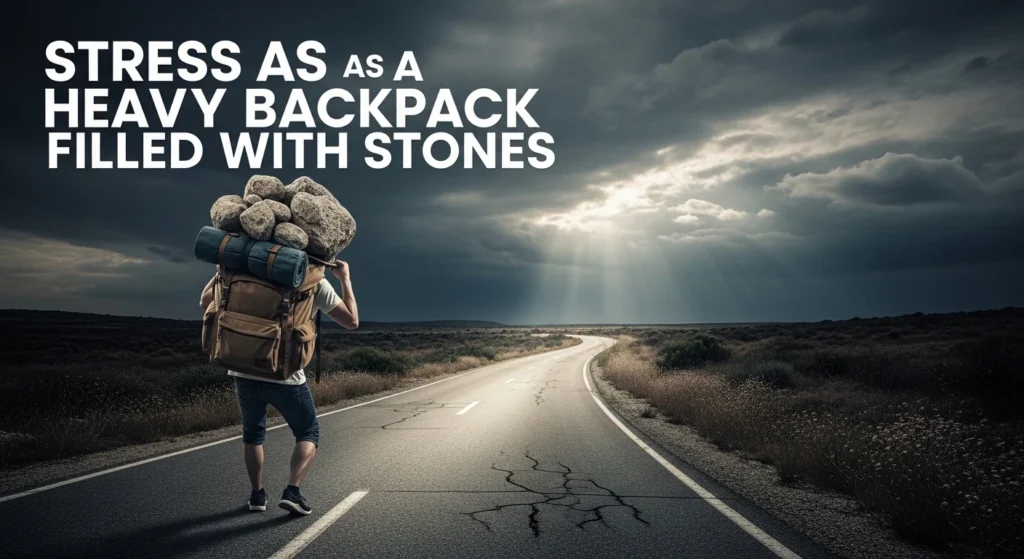
Imagine carrying a backpack full of stones all day. Each step feels harder than the last.
Meaning: Stress represents emotional weight.
For example: “He walked into the office with a backpack full of worries.”
This metaphor shows pressure. Small problems may seem light at first. However, when they pile up, they become difficult to carry. In addition, the weight can slow movement and drain energy.
Stress as a Storm Brewing Inside
A storm does not begin loudly. It often gathers slowly before thunder strikes.
Meaning: Stress builds gradually and can explode if ignored.
For instance: “An inner storm began to form before the deadline.”
This image highlights tension. Dark clouds represent worry. Thunder represents emotional outbursts. Therefore, managing stress early can prevent stronger reactions later.
Stress as a Tight Knot in the Chest
A knot feels twisted and uncomfortable.
Meaning: Stress causes physical tension.
Example: “A tight knot formed in her chest before the interview.”
This metaphor connects stress with the body. Many people feel pressure in their shoulders, stomach, or head. As a result, the comparison feels realistic and relatable.
Stress as a Ticking Clock That Never Stops
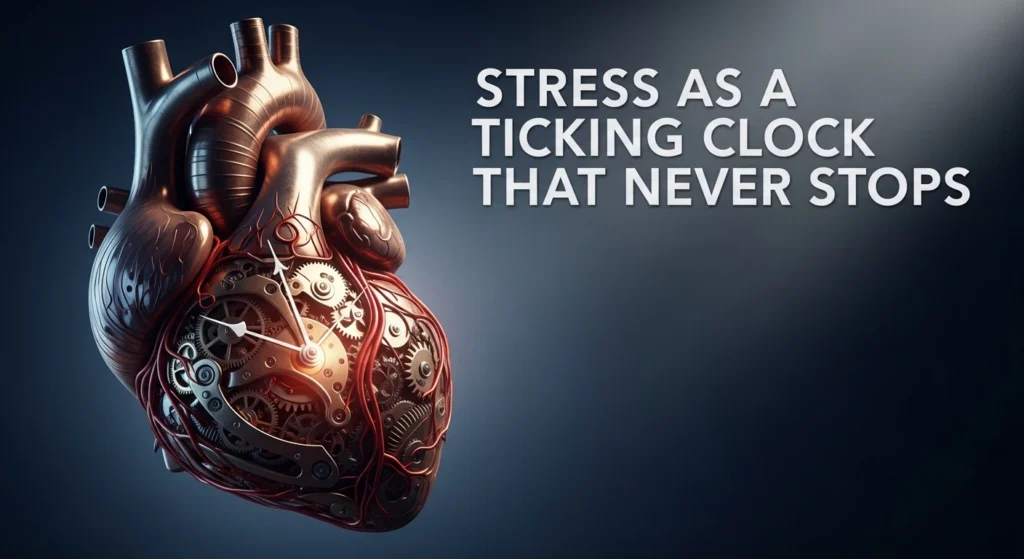
A clock keeps moving forward, even when we wish time would slow down.
Meaning: Stress often comes from pressure and deadlines.
For example: “The ticking clock echoed in his mind.”
This image suggests urgency. Moreover, it shows how stress can feel constant and repetitive.
Stress as a Crowded Highway During Rush Hour
A highway filled with cars moves slowly and feels chaotic.
Meaning: Stress represents mental overload.
For instance: “Her thoughts rushed like traffic at peak hour.”
When too many responsibilities compete for attention, the mind feels blocked. Therefore, this metaphor shows confusion and lack of focus.
Stress as a Balloon Ready to Burst
A balloon stretches as air fills it.
Meaning: Stress builds pressure until release.
Example: “He felt like a balloon ready to burst.”
This metaphor highlights emotional limits. If someone does not release tension through rest or communication, the pressure may explode unexpectedly.
Stress as a Shadow That Follows Everywhere
A shadow stays close and moves with the body.
Meaning: Stress can feel constant and unavoidable.
For example: “Worry followed her like a shadow.”
This image shows how stress can remain present even during quiet moments. However, shadows disappear when light increases. Similarly, stress often reduces with clarity and support.
Stress as a Cage Around the Mind
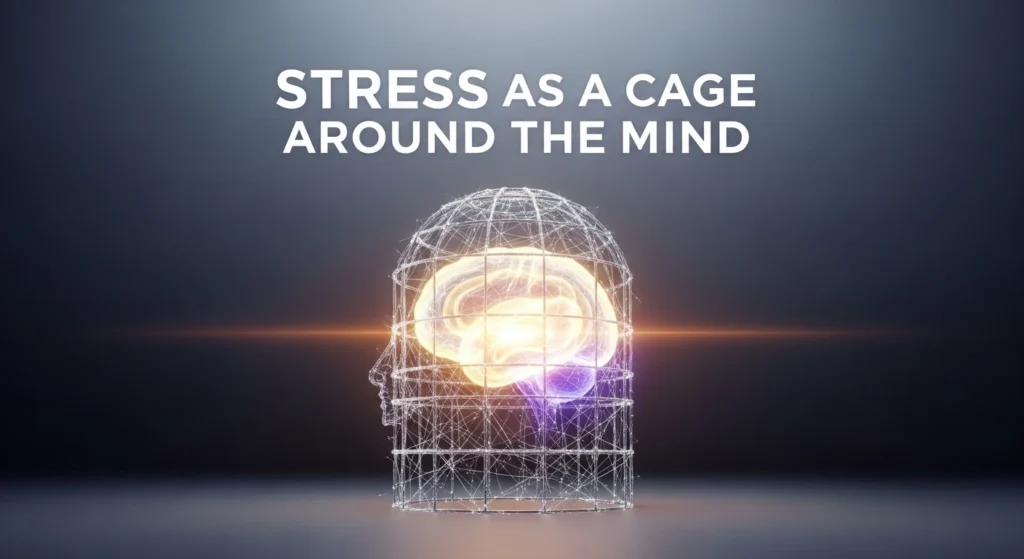
A cage limits movement.
Meaning: Stress restricts freedom and creativity.
For instance: “Deadlines built a cage around his thoughts.”
This metaphor highlights feeling trapped. When stress grows too strong, it blocks clear thinking and decision-making.
Stress as a Fire That Burns Too Hot
Fire provides warmth. However, uncontrolled fire causes damage.
Meaning: Stress can motivate, but too much can harm.
Example: “Pressure burned like an uncontrolled flame.”
This comparison shows balance. A small amount of stress may increase focus. On the other hand, excessive stress may cause exhaustion.
Stress as Waves Crashing Against the Shore
Ocean waves can hit repeatedly without pause.
Meaning: Stress can feel continuous and overwhelming.
For example: “Problems crashed over him like relentless waves.”
This metaphor highlights repetition. One issue may fade, but another quickly follows.
Why Writers Use Metaphors for Stress
Stress feels invisible. You cannot see it directly. Therefore, metaphors give it shape and movement.
For example, describing stress as a “heavy backpack” makes the feeling easier to imagine. Calling it a “storm” shows emotional intensity. These images help readers connect with the experience.
Moreover, simple metaphors improve clarity and emotional understanding.
Positive Metaphors That Show Managing Stress
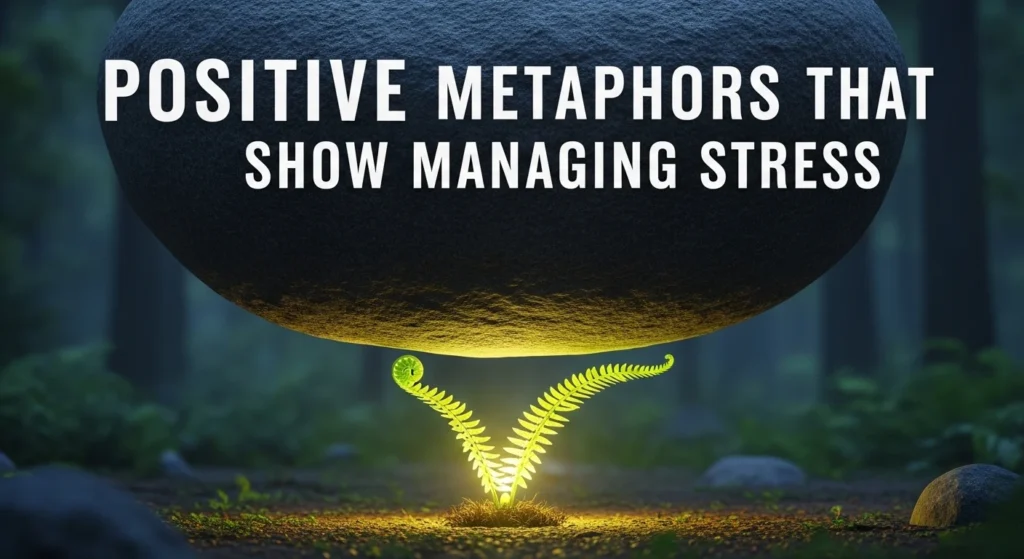
Not all stress metaphors need to feel negative. Some images can show control and release.
- Letting steam escape from a kettle – releasing tension safely.
- Untying a knot slowly – solving problems step by step.
- Clearing traffic lane by lane – organizing tasks gradually.
These comparisons show that stress can be reduced with awareness and action.
How to Use Stress Metaphors in Writing
Keep comparisons simple and clear. Focus on one image at a time.
Weak example: “Stress was like a stormy highway with ticking clocks and bursting balloons.”
Better example: “Stress felt like a storm building in his chest.”
Short sentences improve readability. In addition, natural transitions help ideas flow smoothly.
The Emotional Depth Behind Stress Imagery
Stress often connects with fear, pressure, and uncertainty. However, it can also connect with growth. For instance, controlled fire strengthens steel. Similarly, manageable stress can improve performance.
Understanding this balance makes writing more realistic. Stress is not always negative. It depends on intensity and response.
Take a Moment to Reflect
What does stress feel like to you?
Is it a heavy backpack? Is it a ticking clock? Or is it a rising storm?
Your personal experience shapes the metaphor that fits best.
Conclusion
Stress may feel strong, confusing, and hard to explain, yet metaphors turn that heavy feeling into something clear and manageable. When you describe stress as a storm, a heavy load, or a boiling pot, you give your mind a simple way to understand what is happening inside you. As a result, you feel less lost and more aware. You can slow down, take action, and even share your feelings with others in a natural way. In daily life, writing, or conversation, these metaphors act like gentle tools that help you express, release, and handle pressure with more ease. Over time, this small habit builds confidence, improves communication, and brings calm into moments that once felt overwhelming.
FAQs
Why use metaphors to describe stress?
Because stress is invisible, and metaphors help make it easier to imagine.
Can stress ever be helpful?
Yes. Small amounts of stress can improve focus and motivation.
Why does stress feel physical sometimes?
Because the body reacts to pressure with tension and increased energy.
How can I create my own metaphor for stress?
Think about how stress feels in your body or mind. Then compare it to something heavy, fast, tight, or intense.
Why should I use metaphors to describe stress?
They make your feelings easier to explain and understand. They also help you think clearly and reduce confusion.
Can metaphors really help reduce stress?
Yes, they can. When you describe stress clearly, you feel more in control and less overwhelmed.
Where can I use stress metaphors in daily life?
You can use them in writing, social media posts, conversations, journaling, or even personal reflection to express your emotions better.



