The wind carries a salty smell. Waves rise, curl, and crash with a deep, steady rhythm. You stand at the edge of the shore, feeling the cool water touch your feet and pull back again. The ocean never stays still. It moves, breathes, and speaks in its own language.
Now think about words. Language also moves like the ocean. It flows with emotion. It rises with ideas and it deepens with meaning.
That is where idioms for ocean come in.
Ocean idioms use the sea to express thoughts, feelings, and life situations. They paint pictures in the mind. They turn simple ideas into vivid expressions. Most importantly, they help you speak and write in a way that feels alive, clear, and memorable.
In this article, you will explore ocean idioms, learn their meanings, see real-life uses, and practice them in fun ways. So, let’s dive in.
What the Ocean Truly Represents
The ocean often symbolizes:
Depth of emotion Mystery Power Freedom Calm and chaos The unknown Endlessness Life’s journey
Although the surface of the ocean may look smooth, deep currents move below. In the same way, people often carry deep thoughts and emotions beneath what others can see. Because of this hidden depth, ocean metaphors feel natural and meaningful.
The ocean also represents contrast. It can appear peaceful at sunrise and violent during a storm. It can comfort and frighten at the same time. This dual nature makes it powerful in storytelling.
Why the Ocean Makes a Strong Metaphor
The ocean is something almost everyone understands. Even if someone has never seen it in person, they have seen pictures or heard its sound. Therefore, when you compare something to the ocean, the image becomes clear immediately.
Instead of saying, “She felt very emotional,” you might say, “Her feelings were like the ocean.” That sentence suggests depth, movement, and intensity. Through metaphor, emotion becomes visible.
The Ocean as Deep Emotion
The ocean stretches far beyond what the eye can see.
Meaning: Emotions can be deep and complex.
Example idea: “His sadness felt like an ocean with no shore.”
This metaphor shows intensity. It suggests that feelings may feel endless or overwhelming.
At the same time, the ocean holds beauty in its depth. Therefore, this image can also represent strong love or passion.
The Ocean as Mystery
Much of the ocean remains unexplored.
Meaning: The ocean can symbolize the unknown.
Example idea: “Her mind was an ocean of hidden thoughts.”
This image highlights curiosity and depth. It reminds us that not everything is visible on the surface.
The Ocean as Strength and Power
Waves can crash against rocks with force.
Meaning: The ocean represents power and unstoppable energy.
Example idea: “His determination moved like powerful waves.”
Even when rocks stand firm, waves return again and again. This metaphor suggests persistence and strength.
The Ocean as Calm and Peace
On quiet days, the ocean reflects the sky.
Meaning: The ocean can represent inner peace.
Example idea: “Her heart was calm like a still sea.”
This image feels soothing. It shows emotional balance and clarity.
The Ocean as Chaos
Storms can turn the sea violent and unpredictable.
Meaning: The ocean can represent emotional turmoil.
Example idea: “His thoughts crashed like waves in a storm.”
This metaphor captures confusion and stress.
The Ocean as Freedom
The horizon of the ocean looks endless.
Meaning: The ocean symbolizes openness and possibility.
Example idea: “Standing by the water felt like staring into freedom.”
Because the ocean stretches beyond sight, it suggests unlimited potential.
The Ocean as a Journey
Ships travel across oceans to reach new lands.
Meaning: The ocean represents life’s path and adventure.
Example idea: “Their lives sailed across the ocean of time.”
This metaphor emphasizes movement and discovery.
The Ocean as Connection
All oceans connect across the world.
Meaning: The ocean can symbolize unity and shared experience.
Example idea: “We are drops in the same ocean.”
This image suggests that individuals are part of something larger.
The Emotional Weight of the Ocean
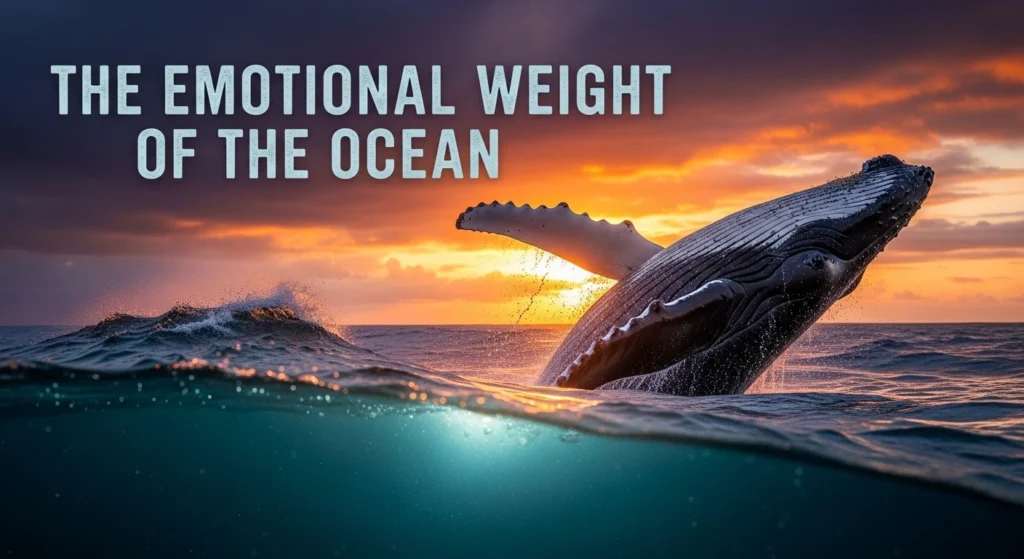
The ocean can feel peaceful or overwhelming depending on perspective. When someone says, “I’m drowning in an ocean of problems,” they describe being overwhelmed. However, when someone says, “I float peacefully on an ocean of calm,” they describe comfort.
Because the ocean carries both extremes, it works well for many emotions.
How Writers Use Ocean Metaphors
Writers often use the ocean to describe love, grief, fear, and hope. A character might have “waves of anger.” Someone may speak of “an ocean of tears.” These phrases create clear pictures.
Instead of long explanations, one strong image communicates depth and movement instantly.
A Personal Reflection
Think about your current feelings.
Do they feel calm like a quiet sea? Do they feel strong like rising waves?
Choosing an ocean image can help you understand what you are experiencing.
Using Ocean Metaphors in Everyday Language
Rather than simply saying, “I feel overwhelmed,” you could describe it as, “I’m drowning in waves.” To convey a sense of calm, try, “My mind is like a calm sea,” instead of just saying, “I feel peaceful.” When highlighting abundance or possibilities, you might express it as, “The horizon is wide like the ocean,” rather than merely stating, “There are many opportunities.”
These expressions make language richer and more emotional.
Conclusion
Ocean idioms bring life to language. They turn simple ideas into powerful expressions. When you understand phrases like “a drop in the ocean” or “in deep water,” you gain tools to express emotions clearly and creatively. Moreover, these idioms help you connect thoughts with vivid imagery, making your writing and speech more engaging and memorable. So, keep practicing, keep exploring, and let your words flow like waves—natural, deep, and full of meaning.
FAQs
Why is the ocean often used to describe emotions?
Because emotions, like the ocean, can be deep, powerful, and constantly moving.
What does “an ocean of tears” mean?
It suggests a large amount of sadness or crying.
How does the ocean symbolize freedom?
Its wide horizon and open space represent endless possibility.
Can the ocean represent both peace and danger?
Yes. Calm waters symbolize peace, while storms represent chaos or conflict.
How can someone create their own ocean metaphor?
Think about how the ocean feels to you — calm, deep, strong, or mysterious — and connect that feeling to your experience.



