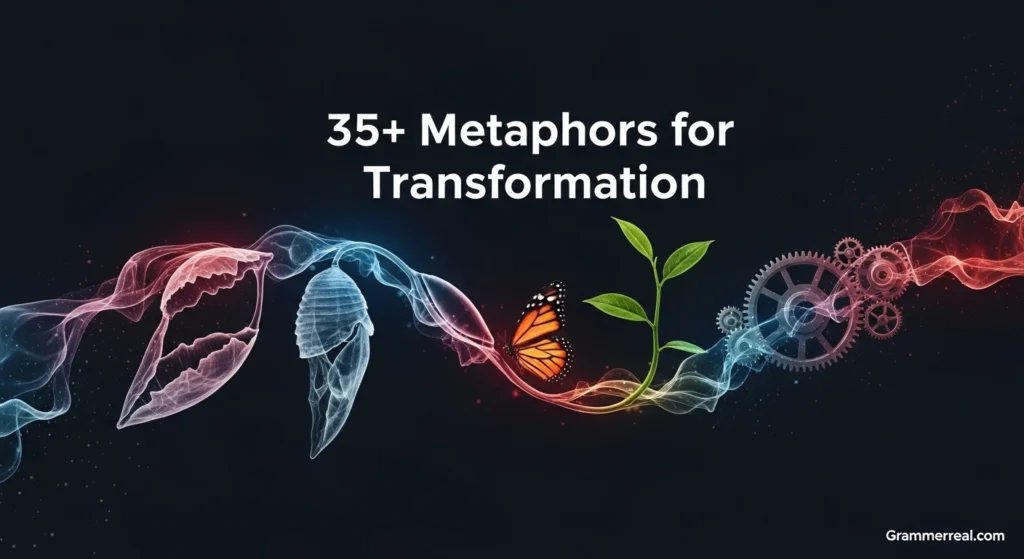
The air smells like rain just before it falls—heavy, electric, full of quiet promise. A leaf trembles on a branch, caught between staying and letting go. Somewhere deep in the soil, a seed splits open in the dark, unseen but unstoppable. Change rarely announces itself with noise. Instead, it whispers, stirs, and slowly reshapes everything it touches.
That quiet reshaping is what we call transformation.
At its heart, transformation means becoming something new while still carrying traces of what came before. It is not just change—it is deep, meaningful evolution. And because transformation can feel confusing or overwhelming, metaphors become our guide. They give shape to the invisible. They turn emotions into images we can understand, feel, and use.
In this article, we will explore powerful metaphors for transformation, learn how to use them creatively, and discover how they can sharpen your writing, deepen your thinking, and even shift how you see your own life.
The Hidden Stage Before Change
Every transformation begins quietly. Before a butterfly appears, a caterpillar disappears into a cocoon. Before a sunrise lights the sky, darkness deepens. In the same way, personal change often starts in silence.
Meaning: Transformation includes preparation and internal work.
Example idea: “She stepped into a cocoon of reflection before emerging stronger.”
During this hidden stage, growth may not look impressive from the outside. However, deep changes are forming beneath the surface. Although progress feels slow, it is still progress.
Moreover, this stage teaches patience. Real transformation cannot be rushed.
Fire as a Symbol of Renewal
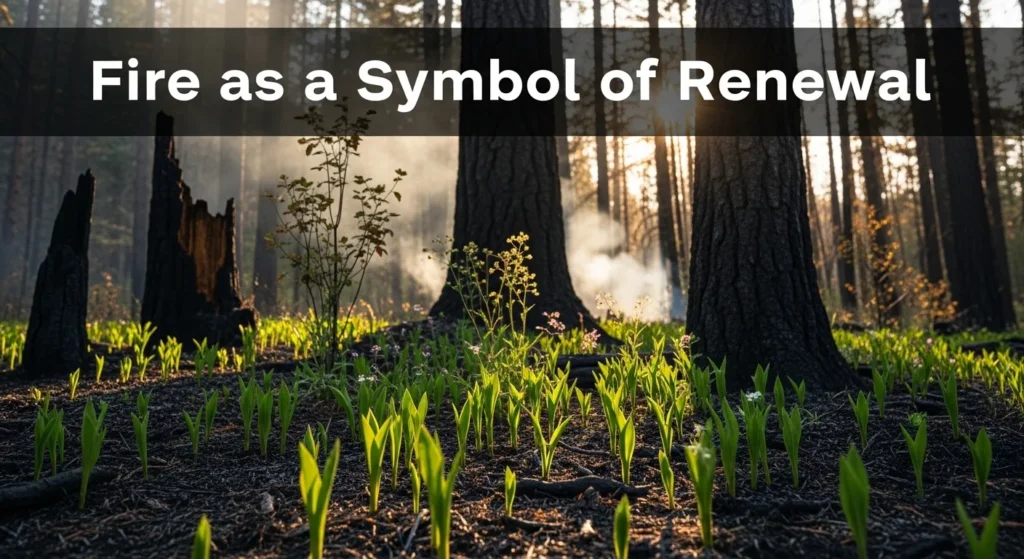
Fire destroys, but it also clears space for new life. Forests sometimes grow stronger after controlled burns. Metal becomes flexible and reshaped in intense heat.
Meaning: Difficult experiences can refine a person.
Example idea: “The hardship passed through him like fire, shaping something stronger.”
Pain often feels overwhelming. Nevertheless, it can remove weaknesses and reveal strength. Just as gold is purified in flame, character can deepen through challenge.
Water Changing Form
Water shifts between liquid, ice, and vapor. Although its form changes, its essence remains the same.
Meaning: Transformation does not erase identity; it reshapes expression.
Example idea: “She changed like water turning to steam — same spirit, new direction.”
Sometimes people fear change because they think they will lose themselves. In reality, transformation often reveals a truer version of who they are.
The Phoenix Rising
The phoenix is a mythical bird that burns and rises from its ashes.
Meaning: New beginnings can follow complete endings.
Example idea: “After failure, he rose like a phoenix.”
Although loss feels final, it may create space for renewal. This metaphor emphasizes resilience and courage.
Furthermore, the phoenix reminds us that transformation sometimes requires letting something old end completely.
A Seed Breaking Open
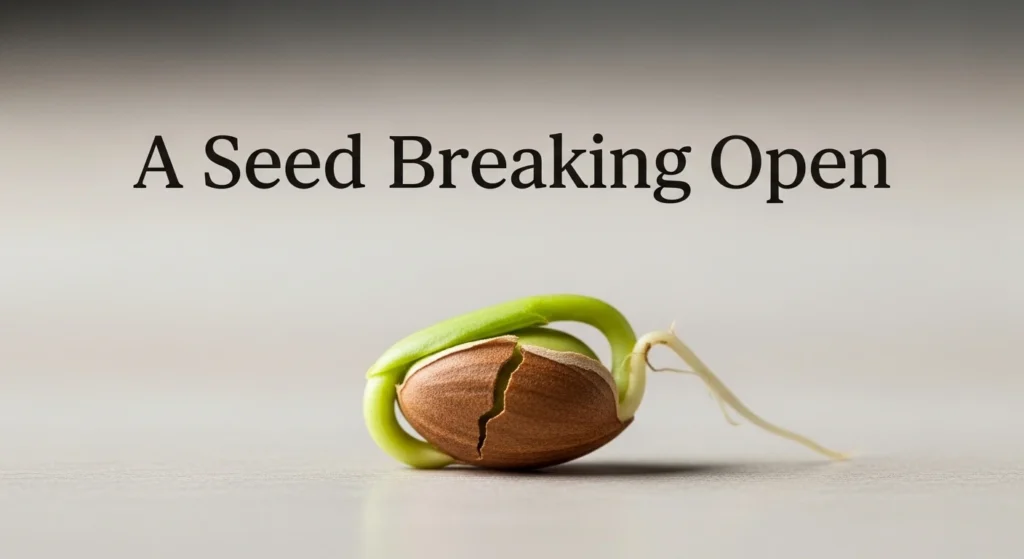
A seed must split before it grows into a plant.
Meaning: Growth requires vulnerability.
Example idea: “Her confidence began when the seed of doubt cracked open.”
The breaking stage does not look beautiful. However, it is necessary. Without that opening, growth cannot begin.
As a result, transformation often feels uncomfortable before it feels rewarding.
The River Carving Stone
A river shapes rock slowly through constant movement.
Meaning: Change can happen gradually through steady effort.
Example idea: “Daily habits carved his future like water shaping stone.”
Not every transformation is dramatic. Some changes happen through repetition and discipline. Over time, small actions create visible results.
Shedding Old Skin
Certain animals shed their skin to grow larger.
Meaning: Letting go allows expansion.
Example idea: “She shed old fears like worn-out skin.”
Old beliefs, habits, or relationships sometimes hold growth back. Therefore, releasing them becomes part of transformation.
Although letting go feels uncertain, it creates space for something better.
Dawn After Night
Night does not last forever. Slowly, light spreads across the sky.
Meaning: Transformation brings clarity after confusion.
Example idea: “Understanding rose like dawn after a long night.”
Dark periods often prepare the mind and heart for insight. Eventually, light returns.
The Emotional Reality of Transformation
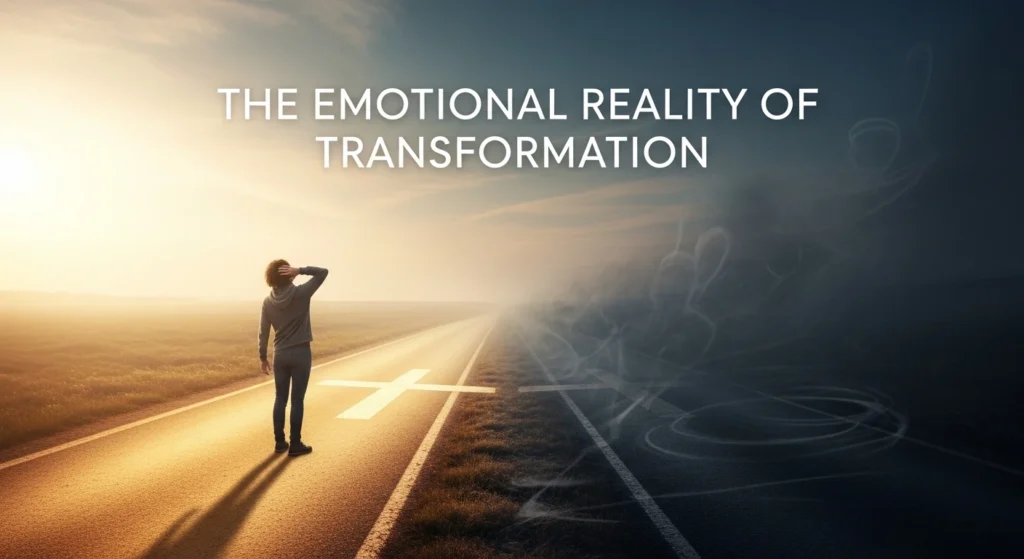
Transformation is rarely comfortable. It can involve fear, doubt, and temporary confusion. Still, growth often hides inside those difficult moments. When you feel stretched, something inside is expanding.
Sometimes change feels slow and invisible. At other times, it feels sudden and powerful. Regardless of speed, transformation reshapes perspective.
Importantly, transformation does not mean becoming perfect. Instead, it means becoming more aware and intentional.
Different Types of Transformation
Not all transformation looks the same. Some changes are emotional. Others are professional. Some are spiritual. Each type carries its own challenges.
Emotional transformation may feel like healing after pain. Career transformation may feel like stepping onto a new road. Personal transformation may feel like meeting yourself again for the first time.
Because transformation touches many areas of life, metaphors help describe these varied experiences clearly.
How Writers Show Transformation
In stories, transformation often marks a turning point. A character may “step into the light” or “break free from chains.” These images show change without long explanation.
Instead of listing internal thoughts, writers present symbolic actions. A character walking into sunrise suggests hope. A character rising from ashes suggests rebirth.
As a result, readers feel the change rather than simply reading about it.
A Reflection on Personal Change
Pause and consider your own journey.
Are you in the cocoon stage? Are you walking through fire? Are you rising like a phoenix? Are you slowly carving stone like a river?
Naming your stage can make transformation feel clearer and less frightening.
Speaking About Transformation Naturally

When describing change, simple imagery can add depth. You might say your life “entered a new season” instead of saying it changed. You could describe growth as “breaking out of a shell” rather than just improving. In conversation, natural images often communicate emotion better than plain statements.
However, the key is balance. A single strong image works better than too many comparisons. Choose metaphors that match your real experience.
Conclusion
Transformation is not always loud. Sometimes, it happens quietly, like roots growing beneath the ground.
Metaphors help us see that quiet growth. They turn confusion into clarity, emotion into imagery, and change into something we can understand.
As you explore metaphors for transformation, you begin to see your own journey differently. You notice the small shifts, the hidden growth, the steady movement forward.
And slowly, you realize something important—you are not just experiencing transformation. You are becoming it.
FAQs
Why is transformation often compared to a butterfly?
Because a caterpillar changes completely before becoming a butterfly, symbolizing deep personal growth.
Does transformation always involve pain?
Not always, but many meaningful changes involve effort or discomfort.
What does the phoenix represent?
It represents renewal after loss or destruction.
Can transformation be slow?
Yes. Like a river shaping rock, change often happens gradually.
How can I describe my own transformation?
Choose an image that reflects your experience, such as dawn, fire, water, or growth from a seed.



