The first bite of truth often feels sharp, like biting into a slice of green mango sprinkled with salt. It wakes your senses and it tingles your tongue. It may even make you wince before you smile. Truth rarely arrives quietly; instead, it knocks, echoes, and lingers. You can almost hear it in the hush after a confession or feel it in the air when someone finally says what everyone has been avoiding.
At times, truth feels warm, like sunlight touching your face after a long, cloudy day. At other moments, it feels cold and clear, like water poured over your hands, impossible to ignore. Because of this, writers, thinkers, and everyday people turn to metaphors to capture its complexity. Words alone may struggle, but images and comparisons bring truth to life.
What Truth Often Represents
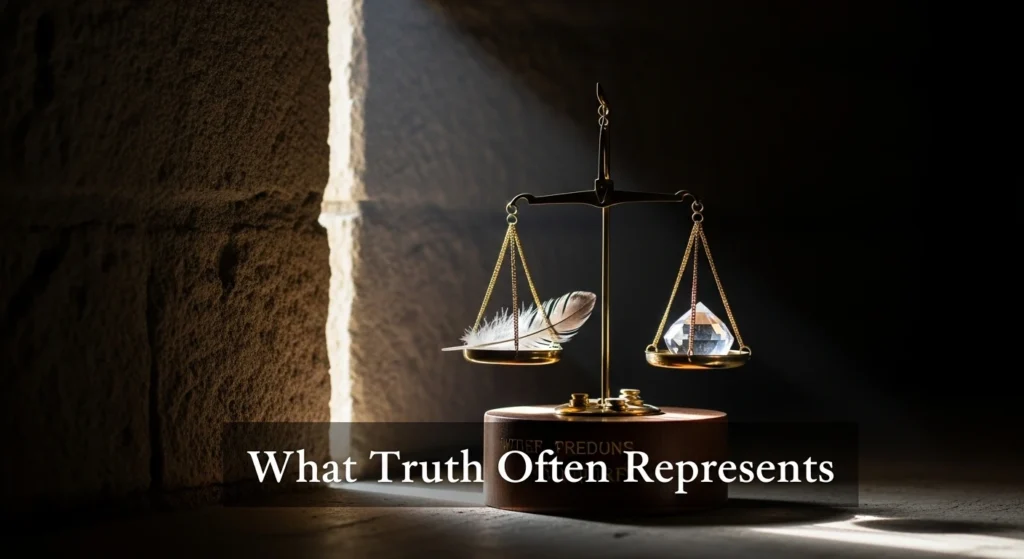
Truth can symbolize:
Clarity Honesty Reality Light Foundation Exposure Freedom Courage
At its core, truth reflects what is real. Yet reality is not always easy to face. Therefore, metaphors for truth can feel both reassuring and challenging.
Why Truth Needs Metaphor
Truth is simple in definition but complex in experience. When someone says, “Tell the truth,” the words seem clear. However, when someone says, “Shine a light on it,” the meaning feels deeper.
Metaphors give truth texture. They help explain how it feels — not just what it is. Sometimes truth feels warm like sunlight. At other times, it cuts like glass. Imagery captures these emotional layers.
Truth as Light
Light removes darkness. It reveals what was hidden.
Meaning: Truth represents clarity and understanding.
Example idea: “Her words brought light into the confusion.”
Light metaphors suggest openness and revelation. Once light appears, shadows lose power.
Truth as a Mirror
A mirror reflects exactly what stands before it. It does not flatter. It does not edit.
Meaning: Truth shows reality without distortion.
Example idea: “The conversation held up a mirror to his behavior.”
This metaphor highlights honesty, even when reflection feels uncomfortable.
Truth as a Foundation
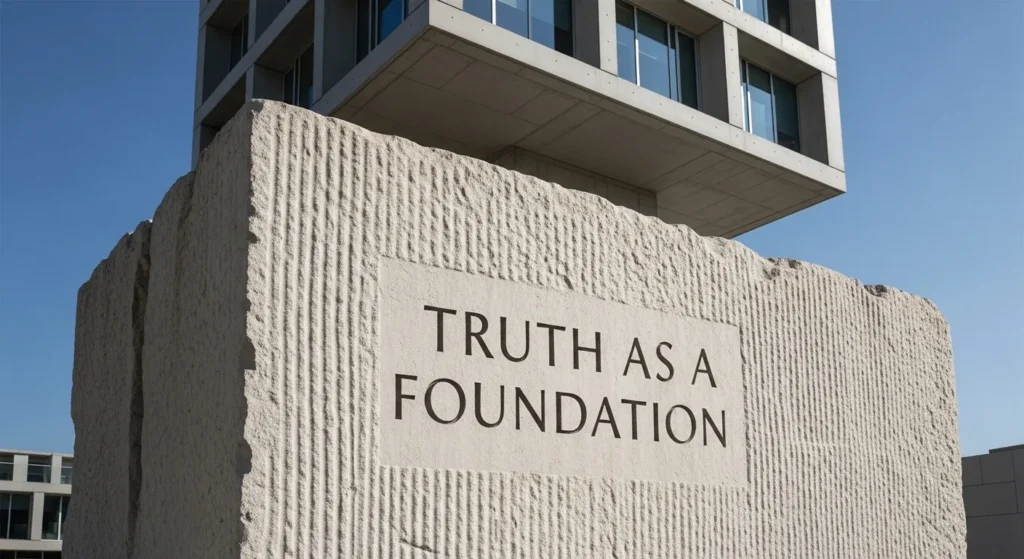
A building stands strong only if its base is solid.
Meaning: Truth represents stability and trust.
Example idea: “Their friendship rested on the foundation of truth.”
Without truth, relationships weaken. With truth, they endure.
Truth as a Compass
A compass points north no matter where you stand.
Meaning: Truth guides decisions and direction.
Example idea: “She used honesty as her compass.”
The image suggests moral guidance and clarity of path.
Truth as Fire
Fire can warm or burn. It demands respect.
Meaning: Truth can feel intense and powerful.
Example idea: “His confession spread like fire through the silence.”
This metaphor shows both energy and consequence.
Truth as Water Clearing Mud
When muddy water settles, it becomes clear again.
Meaning: Truth removes confusion and reveals what lies beneath.
Example idea: “Time allowed the truth to settle like clear water.”
The image emphasizes patience and eventual clarity.
Truth as an Unbreakable Thread

A thread connects two pieces of fabric. When strong, it holds everything together.
Meaning: Truth connects people and maintains unity.
Example idea: “Honesty was the thread that kept their family intact.”
This metaphor suggests quiet but lasting strength.
The Comfort of Truth
Truth can feel freeing. When secrets disappear, tension fades. A person who speaks honestly often feels lighter. In this sense, truth resembles fresh air after a long time indoors. It allows breathing. It creates space.
The Difficulty of Truth
However, truth can also feel sharp. Like bright sunlight after darkness, it may hurt the eyes at first. A mirror may reveal flaws. Fire may burn before it warms. These metaphors remind us that truth is not always easy — but it remains necessary.
How Writers Use Truth Imagery
In literature, truth often appears as light breaking through clouds, a curtain pulled back, or a door opening. Instead of directly stating facts, writers show revelation through images. This method makes truth feel alive and dramatic.
Moreover, truth metaphors often mark turning points. When truth appears, change follows. Characters grow. Conflicts shift. Illusions disappear.
A Personal Reflection
Imagine truth as an object in your life. What would it be?
It could shine like a steady lighthouse, guiding ships safely through the darkness of night. At the same time, it might act as a mirror, reflecting reality with clarity and honesty. Like a reliable compass, it can quietly direct your choices, helping you navigate even the most uncertain paths.
Choosing an image helps you understand how you relate to honesty and clarity.
Using Truth Metaphors in Everyday Speech

You might encourage honesty by saying, “Let’s bring this into the light,” rather than simply saying, “Be honest.” When urging someone to confront the truth, try “Look in the mirror” instead of “Face reality.” To guide decisions, you could suggest, “Trust your compass,” rather than just saying, “Follow what’s right.”
These phrases add strength and clarity to conversation.
Conclusion
Truth is not always easy, yet it remains essential. It reflects, guides, and transforms. Through metaphors, we understand it more deeply and share it more effectively.
Whether you see truth as a mirror, a light, or a flowing river, each image adds meaning. Together, they create a richer understanding of honesty and reality. As you practice, your words will become more vivid, your ideas clearer, and your voice stronger.
FAQs
Why is truth often compared to light?
Light reveals what darkness hides, just as truth reveals reality.
Can truth feel painful?
Yes. Like bright sunlight or fire, truth can feel uncomfortable before it brings clarity.
Why is a mirror a strong metaphor for truth?
Because a mirror reflects reality without changing it.
How does truth act like a compass?
It guides decisions and keeps direction steady.
How can I create my own metaphor for truth?
Think about how truth feels to you — comforting, sharp, guiding, or revealing — then connect that feeling to an image that carries the same energy.