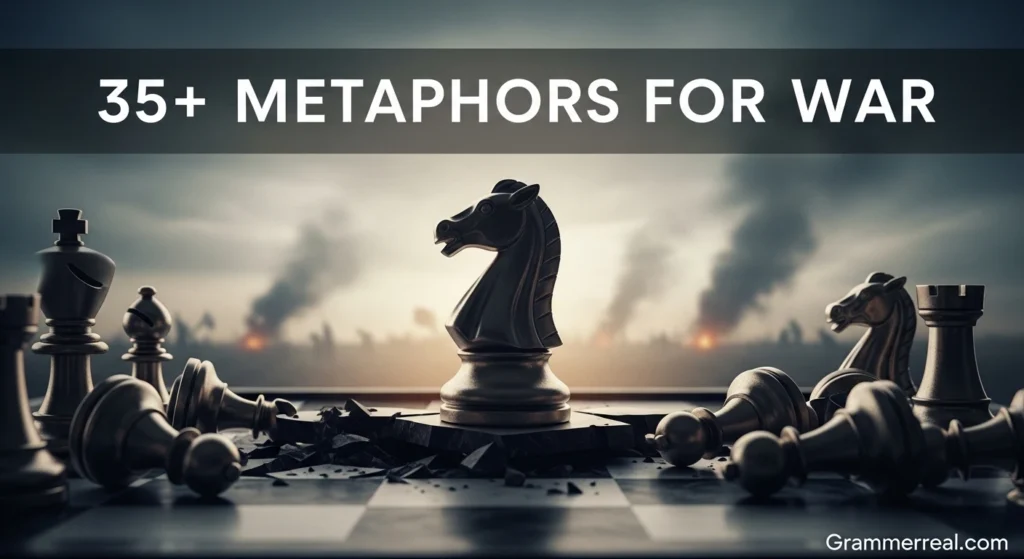
The air tastes like iron. Dust clings to your tongue, and the ground trembles under distant thunder that is not weather but something far more human. You hear boots scraping gravel, a heartbeat echoing louder than any drum, and somewhere, a silence stretches so thin it might snap. In that moment, war does not feel like history or headlines—it feels like a storm inside the chest, a clash of forces both seen and unseen.
This is where metaphors for war begin—not only on battlefields, but in language, emotion, and imagination. Because sometimes, the literal truth is too sharp to hold, we shape it into images we can carry.
What War Can Represent
War often symbolizes:
Conflict Inner struggle Competition Resistance Sacrifice Survival Power Chaos Determination
Since war involves two opposing sides, it naturally reflects moments when tension exists. That tension might be between two people. It might exist between dreams and reality. It might even live inside one person’s thoughts.
Why War Is a Powerful Metaphor
War feels urgent. It does not sound small. When someone says, “I’m fighting a battle,” we understand that the situation matters deeply. The phrase carries emotion without long explanation.
At the same time, war suggests effort. It shows that someone is not giving up. It shows movement, defense, and courage. For this reason, war metaphors often appear in serious or dramatic situations.
However, careful use is important. Real wars cause real suffering. Therefore, the metaphor should match the weight of the topic. When used thoughtfully, war imagery can express struggle without disrespecting reality.
War as an Inner Battle
Some of the hardest wars happen inside the mind. Doubt fights confidence. Fear fights courage. Hope fights despair.
Meaning: War can symbolize internal conflict.
Example idea: “He was at war with his own fears.”
This metaphor shows tension within a person. It suggests sleepless nights, heavy thoughts, and emotional exhaustion.
War as Survival
On a battlefield, survival becomes the main goal.
Meaning: War represents fighting to keep going during hard times.
Example idea: “Each day felt like a war just to stay strong.”
This image highlights effort and resilience. It suggests that even small victories matter.
War as Competition
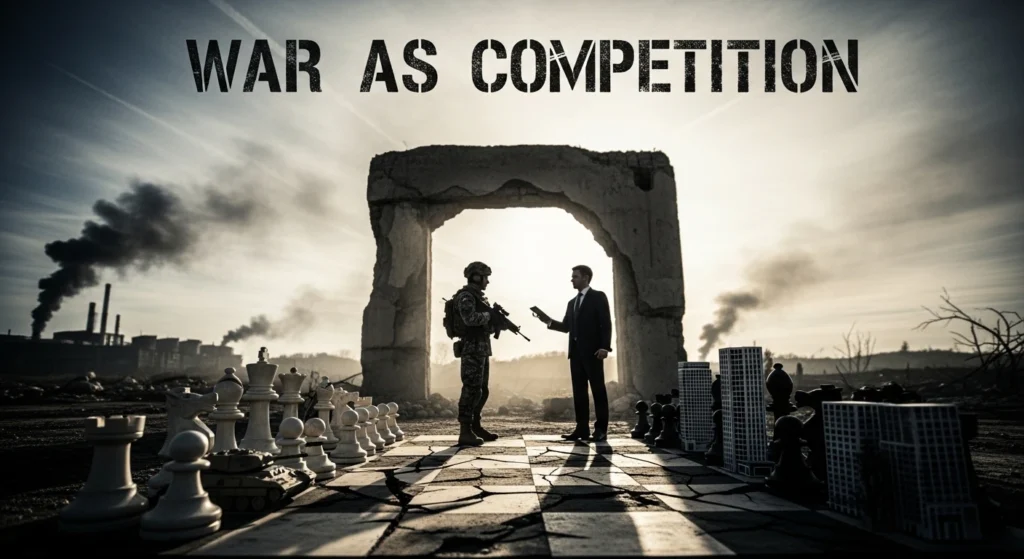
Two sides in war compete for victory.
Meaning: War can describe intense rivalry or high-pressure competition.
Example idea: “The courtroom turned into a war of arguments.”
This metaphor shows strong opposition without physical violence.
War as Resistance
War begins when one side refuses to surrender.
Meaning: It symbolizes standing up against injustice or difficulty.
Example idea: “She declared war on the limits placed on her.”
Here, war represents courage and determination.
War as Chaos
War zones are loud and confusing. Plans change quickly. Nothing feels stable.
Meaning: War can symbolize disorder in life.
Example idea: “The office became a war zone before the deadline.”
This metaphor captures stress and urgency.
War as Sacrifice
War demands cost. Time, comfort, and peace are often lost.
Meaning: War can represent the price paid for growth or achievement.
Example idea: “Building his dream required the sacrifices of a long war.”
The image suggests long effort and personal cost.
War as Strategy
Wars are not only about fighting. They are also about planning. Leaders think ahead. They choose when to act.
Meaning: War can symbolize careful decision-making during conflict.
Example idea: “She approached her challenges like a skilled general.”
This metaphor highlights wisdom and preparation.
War as Emotional Distance
War often separates people. It creates lines between sides.
Meaning: War can symbolize broken relationships or emotional walls.
Example idea: “Silence built a quiet war between them.”
This image shows tension without direct confrontation.
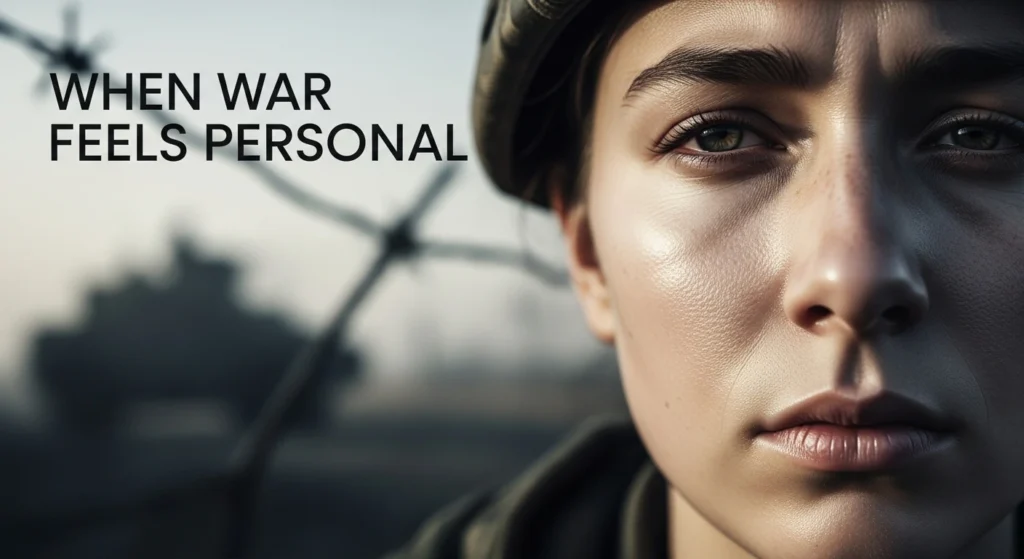
When War Feels Personal
Sometimes life feels like:
A daily fight against exhaustion A battle to protect self-worth A struggle to stay hopeful
In these moments, war represents private challenges. No audience exists. No applause follows. The fight remains personal and unseen.
When War Represents Strength
Despite its harsh image, war metaphors can also reflect power:
Standing firm under pressure Refusing to retreat from goals Fighting for justice or truth
In these cases, war imagery emphasizes bravery and persistence.
How Writers Use War Metaphors
Writers often use war language to create strong emotion. A “battle for freedom” feels more intense than a simple disagreement. A “war against time” feels urgent and dramatic. Through these phrases, readers immediately sense pressure and high stakes.
Additionally, war metaphors create clear sides. There is something to defend. There is something to overcome. This structure makes stories feel active and focused.
A Reflection on Personal Conflict
Consider a challenge in your life. Does it feel like a short battle that will pass quickly? Or does it resemble a long war requiring patience and endurance?
By naming the struggle, you better understand your role in it. You might need defense. You might need strategy and you might simply need rest before continuing.
Using War Metaphors in Daily Language
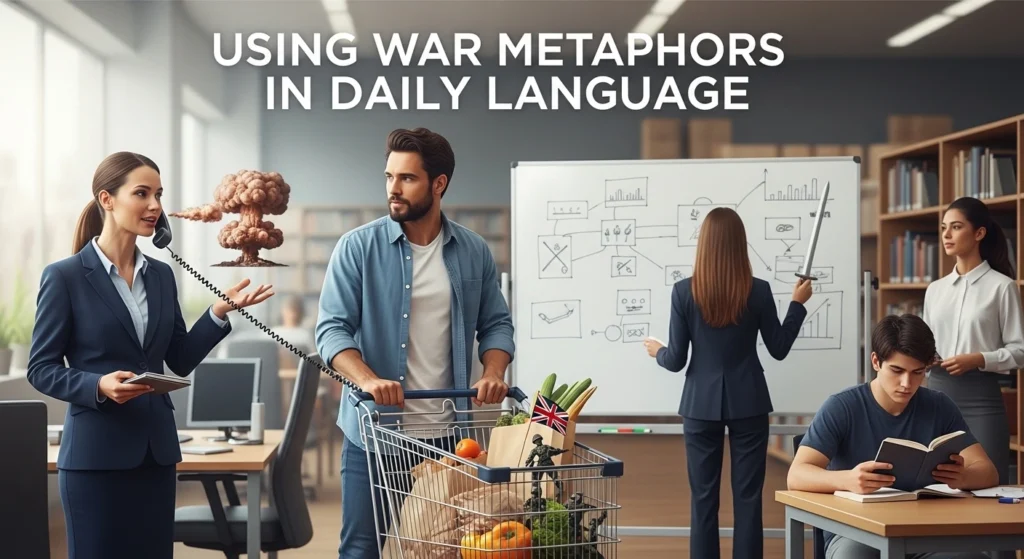
Instead of saying, “I’m dealing with a problem,” you might say, “I’m fighting a tough battle.” Rather than saying, “There is tension between us,” you could describe it as “a silent war between us.” To express pressure, you might use the phrase “being on the front lines” instead of simply saying, “I feel pressured.”
These expressions add intensity and clarity.
Conclusion
Metaphors for war transform something overwhelming into something understandable. They turn chaos into imagery, fear into language, and conflict into connection. Through storms, fire, games, and shadows, we find ways to express what might otherwise remain unsaid.
Moreover, these metaphors do not belong only to history or literature. They live in everyday speech, in personal struggles, and in creative expression. When you use them carefully, you give your words strength, clarity, and emotion.
So whether you write stories, share thoughts online, or simply reflect on your own experiences, metaphors for war can help you speak with power and purpose.
FAQs
Why do people use war as a metaphor?
They use it because war represents intense conflict and high stakes in a simple, powerful way.
Is it always appropriate to use war metaphors?
No. The seriousness of the situation should match the intensity of the metaphor.
What does “at war with yourself” mean?
It means experiencing strong internal conflict or emotional struggle.
Can war metaphors ever feel positive?
Yes. They can show courage, resilience, and determination when facing challenges.
How can someone create a thoughtful war metaphor?
First, identify the type of struggle involved. Then decide whether it feels like a short battle, a long campaign, or a fight for survival, and build your image carefully around that idea.