The wind arrives before you see it. It brushes your cheek like a secret, cool and curious. It rattles loose leaves, hums through narrow streets, and slips under doors as if it belongs everywhere. Sometimes it howls, wild and restless, shaking windows with a voice that refuses to be ignored. At other times, it whispers so softly you only notice it in the way your skin shivers or your hair shifts.
You cannot hold the wind. You cannot see its full shape. Yet, you feel it—again and again.
That is exactly why wind makes such powerful metaphors.
What Wind Can Symbolize
Wind is more than moving air. It often represents:
Change Freedom Movement Restlessness Energy Unseen influence Whispers of memory Sudden force
Because wind constantly moves, it naturally reflects transition. Life changes like wind changes direction—sometimes gently, sometimes dramatically.
Why Wind Makes a Powerful Metaphor
You cannot see wind itself. You only see its effect. Leaves scatter. Doors slam. Waves rise. In the same way, emotions and life shifts are often invisible, yet their impact is clear.
That similarity makes wind a strong metaphor. It explains feelings we cannot fully describe. Instead of saying, “Things are shifting,” we say, “The wind is changing.” The image feels immediate and alive.
Wind as Change
A breeze can slowly turn into a gust. Direction can shift in seconds.
Meaning: Wind often symbolizes transformation or unexpected life shifts.
Example idea: “A strong wind of change swept through her world.”
This image captures movement and sudden transition.
Wind as Freedom
Wind crosses mountains and oceans without borders. Nothing ties it down.
Meaning: Wind represents independence and limitless movement.
Example idea: “He wanted to live like the wind—untamed and free.”
The metaphor suggests a life without restriction.
Wind as a Whisper
Soft wind sounds like a quiet voice brushing past your ear.
Meaning: Wind can symbolize subtle messages, memories, or intuition.
Example idea: “The evening breeze felt like a whisper from the past.”
This version of wind feels gentle and reflective.
Wind as a Storm
When wind grows fierce, it becomes impossible to ignore.
Meaning: Wind can represent anger, conflict, or emotional intensity.
Example idea: “His frustration rose like a storm wind.”
Here, wind reflects power and disruption.
Wind as a Traveler
Wind never stays in one place. It moves endlessly across landscapes.
Meaning: Wind can symbolize wandering, curiosity, or exploration.
Example idea: “Her dreams drifted like traveling winds.”
This metaphor highlights motion and distance.
Wind as Energy
Wind turbines spin because of wind. Sails move because of wind.
Meaning: Wind can represent motivation and force that pushes things forward.
Example idea: “Hope became the wind behind his efforts.”
This image shows support and momentum.
Wind as Restlessness
Still air feels calm. Moving wind feels unsettled.
Meaning: Wind can symbolize inner impatience or longing.
Example idea: “Restlessness moved through him like uneasy wind.”
This metaphor captures emotional motion.
When Wind Feels Gentle
Sometimes wind feels like:
A cool hand on a warm day A quiet sigh through trees A soft reminder that you are not alone
In these moments, wind symbolizes comfort and subtle presence.
When Wind Feels Powerful
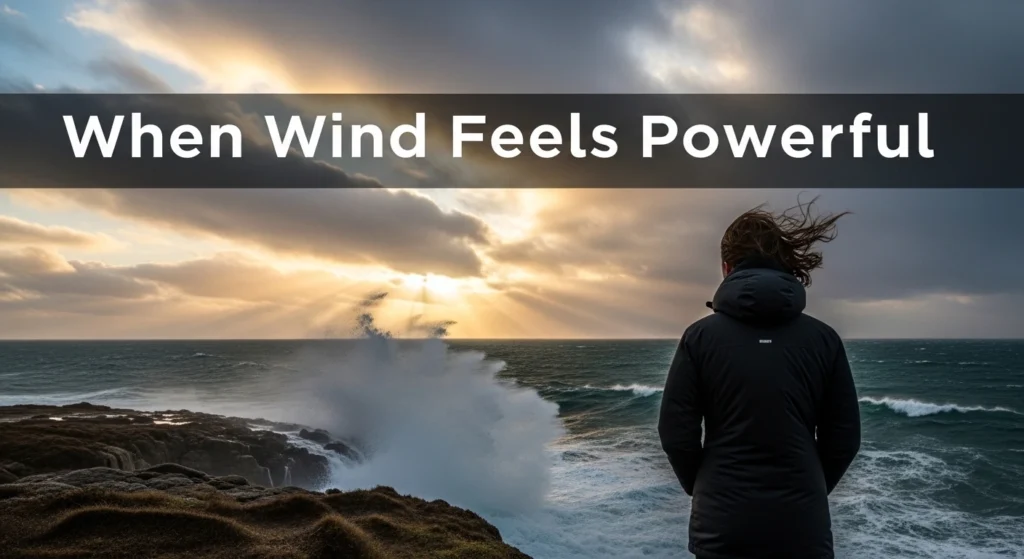
At other times, wind feels like:
A push against your back A howl through the night Leaves spinning wildly in the air
Here, wind reflects strength, urgency, or challenge.
How Writers Use Wind Metaphors
Writers often connect wind to change and freedom. Because wind cannot be seen but can always be felt, it mirrors human emotions perfectly. It creates movement in a scene. It adds life to still landscapes. Even a single mention of wind can shift the mood from calm to dramatic.
A Simple Reflection Exercise
Complete this sentence:
“Wind feels like ______.”
You might write:
A whisper carrying memories Freedom across open land A storm inside my chest Energy pushing me forward
Each answer reveals what wind represents in your own experience.
Using Wind Metaphors in Daily Language
Instead of saying, “Things are changing,” you can say, “The wind is shifting.” Instead of saying, “I feel restless,” you can say, “There’s a restless wind inside me.”
These phrases feel more vivid and expressive. Even simple conversations become more poetic when wind imagery appears.
Conclusion
Wind moves through the world without asking permission. It touches everything, yet remains unseen. In the same way, metaphors for wind move through language, shaping meaning without force.
When you use wind metaphors, you give life to invisible feelings. You turn simple words into experiences. You invite readers to feel, not just understand.
So next time you notice the wind—whether it whispers or roars—pause for a moment. Listen closely. There is always a story hidden inside it.
FAQs
Why is wind commonly used as a metaphor?
Wind represents invisible but powerful forces, which makes it perfect for describing emotions and change.
Does wind always symbolize something dramatic?
No. Wind can represent gentle comfort as easily as intense power.
What does “wind of change” mean?
It means something new or different is happening.
Can wind symbolize freedom?
Yes. Because wind moves without limits, it often represents independence.
How can I create my own wind metaphor?
Think about how wind feels to you—calm, strong, restless, or refreshing—and connect that feeling to a life experience.



