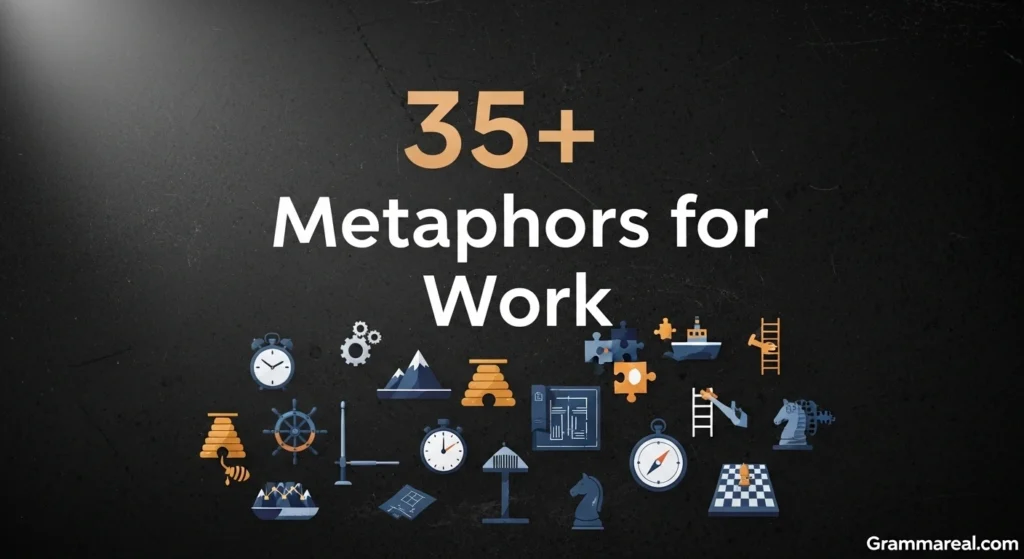
The alarm hums softly, like a distant engine warming up. Light slips through the curtains, thin and pale, stretching across the floor like a quiet invitation. Somewhere, a kettle whistles, papers rustle, and a screen flickers to life. Work does not arrive all at once. Instead, it seeps in—through sound, through motion, through the steady rhythm of responsibility.
You step into your day the way a traveler steps onto a path. At first, the road feels uncertain. Then, with each task, each conversation, each small decision, the path grows clearer. Work becomes more than effort. It becomes a story in motion.
And this is where metaphors step in.
What Work Represents Beyond a Job
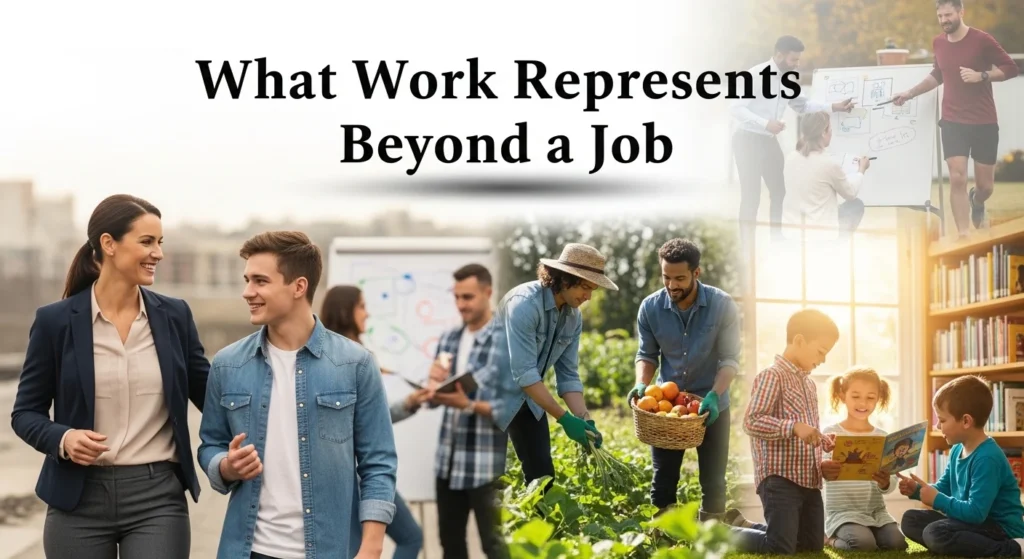
Work is not only about earning money. It can reflect:
Purpose Responsibility Growth Discipline Persistence Creativity Contribution Independence
Moreover, work often shapes identity. The effort you put in, the skills you develop, and the challenges you overcome all influence who you become. Because work touches both external success and internal development, metaphors allow us to express its deeper meaning.
Why Metaphors Help Describe Work
When someone says, “Work is hard,” the idea feels general. However, saying, “Work feels like climbing a mountain,” creates a clearer picture. Instantly, the listener imagines effort, height, and determination.
In addition, metaphors add depth to everyday conversations. Instead of speaking only about deadlines and tasks, we can describe momentum, progress, and transformation. As a result, work feels like a journey rather than just a routine.
Work as Climbing a Mountain
Climbing requires strength, patience, and focus. The higher you go, the more effort you need.
Meaning: Work often demands consistent effort before reaching success.
Example idea: “Every project felt like climbing a mountain step by step.”
Alternative expressions: Reaching the summit Uphill battle Scaling new heights
This metaphor highlights perseverance and long-term reward.
Work as a Journey
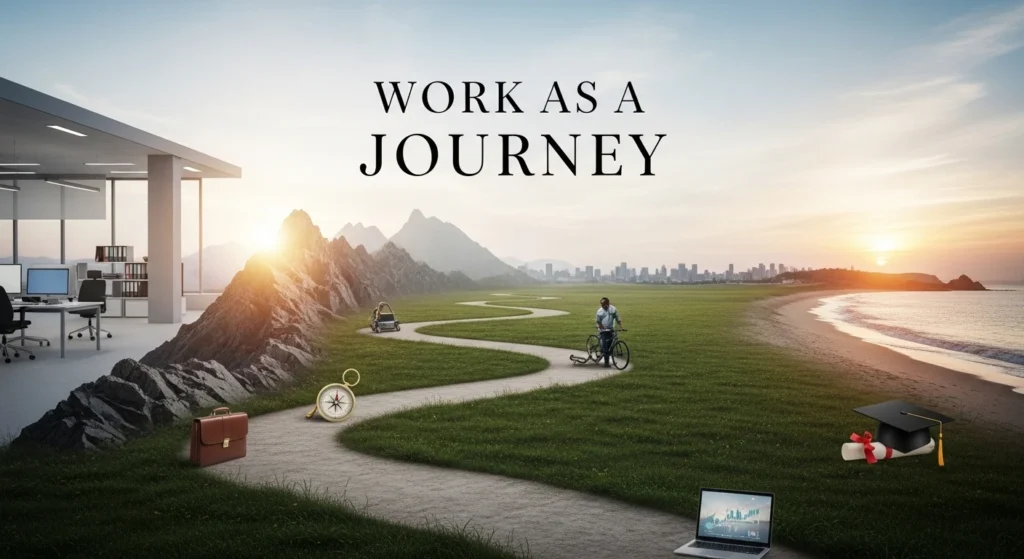
Journeys involve movement, learning, and unexpected turns.
Meaning: Work is not a single moment but a process over time.
Example idea: “Her career became a journey filled with lessons and growth.”
Alternative expressions: Path forward Road to success Long voyage
This image emphasizes development and experience.
Work as Building a Bridge
A bridge connects two separate sides. It requires careful planning and strong support.
Meaning: Work can connect effort with achievement.
Example idea: “Each small task helped him build a bridge toward his goals.”
Alternative expressions: Connecting steps Linking effort to success Constructing progress
This metaphor reflects purpose and structure.
Work as Tending a Garden
Gardens need time, patience, and daily care.
Meaning: Work grows gradually when nurtured.
Example idea: “She treated her business like a garden, watering it every day.”
Alternative expressions: Planting seeds of effort Cultivating success Harvesting results
This image shows steady growth.
Work as a Forge
In a forge, metal becomes stronger under heat and pressure.
Meaning: Work shapes character through challenges.
Example idea: “The tough years at work forged his resilience.”
Alternative expressions: Shaped by fire Strength under pressure Tempered by experience
This metaphor highlights transformation.
Work as a Marathon
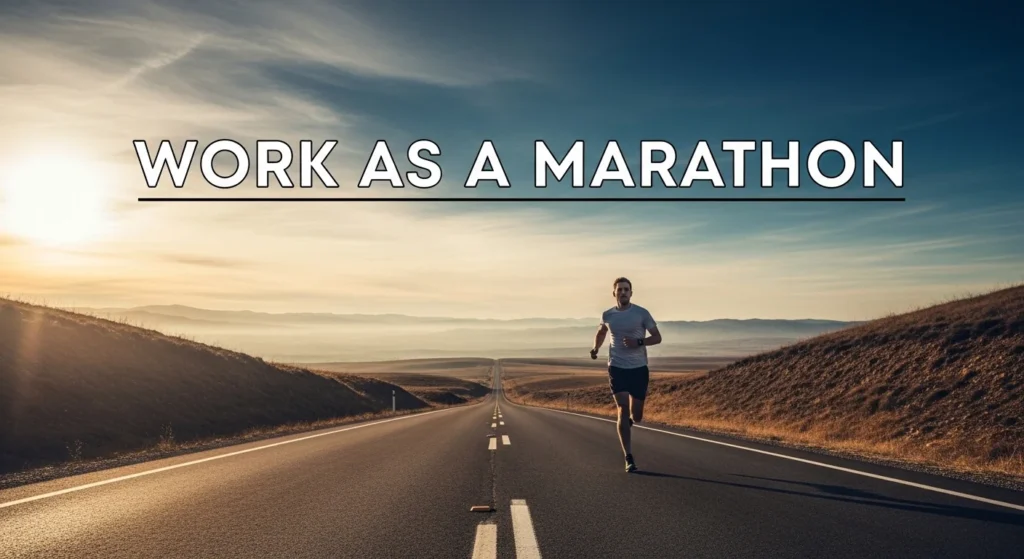
A marathon requires endurance rather than speed.
Meaning: Work often demands long-term commitment.
Example idea: “Building her career felt like running a marathon, not a sprint.”
Alternative expressions: Long-distance effort Pacing yourself Endurance race
This image emphasizes stamina.
Work as a Machine
Machines operate through coordination and consistent motion.
Meaning: Work can require teamwork and efficiency.
Example idea: “The office ran like a well-oiled machine.”
Alternative expressions: Working in sync Smooth operation Moving parts together
This metaphor highlights cooperation.
Work as Laying Bricks
Brick by brick, walls rise slowly but steadily.
Meaning: Progress happens step by step.
Example idea: “He built his success by laying one brick at a time.”
Alternative expressions: Step-by-step growth Solid foundation Building upward
This image shows patience and structure.
When Work Feels Heavy
At times, work may feel like:
Carrying a heavy backpack Walking through thick mud Pushing against strong wind
In those moments, effort feels draining. However, even heavy work builds strength over time.
When Work Feels Rewarding

At other times, work feels like:
Watching a sunrise after a long night Reaching the mountaintop Harvesting crops after months of care
Here, effort turns into satisfaction and pride.
How Writers Use Work Metaphors
Writers often compare work to journeys, mountains, and gardens because these images naturally reflect effort and growth. Nature-based metaphors make abstract ideas easier to understand. Additionally, strong imagery turns ordinary tasks into meaningful stories.
A Simple Reflection Exercise
Complete this sentence:
“Work feels like ______.”
Examples:
Climbing a mountain Running a marathon Building a bridge Tending a garden Laying bricks for a future home
Each answer reveals how you personally experience effort and responsibility.
Using Work Metaphors in Daily Life
Metaphors for work fit well in speeches, motivational talks, resumes, and personal reflections. Instead of saying, “I worked hard,” you might say, “I climbed every step of that mountain.” Such language feels stronger and more memorable.
Moreover, metaphors help transform routine tasks into meaningful milestones.
Conclusion
Work does not have to feel dull or mechanical. When you use metaphors, you turn effort into something meaningful.
You begin to see patterns, progress, and purpose. You transform routine into rhythm and you turn pressure into possibility.
So the next time you sit down to work, pause for a moment. Ask yourself:
“What does my work feel like today?”
Your answer might change everything.
FAQs
Why use metaphors for work?
Metaphors make effort and progress easier to visualize and understand.
What is the most common metaphor for work?
Climbing a mountain is common because it represents challenge and achievement.
Can work metaphors show teamwork?
Yes. A machine or bridge metaphor highlights cooperation and coordination.
Why compare work to nature?
Nature reflects growth, patience, and steady progress, which match the experience of work.
How can I create my own work metaphor?
Think about how your work feels—challenging, steady, creative, exhausting—and compare it to something simple like climbing, building, planting, or running.