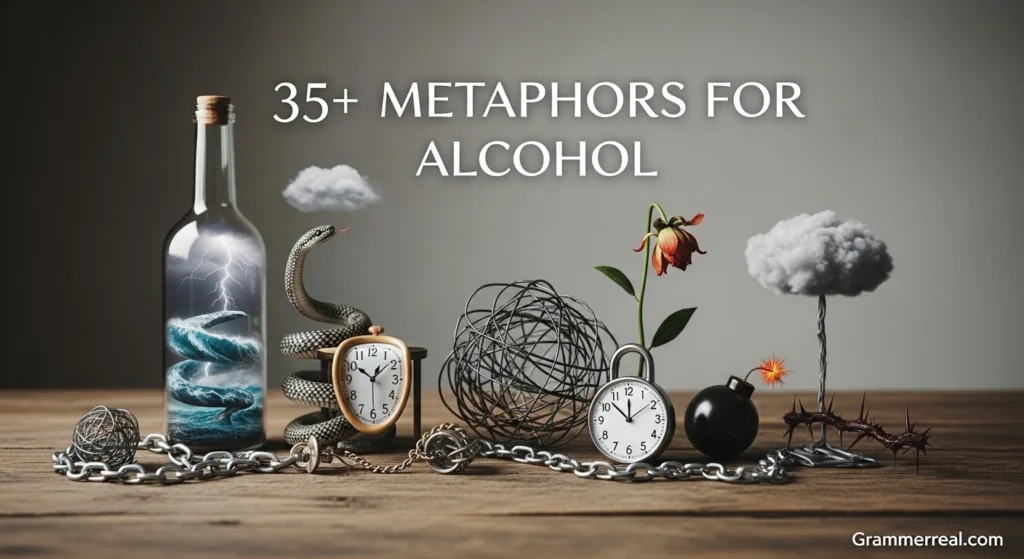
The glass catches the light like a small sunset. Amber swirls slowly, thick as memory, releasing a sharp sweetness into the air. A faint burn waits beneath the surface, like a secret. You lift it, and for a moment, the world pauses—then softens, then shifts. Alcohol is never just a drink. It is a feeling, a doorway, a mirror. And perhaps that’s why language reaches for metaphors to describe it.
Because plain words fail.
Metaphors for alcohol help us express what it does, not just what it is. They capture its warmth, its danger, its comfort, and its chaos. Whether you are writing creatively, telling a story, or simply trying to describe a moment, these metaphors give your language depth and emotion. More importantly, they help readers feel rather than just understand.
So let’s step into this world—where alcohol becomes fire, escape, poison, and poetry all at once.
Alcohol as Fire
Fire is one of the most common metaphors for alcohol.
Meaning: Alcohol burns, warms, and sometimes destroys.
Example: “The whiskey burned like fire down his throat.”
Fire suggests intensity. A small flame may feel comforting, like warmth in winter. But an uncontrolled blaze can destroy everything in its path.
Other expressions:
- Liquid flame
- Burning courage
- Fire in a glass
This metaphor highlights both heat and danger.
Alcohol as Liquid Courage
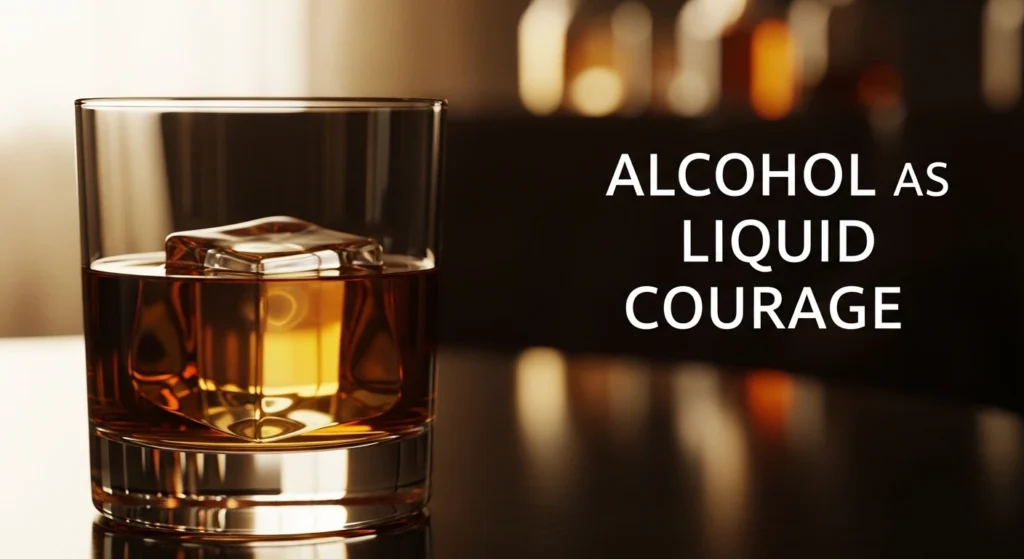
This is a familiar phrase.
Meaning: Alcohol temporarily removes fear or hesitation.
Example: “He found his voice through liquid courage.”
In this metaphor, alcohol becomes something that unlocks boldness. It may make someone speak, confess, dance, or act in ways they normally wouldn’t.
Alternative ideas:
- A borrowed backbone
- A false armor
- A mask of bravery
This metaphor often carries irony—courage that fades by morning.
Alcohol as a Mask
Masks hide true expressions.
Meaning: Alcohol can conceal pain, insecurity, or emotion.
Example: “Her laughter was a mask stitched with wine.”
This metaphor suggests that drinking may cover deeper feelings rather than solve them.
Other variations:
- Veil of intoxication
- Costume of cheerfulness
- Disguise of celebration
This metaphor explores emotional escape.
Alcohol as a Storm
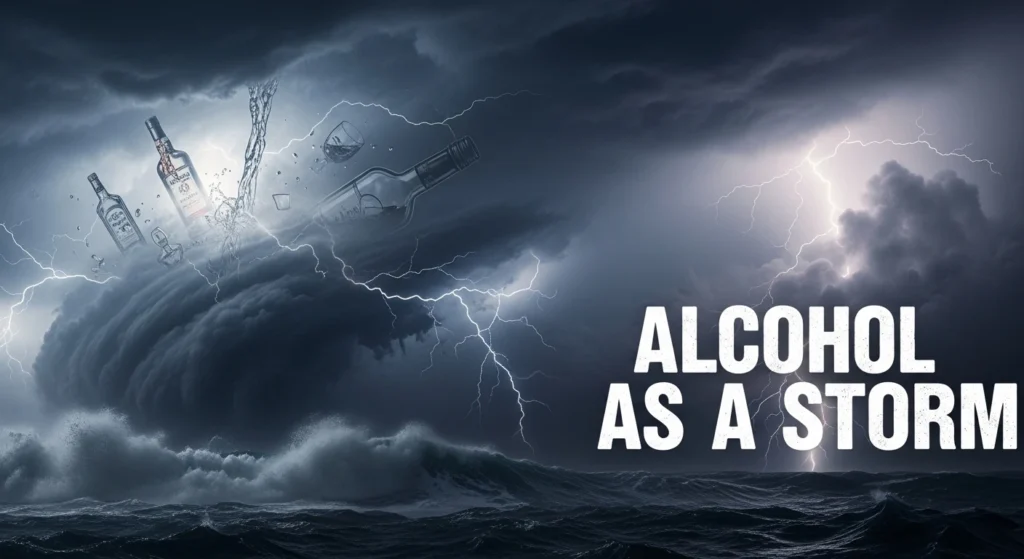
Storms symbolize chaos and unpredictability.
Meaning: Alcohol can create turbulence in emotions or behavior.
Example: “After a few drinks, the calm turned into a storm.”
Storm imagery suggests loss of control—wind, thunder, and aftermath.
Alternative expressions:
- Tempest in a bottle
- Hurricane of impulse
- Rain of regret
This metaphor highlights unpredictability.
Alcohol as a River
A river flows and pulls things along.
Meaning: Alcohol can carry someone away from clear judgment.
Example: “He let himself drift down the river of wine.”
Sometimes the river feels smooth and relaxing. Other times, it sweeps people into deeper waters.
Other ideas:
- Current of intoxication
- Flow of forgetfulness
- Drowning in drink
This metaphor emphasizes movement and surrender.
Alcohol as a Mirror
A mirror reflects truth.
Meaning: Alcohol may reveal hidden emotions or suppressed thoughts.
Example: “Under the influence, his heart became a mirror.”
This metaphor suggests that alcohol can expose honesty, vulnerability, or buried feelings.
Alternative phrases:
- Reflection in a glass
- Truth at the bottom of the bottle
- Emotions rising to the surface
This metaphor explores revelation.
Alcohol as a Cage
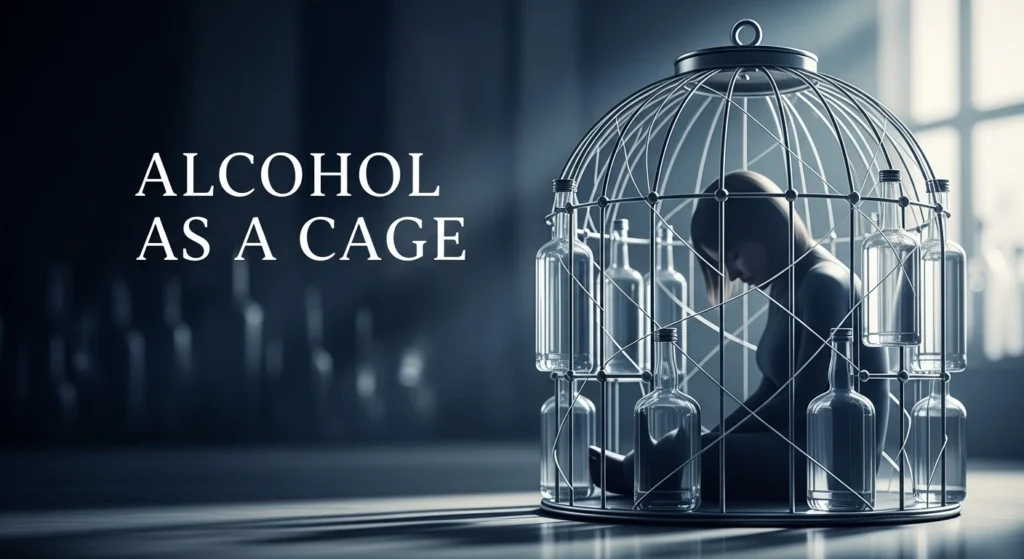
Cages symbolize confinement.
Meaning: Dependence on alcohol can trap someone.
Example: “What started as comfort became a cage.”
This metaphor shows how something once chosen freely can later feel restricting.
Other variations:
- Chains of addiction
- Prison of habit
- Locked inside a bottle
This metaphor focuses on loss of freedom.
Alcohol as a Blanket
A blanket provides warmth and comfort.
Meaning: Alcohol can feel soothing or protective.
Example: “The wine wrapped around her like a warm blanket.”
This metaphor highlights emotional comfort—temporary relief from stress or sadness.
Alternative ideas:
- Cushion against pain
- Soft shield
- Gentle escape
This metaphor emphasizes comfort, though it may also hint at avoidance.
Alcohol as a Spark
A spark starts reactions.
Meaning: Alcohol can ignite joy, conflict, laughter, or recklessness.
Example: “One drink was the spark that lit the party.”
Sparks can start warmth—or wildfires. This dual meaning makes it powerful.
Other expressions:
- Ignition of chaos
- Flash of celebration
- Match to dry grass
This metaphor shows how small beginnings can grow quickly.
Alcohol as Fog
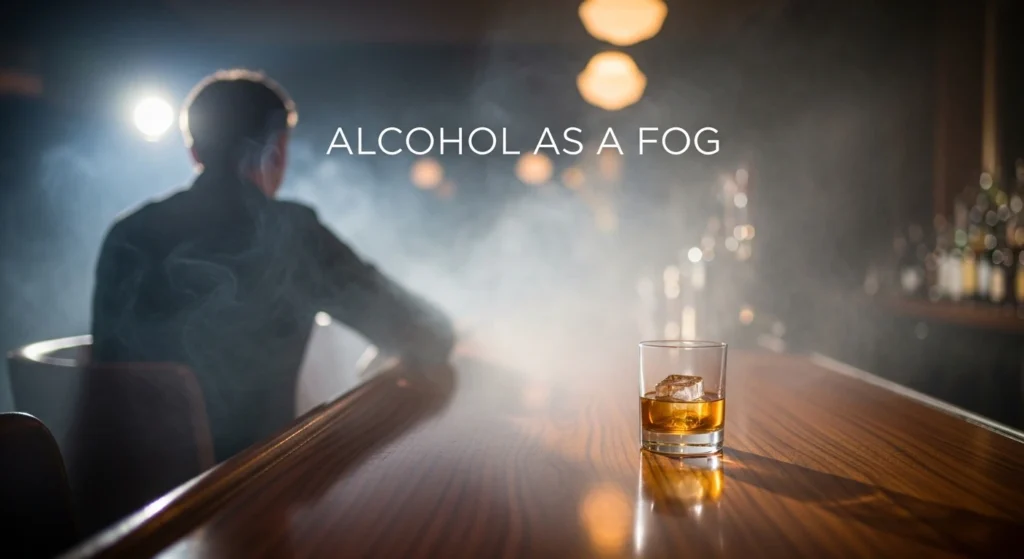
Fog obscures vision.
Meaning: Alcohol can blur thinking and perception.
Example: “His thoughts drifted into a fog of beer.”
This metaphor captures mental haziness and confusion.
Alternative phrases:
- Clouded judgment
- Mist over memory
- Blurred horizon
This metaphor feels quiet but disorienting.
Alcohol as an Escape Door
Doors symbolize transition.
Meaning: Alcohol may serve as a temporary exit from stress or reality.
Example: “He reached for the bottle like an escape door.”
This metaphor suggests avoidance rather than solution.
Other variations:
- Shortcut out of pain
- Exit from worry
- Temporary refuge
This metaphor highlights emotional motivation.
Alcohol in Literature and Culture
In many novels, poems, and films, alcohol symbolizes different things: celebration, rebellion, sorrow, or downfall. It may appear at weddings and at funerals. It can represent freedom in one scene and tragedy in another.
Metaphors allow writers to show that alcohol is rarely just a drink—it is often a symbol of something deeper in the human experience.
Using Alcohol Metaphors Thoughtfully
Because alcohol carries serious real-world consequences, metaphors should be used with care. They can describe warmth and celebration, but also harm and addiction.
Choosing the right metaphor depends on tone:
- Fire for intensity
- Fog for confusion
- Blanket for comfort
- Cage for dependence
- Storm for chaos
The metaphor should match the emotion you want to convey.
Conclusion
Alcohol, in its simplest form, is just a liquid. Yet through metaphor, it transforms into something far more complex—courage, escape, danger, warmth, and memory all at once.
By using metaphors thoughtfully, you give your words life. You move beyond description and step into experience. Whether you write stories, captions, or reflections, these metaphors help you express what cannot be said directly.
So next time you lift a glass—or describe one—pause for a moment. Ask yourself: What story does this hold?
Because sometimes, the most powerful meanings don’t sit in the drink itself—they live in the words we choose to describe it.
FAQs
Why are metaphors for alcohol common in writing?
Because alcohol affects emotions and behavior, making it rich with symbolic meaning.
What is the most common metaphor for alcohol?
Fire is common because alcohol burns and can both warm and destroy.
Can alcohol metaphors be positive?
Yes. It can symbolize celebration, connection, or comfort.
Can they be negative?
Yes. It can represent addiction, chaos, or emotional escape.
How can I create my own metaphor for alcohol?
Think about how alcohol feels or what it causes—warmth, blur, boldness, escape—and compare it to something physical with similar qualities, like fire, fog, or a river.



