The ball snaps against a player’s palm with a sharp thwack, echoing through the gym like a heartbeat you can hear. Shoes squeak, quick and urgent, tracing invisible patterns across polished wood. A breath is held, then released, as the ball arcs high—suspended for a moment like a thought not yet spoken. In that fleeting second, time stretches. Then—impact. Motion returns. The rally continues.
Volleyball is not just a sport. It is rhythm. It is tension and release and it is silence broken by energy. And perhaps most beautifully, it is a language—one we can describe, understand, and deepen through metaphors.
Metaphors for volleyball do more than decorate language. They bring clarity to emotion, movement, teamwork, and struggle. They help writers, players, and fans feel the game, not just watch it. And when you learn to use them well, you don’t just describe volleyball—you make it come alive.
What Volleyball Represents Beyond the Court
Volleyball represents cooperation. No player can hold the ball for long. Success depends on passing, setting, and trusting others. It is a sport where connection matters as much as strength.
Volleyball also symbolizes resilience. The ball keeps returning. You must recover quickly, reset your mind, and stay present. Metaphors help capture these deeper meanings.
Why Metaphors Fit Volleyball So Naturally
Volleyball is fast, visual, and full of motion. The ball arcs like a comet, the players leap like springs, and the rallies feel like waves crashing back and forth.
Instead of saying “The match was intense,” a metaphor might say “The court became a battlefield of flying lightning.” That image brings energy and drama instantly.
Metaphors help volleyball feel alive.
Volleyball as a Dance of Timing
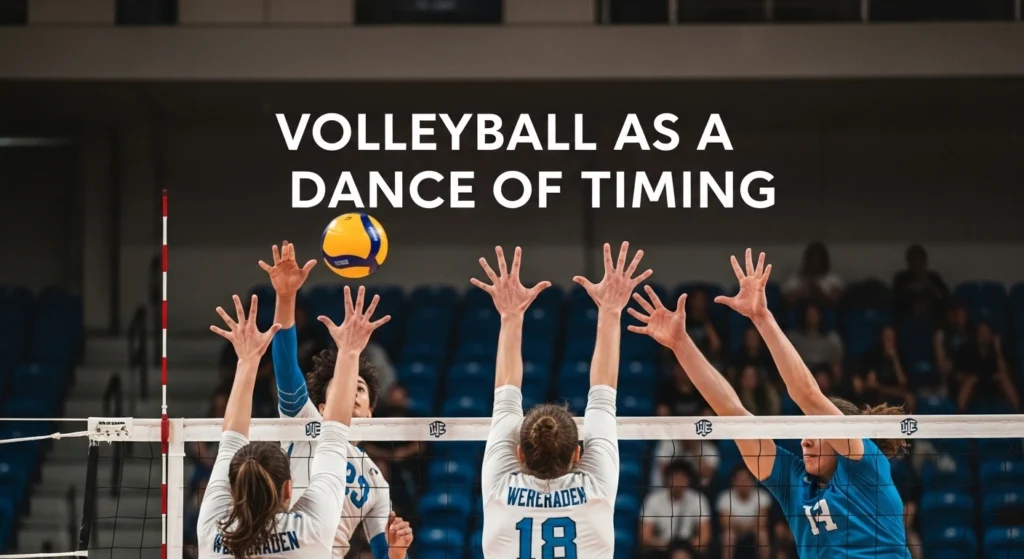
Dance metaphors highlight rhythm and coordination.
Meaning: Volleyball is about moving together, anticipating each step.
Example idea: “The team played volleyball like a dance, each pass perfectly in sync.”
Alternative expressions:
- Choreography of motion
- Ballet above the net
- Rhythm of teamwork
Sensory detail: The court becomes a stage, and every jump feels like a practiced step.
Volleyball as a Conversation in the Air
This metaphor emphasizes communication.
Meaning: Each pass and set is like speaking without words.
Example idea: “The rally was a conversation, the ball carrying messages between hands.”
Alternative expressions:
- Dialogue of movement
- Silent teamwork
- Language of passes
This metaphor shows connection.
Volleyball as a Storm Over the Net
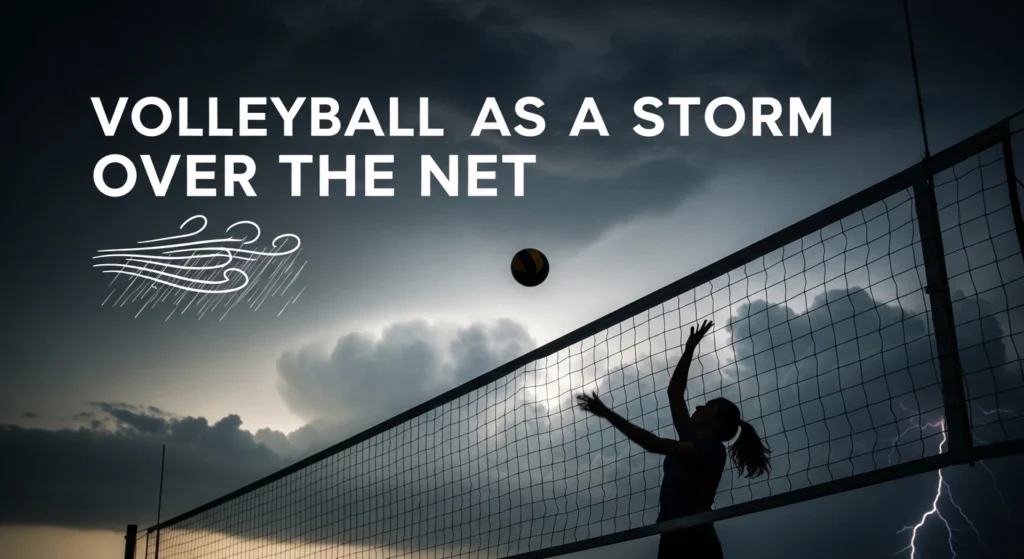
Storm metaphors show intensity and power.
Meaning: Spikes and blocks feel like thunder and lightning.
Example idea: “Her spike was lightning, cracking through the defense.”
Alternative expressions:
- Thunderous attack
- Tempest of energy
- Storm of competition
Mini storytelling: In a close match, the air feels charged, like clouds gathering before rain.
Volleyball as Chess Played at High Speed
Chess metaphors highlight strategy.
Meaning: Volleyball is not only physical—it is mental and tactical.
Example idea: “Every set was a chess move, planned two steps ahead.”
Alternative expressions:
- Strategy in motion
- Mental match above the net
- Game of positioning
This metaphor shows intelligence in sport.
Volleyball as Waves Crashing Back and Forth
Wave metaphors emphasize rhythm and momentum.
Meaning: Rallies rise and fall like tides.
Example idea: “The ball moved like waves, crashing from one side to the other.”
Alternative expressions:
- Ocean of rallies
- Tide of teamwork
- Surging momentum
This metaphor feels fluid and dynamic.
Volleyball as Flying Poetry
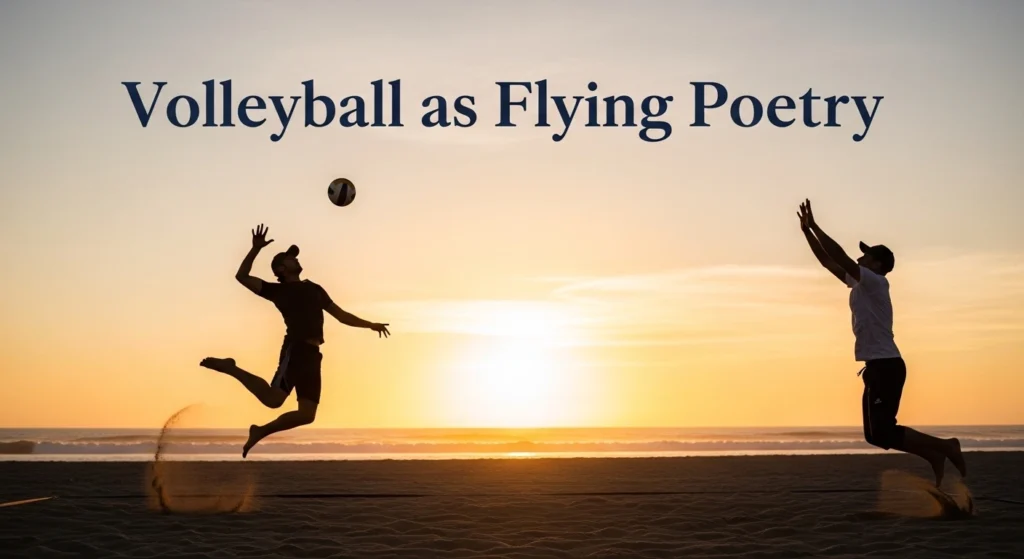
This metaphor highlights beauty.
Meaning: The arcs of the ball and leaps of players can feel graceful.
Example idea: “The match was flying poetry, written in jumps and motion.”
Alternative expressions:
- Art in the air
- Graceful battle
- Sport as music
This metaphor adds softness to competition.
Volleyball Players as Guardians of the Net
Guardian metaphors show defense and protection.
Meaning: Blocking is like guarding a border.
Example idea: “She stood as a guardian, refusing to let the ball pass.”
Alternative expressions:
- Wall of defense
- Protector of the court
- Shield at the net
This metaphor emphasizes strength.
Volleyball as a Test of Trust
Trust metaphors show teamwork.
Meaning: You rely on others for every point.
Example idea: “Volleyball is trust made visible, hands depending on hands.”
Alternative expressions:
- Teamwork woven together
- Shared heartbeat
- Connection in motion
This metaphor captures the spirit of the sport.
Volleyball as Fireworks in Motion

Fireworks symbolize excitement.
Meaning: Big spikes and long rallies burst with energy.
Example idea: “The final point exploded like fireworks across the court.”
Alternative expressions:
- Spark of victory
- Burst of celebration
- Bright intensity
This metaphor feels joyful.
When Volleyball Feels Like a Battle
Competition metaphors show struggle.
Meaning: Teams fight for every point.
Example idea: “The court became a battlefield, every rally a small war.”
Alternative expressions:
- Clash of willpower
- Fight above the net
- Arena of effort
This metaphor highlights determination.
When Volleyball Feels Like Unity
Sometimes volleyball is about harmony:
- A choir of movement
- A circle of support
- One rhythm shared
Example idea: “They moved like one body, united by the ball.”
These metaphors show togetherness.
How Writers Use Volleyball Metaphors
Writers often use volleyball to symbolize teamwork and resilience. The constant return of the ball mirrors life’s challenges. The need for cooperation mirrors relationships.
Metaphors help transform a sports match into a story about trust, effort, and connection.
A Small Exercise to Create Your Own Volleyball Metaphor
Fill in the blank:
“Volleyball is like ______.”
Sample answers:
- A dance above the net
- A storm of teamwork
- A conversation in the air
- Waves crashing back and forth
- Chess played in motion
Now try it in a sentence:
Example: “Volleyball is a conversation in the air, where trust speaks louder than words.”
Using Volleyball Metaphors in Daily Life
Volleyball metaphors work well for motivation and teamwork.
Instead of: “We need to cooperate.” Try: “Let’s play this like volleyball—pass, trust, and move together.”
Instead of: “That was intense.” Try: “It felt like a storm over the net.”
These metaphors bring energy into everyday language.
Keeping Volleyball Metaphors Clear and Fun
The best metaphors match volleyball’s spirit: fast, rhythmic, cooperative, exciting. Avoid metaphors that feel too dark unless the tone calls for it.
One strong metaphor can capture the whole game.
Conclusion
Volleyball is more than a sport—it is a story waiting to be told. Through metaphors, we capture its rhythm, its tension, and its beauty. We turn movement into meaning and action into emotion.
When you use metaphors, you don’t just describe the game—you translate it. You allow others to see, hear, and feel what happens on the court.
FAQs
Why are metaphors for volleyball useful?
They help describe the sport’s speed, teamwork, and emotion in vivid ways.
What is the best metaphor for volleyball teamwork?
A conversation in the air or a dance of timing captures cooperation beautifully.
Which metaphor shows volleyball intensity?
Storm and battlefield metaphors highlight power and competition.
Can volleyball metaphors be poetic?
Yes. Flying poetry and waves metaphors show the beauty of motion.
How can I create my own volleyball metaphor?
Think about what volleyball feels like—fast, rhythmic, strategic, cooperative—and compare it to something vivid like dance, storms, or music.



