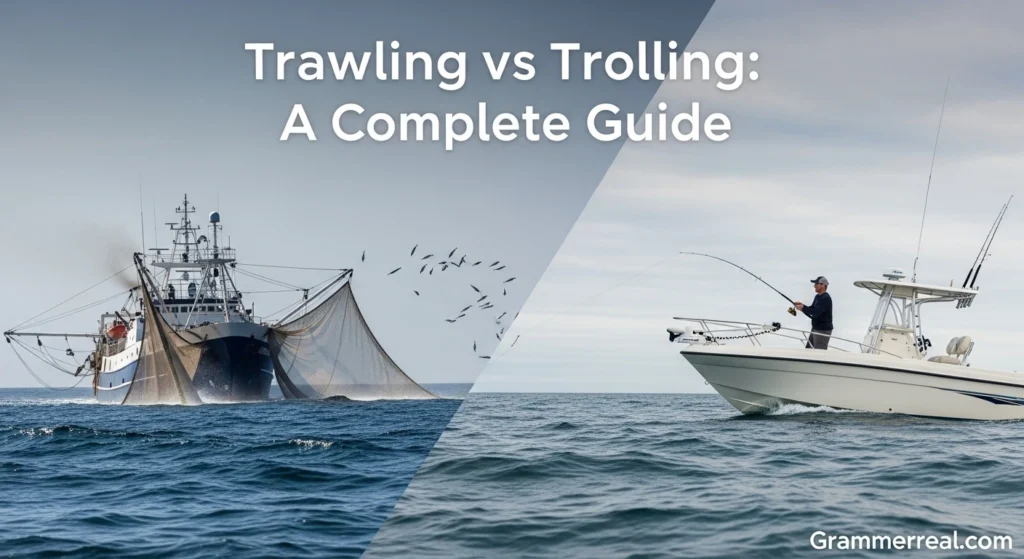
The difference between trawling and trolling confuses many English learners. Both words look similar, but they have different meanings and uses. One word relates to fishing, and the other refers to online behavior or fishing techniques. Understanding the correct meaning helps avoid confusion in speech and writing. In this article, we will explain the meaning, usage, spelling, examples, and common mistakes. By the end, you will know when to use trawling and when to use trolling.
What Does “Trawling vs Trolling” Mean?
Trawling refers to a method of fishing. Fishermen use a large net called a trawl to catch fish. The net is pulled through the water by a boat. This method is common in commercial fishing and ocean industries.
Example:
- The ship was trawling for fish near the coast.
Trolling has two meanings. The first meaning also relates to fishing. In this case, a fishing line is pulled behind a moving boat to catch fish. The second and more modern meaning refers to online behavior, where a person posts messages to upset others or create arguments.
Examples:
- They spent the afternoon trolling for salmon.
- Someone was trolling in the comment section and causing trouble.
Both words connect to fishing, but trolling also has a social media meaning.
Spelling and History
Trawling comes from the word “trawl,” which is from Old French and Middle English roots referring to nets and fishing equipment. Trolling comes from the word “troll,” originally related to turning or rolling, and later used in fishing and online language. The internet meaning of trolling became common in the late 1990s and early 2000s.
When to Use “Trawling”
Use trawling when talking about commercial or large-scale fishing. Trawling uses big nets, large boats, and professional equipment. It is often associated with ocean and deep-water fishing.
Examples:
- Fishing boats were trawling for tuna.
- The company specializes in trawling the North Atlantic.
- Trawling operations can catch large amounts of fish.
Trawling may also appear in environmental discussions.
Example:
- Trawling can affect the sea floor and marine habitats.
When to Use “Trolling”
Use trolling in two different contexts: fishing and online behavior.
Fishing Meaning
Trolling as fishing uses small boats, fishing lines, and bait. It is common in lakes, rivers, and coastal waters.
Examples:
- He enjoyed trolling for trout on the lake.
- The guide said trolling works best in colder waters.
Online Meaning
Trolling online refers to posting messages that are rude, annoying, or meant to provoke others.
Examples:
- The user was trolling and trying to start an argument.
- Trolling in online games is a common problem.
- The moderator removed the trolling comments.
Both meanings are correct, and the context makes the difference clear.
Contextual Examples of Correct Usage
Fishing
- Trawling uses nets.
- Trolling uses lines.
Examples:
- The boat was trawling near the harbor.
- They were trolling along the shore.
Internet Behavior
- Someone was trolling on social media.
- The forum removed trolling posts.
Everyday Descriptions
- Trawling for fish is a major industry.
- Trolling for attention is common online.
These examples show how the two words function naturally.
Common Mistakes with “Trawling vs Trolling”
Mixing the meanings
Incorrect: The fishermen were trolling with huge nets. Correct: The fishermen were trawling with huge nets.
Using trolling only for fishing
Some students forget trolling has an internet meaning.
Assuming trawling works for online behavior
Incorrect: He was trawling the comments to make people angry. Correct: He was trolling the comments to make people angry.
Spelling confusion
Both words look similar but sound different.
- Trawling → “trawl”
- Trolling → “troll”
American vs British English
There is no major spelling difference between trawling and trolling in American and British English. Both varieties use the same spelling, pronunciation, and meaning. The internet meaning of trolling is also shared widely in both regions.
Examples:
American English:
- Trolling online is a serious issue.
British English:
- Trolling online is a serious issue.
For fishing, both regions use both words in outdoor and marine contexts.
Idiomatic and Natural Usage
Idiomatic examples show how the words sound in natural English:
- The trawling boats returned with full nets.
- They spent hours trolling for bass.
- Someone was trolling the chat for reactions.
- The filmmakers went trawling through archives for old footage.
The last example shows trawling used metaphorically to mean searching through material.
Practical Tips to Remember the Correct Form
Fishing method
- Nets → trawling
- Lines → trolling
Internet use
- Annoying comments → trolling
Think about equipment
- Large boats and nets → trawling
- Small boats and lines → trolling
Think about context
Fishing meaning or internet meaning decides the word.
Sentence Examples for Practice
Trawling:
- The ship was trawling off the coast.
- Trawling is common in the fishing industry.
- Many species are caught during trawling.
Trolling (Fishing):
- They tried trolling for trout in the river.
- Trolling works best in the morning.
- The guide recommended trolling with baitfish.
Trolling (Internet):
- Someone was trolling on the forum.
- The comments section was full of trolling.
- The moderator banned trolling behavior.
Why Using the Correct Form Matters
Using the correct word avoids confusion in speaking and writing. Mixing trawling and trolling may change the meaning of a sentence, especially in fishing or online contexts. Correct usage shows attention to detail and improves clarity.
Reflection on Grammar Rules and Writing Techniques
This topic focuses on spelling, meaning, and context. Trawling and trolling show how English words can look similar but have different uses. Practicing these differences improves vocabulary, reading skills, and writing accuracy.
Conclusion
In conclusion, trawling and trolling are two different words with different meanings. Trawling refers to fishing with nets, while trolling refers to fishing with lines or causing trouble online. Both are correct, but the context decides which one to use. With practice, the difference becomes simple.
FAQs
Is trawling correct?
Yes, for fishing with nets.
Is trolling correct?
Yes, for fishing with lines or online behavior.
Do they mean the same thing?
No, they describe different actions.
Which word refers to online trouble?
Trolling.
Which word refers to nets?
Trawling.
Is trolling used in fishing?
Yes, but with lines instead of nets.
Do both words relate to fishing?
Yes, but in different ways.
Is there a spelling difference by region?
No, both are spelled the same in American and British English.
Can trawling be used metaphorically?
Yes, for searching through information.
How can I remember the difference?
Nets = trawling, lines or online = trolling.



