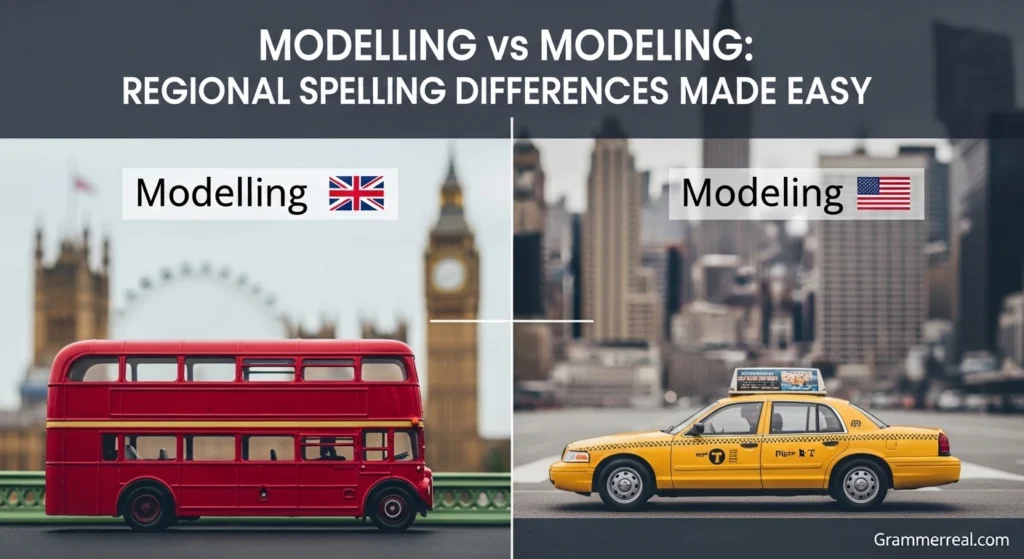
Many English learners and even native speakers get confused when they see modelling vs modeling used in different places. At first glance, both words look correct, and in fact, they are correct.
The confusion usually comes from regional language differences rather than grammar mistakes. This topic matters because spelling affects clarity, consistency, and reader trust. Writers often worry about which form is “right” and whether one is more formal than the other. The truth is simple, but it needs clear explanation. This article explains modelling vs modeling in plain language with clear examples. You will learn when to use each spelling and why both exist. By the end, you will feel confident choosing the correct form for your writing. The goal is clarity, not complexity.
What does modelling or modeling mean?
Before comparing spellings, it helps to understand the meaning of the word itself. Both modelling and modeling come from the verb to model. The verb has several related meanings, but the core idea stays the same.
Modeling or modelling can mean:
- Creating a representation of something
- Showing how something should be done
- Working as a fashion or commercial model
- Building a physical or digital model
- Explaining ideas using examples or systems
For example, a teacher may model good behavior for students. An engineer may create a model of a bridge. A person may work in the fashion industry as a model. In all these cases, the action word is either modeling or modelling, depending on spelling style.
The meaning does not change with spelling. Only the regional style changes.
Why are there two spellings?
The difference between modelling vs modeling exists because of differences between American English and British English. Over time, English spelling changed in different regions.
British English often keeps double consonants when adding endings like -ing. American English usually simplifies spellings by dropping one consonant. This pattern appears in many word pairs, not just modelling and modeling.
This is not a grammar issue. It is a spelling convention. Both forms follow consistent rules within their language systems.
Understanding this difference makes it easier to choose the right form.
Modelling in British English
Modelling is the preferred spelling in British English. It follows the British rule of keeping the double l when adding -ing to verbs that end in l.
Examples of British English usage:
- She is modelling a new dress for the show.
- The teacher is modelling good writing skills.
- The company focuses on financial modelling.
In British English, verbs like travel, cancel, and label also double the final l:
- travelling
- cancelled
- labelled
So, modelling fits naturally into this pattern.
If you are writing for a British audience or following British spelling rules, modelling is the correct choice.
Modeling in American English
Modeling is the standard spelling in American English. American spelling often removes extra letters to make words simpler and shorter.
Examples of American English usage:
- She is modeling for a fashion brand.
- The teacher is modeling good habits.
- The project involves data modeling.
In American English, the same pattern appears in other words:
- traveling
- canceled
- labeled
So, modeling follows the American rule of using a single l.
If your audience uses American English, modeling is the correct spelling.
Modelling vs modeling in academic and professional writing
In formal writing, consistency matters more than the choice itself. Academic, technical, and professional documents often follow a specific style guide.
If a journal or institution uses British English, it will expect modelling. If it follows American English, it will expect modeling.
Here are some common fields where the word appears often:
- Business
- Science
- Engineering
- Education
- Fashion
For example:
- Financial modelling is common in British business texts.
- Financial modeling is common in American business texts.
Neither spelling is more correct or more advanced. The key is to match the spelling to the chosen language style and use it consistently throughout the document.
Common mistakes with modelling vs modeling
Even though the rule is simple, people still make mistakes. Most errors happen because writers mix styles without realizing it.
Common mistakes include:
- Using modelling in one paragraph and modeling in another
- Thinking one spelling is wrong
- Changing spelling based on meaning
- Assuming double letters mean formality
For example, some writers believe modelling is only for fashion and modeling is for science. This belief is incorrect. Both spellings can be used for any meaning, depending on the language style.
Another mistake is switching spellings when editing or copying content. This creates inconsistency and confusion for readers.
Does the meaning change with spelling?
No, the meaning does not change at all. Modelling vs modeling is a spelling difference only. The action, idea, and context stay the same.
Look at these sentences:
- She is modelling professional behavior.
- She is modeling professional behavior.
Both sentences mean exactly the same thing. Only the spelling reflects regional language rules.
This is important because some learners worry that one spelling carries a different tone or purpose. That is not true.
Modelling vs modeling in fashion and media
The fashion industry uses both spellings, depending on region.
In the UK and other countries that follow British English, modelling is standard:
- She is modelling for a London brand.
In the US and other American English regions, modeling is standard:
- She is modeling for a New York agency.
The job itself does not change. The spelling follows the language environment.
Media publications usually stick to one style guide. A British magazine will always use modelling. An American magazine will always use modeling.
Modelling vs modeling in science and technology
In technical fields, the word often appears in phrases like:
- Data modelling / data modeling
- Computer modelling / computer modeling
- Statistical modelling / statistical modeling
Again, the choice depends on language style, not subject matter.
British scientific writing uses modelling. American scientific writing uses modeling. International readers will understand both forms without confusion.
Idiomatic and fixed expressions
Some phrases include the word model in a fixed form, but the spelling still follows regional rules.
Examples:
- Role modelling / role modeling
- Behavior modelling / behavior modeling
- Business modelling / business modeling
The structure of the phrase stays the same. Only the spelling of the verb form changes.
There is no special idiomatic rule that forces one spelling over the other.
How to choose the correct spelling
Choosing between modelling vs modeling becomes easy when you ask one simple question:
Which form of English am I using?
Here are some practical tips:
- Use modelling if you follow British English
- Use modeling if you follow American English
- Stay consistent throughout your text
- Follow the style guide if one is given
- Do not switch spellings halfway
If you are unsure, check other words in your text. If you write colour, centre, and travelling, you are using British English or if you write color, center, and traveling, you are using American English.
Match modelling or modeling to that choice.
Modelling vs modeling in global communication
In global communication, both spellings appear side by side. International readers are used to seeing both forms.
In emails, reports, and online content, clarity matters more than spelling preference. Most readers will understand either form without trouble.
However, consistency still matters. Mixing spellings can make writing look careless, even if the reader understands the meaning.
Choosing one form and sticking to it shows attention to detail.
Historical background of the spelling difference
The spelling difference comes from language reform efforts in the past. American English spelling became simpler over time, while British English kept older forms.
Words ending in -el often kept double l in British English. American English dropped one l in many cases.
This pattern explains many spelling pairs, not just modelling vs modeling.
Understanding this background helps writers see the logic behind the difference instead of memorizing rules.
Practical examples in full sentences
Here are clear examples showing correct usage in context.
British English:
- The professor is modelling complex ideas for students.
- The company focuses on risk modelling.
- She is interested in fashion modelling.
American English:
- The professor is modeling complex ideas for students.
- The company focuses on risk modeling.
- She is interested in fashion modeling.
Notice that the sentence structure stays the same. Only the spelling changes.
Teaching modelling vs modeling to learners
For learners, the easiest approach is to link spelling to region.
Teachers can explain:
- Both spellings are correct
- Meaning does not change
- Choose one style and stay consistent
This approach reduces anxiety and builds confidence. Learners do not need to memorize complex grammar rules. They only need to understand regional patterns.
Conclusion
The difference between modelling vs modeling is simple and logical. Both spellings are correct and widely accepted. The choice depends on whether you use British English or American English. The meaning never changes, and neither form is more formal or more correct. Consistency is the most important rule. By understanding regional spelling patterns, writers can avoid confusion and write with confidence. This knowledge improves clarity, accuracy, and reader trust. Once you learn this rule, similar spelling differences become easier to handle.
FAQs
1. Is modelling wrong in American English?
No, it is understood, but modeling is preferred in American English.
2. Is modeling wrong in British English?
No, it is understood, but modelling is preferred in British English.
3. Does modelling mean something different from modeling?
No, both words have the same meaning.
4. Which spelling should I use in academic writing?
Use the spelling that matches the language style of your institution or publication.
5. Can I mix modelling and modeling in one article?
No, mixing spellings reduces consistency and clarity.
6. Is modelling more formal than modeling?
No, neither spelling is more formal.
7. Which spelling is older?
Modelling follows older British spelling traditions.
8. Does this rule apply to other words?
Yes, words like travelling and cancelled follow the same pattern.
9. What if my audience is international?
Choose one style and use it consistently.
10. How can I remember the difference easily?
Link modelling to British English and modeling to American English.



