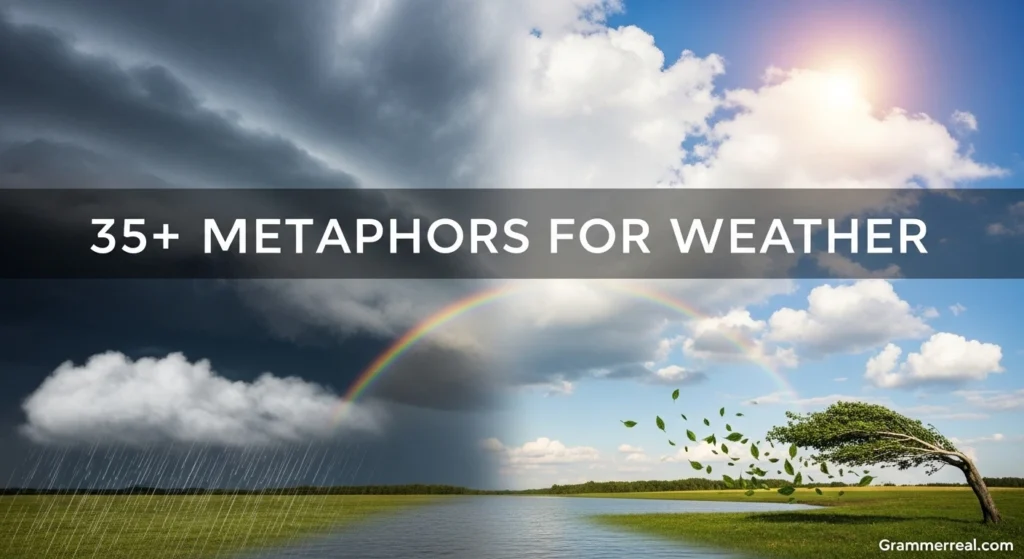
Weather speaks without words. It paints the sky in gold at sunrise, gathers gray clouds by afternoon, and sometimes breaks open with thunder by night. You wake up to sunlight and feel lighter. You step outside into cold wind and instantly tighten your coat. In this quiet way, weather influences mood, energy, and perspective. Because it changes constantly and surrounds everyone equally, weather has become one of the most powerful metaphors in language.
Life rarely stays steady. Emotions shift. Circumstances move. Plans brighten and then grow uncertain. Weather mirrors this rhythm perfectly. A clear day feels hopeful. A storm feels overwhelming. Fog feels confusing. Spring feels new. Instead of explaining every emotion in detail, we often describe the “weather” of our lives. Through metaphor, the sky becomes a reflection of the heart.
What Weather Symbolizes in Human Experience
Weather often represents the inner climate of a person’s life. It can stand for:
- Emotional highs and lows
- Personal growth
- Conflict or peace
- Uncertainty or clarity
- Pressure and intensity
- Renewal and healing
- Patience and endurance
Since weather moves in cycles, it reminds us that nothing stays the same forever. Sunshine fades. Storms pass. Seasons turn. That natural pattern offers comfort and realism at the same time.
Why Weather Creates Such Strong Imagery
Everyone has felt rain on their skin or heat in the air. These shared experiences make weather metaphors easy to understand and emotionally powerful.
Moreover, weather cannot be controlled. You cannot command the clouds to disappear. In the same way, you cannot always control emotions or life events. This similarity gives weather metaphors depth. They capture both vulnerability and resilience.
Weather as a Storm
A storm gathers slowly, then crashes loudly. Thunder shakes the sky. Wind pushes against doors. Rain falls without pause.
Meaning: Storms often represent emotional turmoil, arguments, stress, or major challenges.
Example idea: “Their friendship moved through a season of storms.”
The image suggests tension, noise, and instability. However, storms also clean the air and water the ground, which means they can symbolize necessary release or transformation.
Weather as Sunshine
Sunlight spreads warmth across everything it touches. Colors look brighter. Energy rises.
Meaning: Sunshine represents happiness, hope, positivity, and comfort.
Example idea: “Her laughter felt like pure sunshine in a heavy week.”
This metaphor reflects warmth and emotional lightness.
Weather as Rain
Rain falls steadily, sometimes gently and sometimes fiercely. It taps against windows and fills rivers.
Meaning: Rain can symbolize sadness, reflection, healing, or renewal.
Example idea: “Grief came down like a quiet rain that lasted for days.”
Although rain often connects to tears, it also nourishes growth. Without rain, nothing blooms.
Weather as Fog
Fog blurs vision and hides what lies ahead. The world feels close yet unclear.
Meaning: Fog represents confusion, doubt, or emotional uncertainty.
Example idea: “He walked through a fog of unanswered questions.”
The metaphor captures mental heaviness and lack of direction.
Weather as Changing Seasons
Each season carries its own atmosphere. Spring brings freshness. Summer brings intensity. Autumn carries reflection. Winter holds stillness.
Meaning: Seasonal weather symbolizes stages of life.
Example idea: “After a long winter of struggle, she finally stepped into spring.”
This metaphor suggests hope after difficulty and the promise of renewal.
Weather as Wind
Wind moves invisibly but changes everything in its path. Leaves scatter. Waves rise. Doors slam.
Meaning: Wind represents change, influence, or restless movement.
Example idea: “A quiet wind of change moved through the company.”
The image suggests subtle but powerful transformation.
Weather as Heat
Heat builds slowly until the air feels heavy. It drains energy and demands attention.
Meaning: Heat can symbolize pressure, passion, tension, or emotional intensity.
Example idea: “The room filled with the heat of unspoken anger.”
Here, weather reflects rising emotional temperature.
Weather as a Rainbow
A rainbow appears only after rain and light meet. It does not last long, yet it leaves a strong impression.
Meaning: A rainbow symbolizes hope, beauty after hardship, and unexpected joy.
Example idea: “After months of struggle, a rainbow of opportunity appeared.”
This metaphor reminds us that brightness often follows difficulty.
Gentle Weather and Harsh Weather
At times, life feels like a soft spring morning — balanced, hopeful, and calm. Light breeze, warm sun, clear sky. Everything moves smoothly.
At other times, life resembles a violent storm — loud, uncertain, and exhausting. Thunder echoes. Wind resists every step.
Both types of weather hold meaning. Calm teaches gratitude. Storms build strength.
How Writers Use Weather to Shape Mood
In storytelling, weather often sets the emotional tone before characters speak. Dark clouds hint at conflict. Golden sunlight suggests optimism. Sudden rain may signal tears or emotional release. Instead of stating feelings directly, writers describe the sky. Readers understand the emotion through atmosphere.
This technique works because weather naturally influences perception. A sunny day feels different from a gray afternoon. By using weather metaphorically, writers allow readers to feel mood rather than simply read about it.
A Personal Reflection
Imagine your current life as a forecast. What does it look like today?
Is it bright and open like a clear horizon? Is it heavy with clouds waiting to break? Does it feel like early spring — uncertain but full of promise?
Choose the image that fits honestly. Once you name your weather, you better understand your emotional climate.
Using Weather Metaphors in Everyday Language
Instead of saying, “I’m overwhelmed,” you might say, “I’m standing in a storm.” Rather than saying, “I feel hopeful,” you could say, “The skies are clearing.” If confusion surrounds you, you might describe it as “walking through fog.”
These expressions feel vivid and relatable. They allow emotion to breathe through imagery.
Conclusion
Weather shifts constantly, just like life. Storms roll in, then move away. Sunshine spreads warmth, then fades into evening. Fog lifts. Rain nourishes. Seasons turn. Through metaphor, weather becomes a language for describing the inner climate of the human heart.
It reminds us that no emotional state lasts forever. Turbulence settles. Cold gives way to warmth. Even after the darkest storm, light eventually returns. By looking at the sky, we often find a reflection of ourselves — changing, resilient, and always moving toward a new horizon.
FAQs
Why is weather such a common metaphor?
Weather reflects change, emotion, and life cycles in a way everyone understands.
Does stormy weather always symbolize something negative?
Not always. While storms can represent conflict or stress, they can also symbolize growth and emotional release.
What does sunshine usually symbolize?
Sunshine often represents happiness, optimism, warmth, and clarity.
Why are seasons compared to life stages?
Because seasons move in natural cycles, they mirror growth, rest, struggle, and renewal in human life.
How can someone create a unique weather metaphor?
Start by observing your emotional atmosphere. Notice whether it feels heavy, bright, calm, or unsettled. Then connect that feeling to a type of weather that carries the same energy, and build your sentence around that image.



