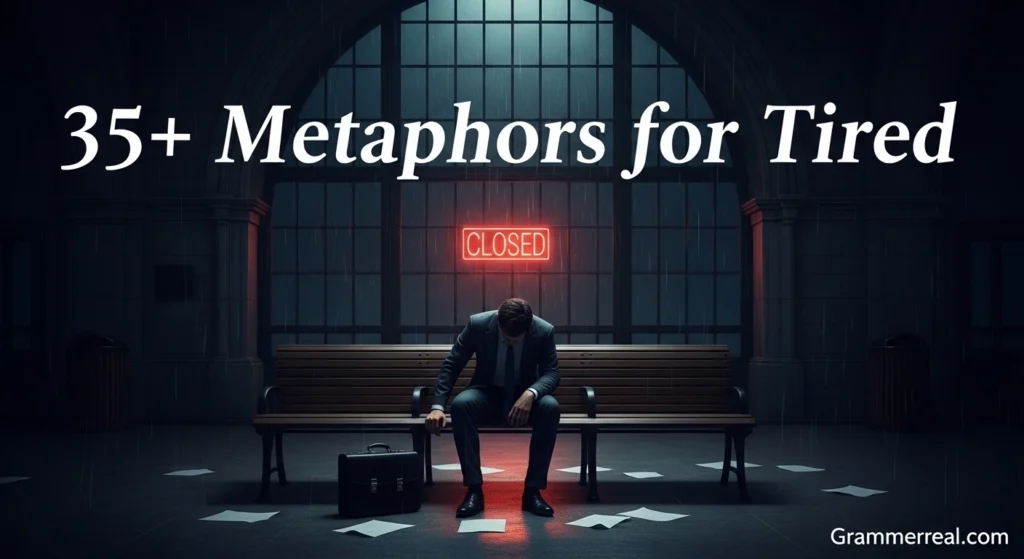
Tiredness does not always look dramatic. It does not always show in heavy yawns or closed eyes. Sometimes it hides behind a polite smile. Sometimes it sits quietly in your chest like weight you cannot explain. After long days, difficult conversations, or endless responsibilities, tiredness spreads slowly through the body and mind. Because exhaustion can feel different for everyone, metaphors help describe it clearly and simply.
At its core, being tired means losing energy. However, fatigue is not only physical. Mental strain, emotional pressure, and constant stress can drain a person just as deeply as hard work. For that reason, people often compare tiredness to empty batteries, fading lights, heavy bags, or dry wells. These images make invisible exhaustion easier to understand.
When Energy Runs Low
Energy works like fuel in a machine. Once the fuel decreases, movement becomes slower and less smooth. In daily life, people often describe this feeling as “running on empty.”
Meaning: Tiredness reflects reduced strength and focus.
For example, someone might say, “By the end of the week, I felt like a phone stuck at one percent.” That comparison immediately shows urgency and weakness.
Moreover, this metaphor reminds us that charging is necessary. Rest is not laziness. It is maintenance.
Carrying the Weight of Too Much
Imagine walking with a backpack filled with stones. At first, the load feels manageable. After hours, each step becomes heavier.
Meaning: Tiredness can build from accumulated stress.
A person might express this by saying, “Every problem added another stone to my bag.” This image shows how responsibilities slowly increase pressure.
As time passes, even small tasks feel exhausting because the weight has grown too large.
A Candle Burning Down
A candle shines brightly at first. Gradually, the flame weakens as the wax melts away.
Meaning: Tiredness can represent fading strength.
Someone could describe their focus by saying, “My mind flickered like a candle in wind.” That sentence shows both effort and fragility.
Although the flame grows smaller, it still gives light. In the same way, even tired people often continue trying.
A Dry Well With No Water
Wells provide water until they run dry. Without refilling, nothing can be drawn from them.
Meaning: Emotional exhaustion leaves little to give.
A teacher, parent, or caregiver might say, “I feel like a dry well.” This metaphor shows deep depletion rather than simple sleepiness.
Importantly, a dry well can refill over time. Renewal is possible with rest and care.
Fog Covering the Mind
Fog reduces visibility and blurs shapes.
Meaning: Mental tiredness clouds clarity.
Instead of saying, “I cannot think clearly,” someone might explain, “My thoughts are lost in fog.” The image feels immediate and relatable.
Because fog eventually lifts, this metaphor also suggests that confusion can pass.
A Phone With Too Many Open Apps
Modern life often demands multitasking. When too many apps run at once, a phone slows down.
Meaning: Overthinking and multitasking cause mental fatigue.
A person might say, “My brain feels like it has too many tabs open.” This comparison feels modern and simple.
Reducing tasks, like closing apps, restores speed and clarity.
Low Tide at the Shore
At low tide, the ocean pulls back and leaves the shore exposed.
Meaning: Tiredness can feel like temporary withdrawal of energy.
Someone could say, “My motivation feels like low tide.” That image suggests emptiness, yet it also hints that high tide will return.
Energy moves in cycles. Rest brings it back.
The Difference Between Sleep and Burnout
Not all tiredness is equal. After a short night, sleep usually solves the problem. However, burnout feels deeper and heavier. It may linger even after rest.
Burnout often feels like a machine running without oil. Movement continues, but friction increases. In contrast, simple sleepiness feels like a dim light that brightens again after charging.
Understanding the difference helps people respond correctly. Some fatigue needs a nap. Other exhaustion needs boundaries and recovery time.
Emotional Exhaustion in Relationships
Sometimes tiredness does not come from work. It grows from emotional strain. Constant conflict, disappointment, or worry can drain the heart.
In these cases, someone might describe themselves as “an overused battery.” The image communicates overextension. Giving too much without receiving support leads to imbalance.
Therefore, emotional rest matters as much as physical sleep.
How Writers Describe Tiredness
Authors often avoid plain statements like “He was tired.” Instead, they write, “His steps dragged across the floor,” or “Her voice faded like a dying echo.” These descriptions create stronger images.
Metaphors allow readers to feel exhaustion rather than simply understand it. A heavy backpack or fading candle paints a clearer picture than a simple adjective.
Recognizing Your Own Form of Tiredness
Pause and ask yourself what your tiredness feels like.
Does it resemble an empty battery? Does it feel like carrying stones uphill? Or Does it seem like fog in your mind?
Naming the image can help identify the cause. Once the cause becomes clear, recovery becomes easier.
Speaking About Tiredness Naturally
When expressing fatigue, simple images often work best. Instead of repeating the word “tired,” you might describe your day as “running on low power.” You could explain stress by saying, “I’ve been carrying too much weight lately.” Clear comparisons communicate emotion without exaggeration.
At the same time, balance matters. One strong metaphor creates impact. Too many comparisons may feel forced. Choose images that match your true experience.
Conclusion
Tiredness can feel like a fading candle, a heavy backpack, a dry well, or a foggy morning. Although exhaustion may seem discouraging, it often signals the need for rest and balance. Energy does not disappear forever. It simply needs renewal.
Through metaphor, tiredness becomes easier to understand and express. Instead of hiding fatigue, people can describe it clearly and seek recovery. Just as batteries recharge and wells refill, strength can return with proper care.
FAQs
Why are batteries common metaphors for tiredness?
Because batteries clearly show energy levels rising and falling.
What is the difference between tiredness and burnout?
Tiredness improves with rest, while burnout often requires deeper recovery and lifestyle changes.
Can emotional stress cause physical tiredness?
Yes. Emotional strain can drain the body’s energy.
Why is fog used as a metaphor for mental fatigue?
Fog reduces clarity, just like exhaustion clouds thinking.
How can someone recover from deep exhaustion?
Rest, healthy boundaries, and balanced routines help restore energy over time.



