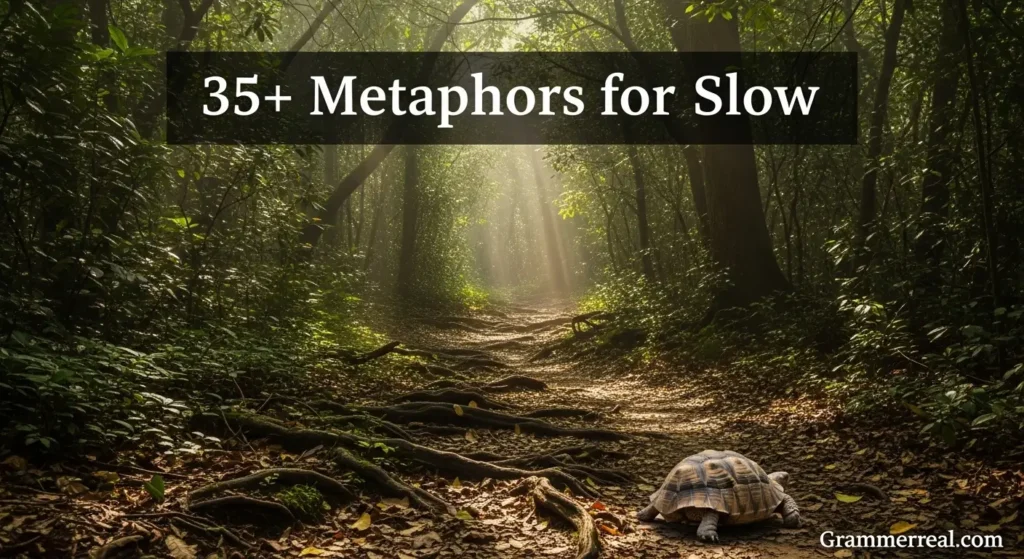
Not everything in life moves quickly. Some moments stretch. Some journeys take time and some changes happen so gradually that we barely notice them. While speed often gets attention, slowness carries its own meaning. It can feel peaceful. It can feel frustrating and it can even feel wise.
Because “slow” can describe movement, growth, thinking, or emotion, writers use metaphors to explain it more clearly. Metaphors for slow help us picture delay, patience, calmness, or hesitation in a vivid way. Instead of simply saying something moved slowly, we can compare it to natural images that readers understand instantly.
Below, you will explore extended metaphors for slow, each explained in simple and readable language.
Slow as a Tortoise Crossing the Road
A tortoise moves carefully, step by step.
Meaning: Slow progress with steady determination.
For example: “The project moved like a tortoise on a long road.”
This metaphor highlights patience. The tortoise does not rush. However, it keeps moving forward. As a result, slowness here represents consistency rather than failure.
Slow as Honey Dripping From a Spoon
Honey flows thickly and smoothly.
Meaning: Slow movement that feels heavy or stretched.
For instance: “Time dripped like honey during the long meeting.”
This image captures the feeling of waiting. Each second feels longer than usual. Therefore, this metaphor often describes boredom or delay.
Slow as a Sunset Fading Into Night
A sunset does not disappear instantly. Colors change gradually.
Meaning: Slow and natural transition.
Example: “The excitement faded like a sunset.”
This comparison feels calm. It shows that not all slow changes are negative. Sometimes slowness creates beauty.
Slow as Winter Melting Into Spring
Seasonal change takes weeks, not minutes.
Meaning: Slow transformation over time.
For example: “Trust returned like winter melting into spring.”
This metaphor emphasizes healing. Growth does not always appear suddenly. Instead, it builds quietly.
Slow as a Snail Leaving a Trail
A snail moves carefully and leaves a visible path.
Meaning: Extremely slow progress.
For instance: “The internet crawled like a snail.”
This image often adds humor. It highlights frustration but in a light way.
Slow as Thick Fog Rolling Over Hills
Fog spreads gradually and softly.
Meaning: Slow movement that feels quiet or mysterious.
Example: “Sleep crept in like fog across the valley.”
This metaphor suggests softness. Slowness here feels peaceful rather than annoying.
Slow as an Old Clock Ticking in a Silent Room
In silence, every tick feels louder.
Meaning: Slow time that feels stretched.
For example: “The minutes ticked like an old clock.”
This comparison highlights awareness of time. When someone waits anxiously, each second feels longer.
Slow as Roots Growing Beneath the Soil
Roots grow invisibly and patiently.
Meaning: Quiet and gradual development.
For instance: “Confidence grew like roots underground.”
This metaphor shows positive slowness. Growth may not appear dramatic, but it becomes strong over time.
Slow as a River Bending Around Rocks
A calm river moves steadily, not quickly.
Meaning: Relaxed and unhurried motion.
Example: “The afternoon passed like a lazy river.”
This image suggests peace. Not all slow experiences feel negative. Sometimes slowness brings rest.
Slow as Paint Drying on a Wall
Paint drying takes time and requires patience.
Meaning: Extremely boring or delayed experience.
For example: “The lecture felt like watching paint dry.”
This metaphor clearly expresses frustration.
Why Writers Use Metaphors for Slow
The word “slow” can feel plain. However, slowness carries different emotions. It may represent calmness, delay, boredom, wisdom, or growth. Because these meanings differ, metaphors help explain tone.
For example, describing someone as “slow like a river” feels peaceful. Describing something as “slow like a snail” feels frustrating. Small changes in imagery create different emotional effects.
Moreover, natural images such as seasons, rivers, or sunsets make writing relatable.
The Positive and Negative Sides of Slowness
Slowness is not always bad.
Positive slowness may include:
- Healing after hardship
- Learning step by step
- Growing stronger over time
Negative slowness may include:
- Delays and missed opportunities
- Boredom during waiting
- Lack of energy
Therefore, writers choose metaphors carefully depending on whether they want calmness or frustration.
How to Use Slow Metaphors Effectively
Keep the image simple. Match the metaphor with the mood.
Weak example: “Time moved like a snail, honey, fog, and paint drying all together.”
Better example: “Time crawled like a snail during the delay.”
Clear comparisons improve readability. Short sentences also strengthen impact.
Reflect on the Feeling of Slowness
When you think of slow, what comes to mind?
Is it peaceful like a river? Is it frustrating like traffic? Or is it patient like roots beneath the soil?
Your answer shapes the metaphor you choose.
Conclusion
Metaphors for slow help describe patience, delay, calmness, or frustration in vivid ways. Slowness can resemble a tortoise on a road, honey dripping from a spoon, a fading sunset, melting snow, thick fog, or roots growing underground. Each image highlights a different emotional shade.
Although modern life often celebrates speed, slowness carries its own strength. Through thoughtful metaphors, writers can show that moving slowly sometimes leads to deeper growth and understanding.
FAQs
Can slow ever have a positive meaning?
Yes. Slow growth and careful progress often create stronger results.
Why compare slowness to nature?
Natural processes like seasons or rivers clearly show gradual change.
How do I choose the right slow metaphor?
Decide whether the situation feels calm or frustrating, then match it with an image that reflects that mood.
Is it okay to use humor in slow metaphors?
Yes. Comparisons like “paint drying” or “a snail” can add light humor to writing.



