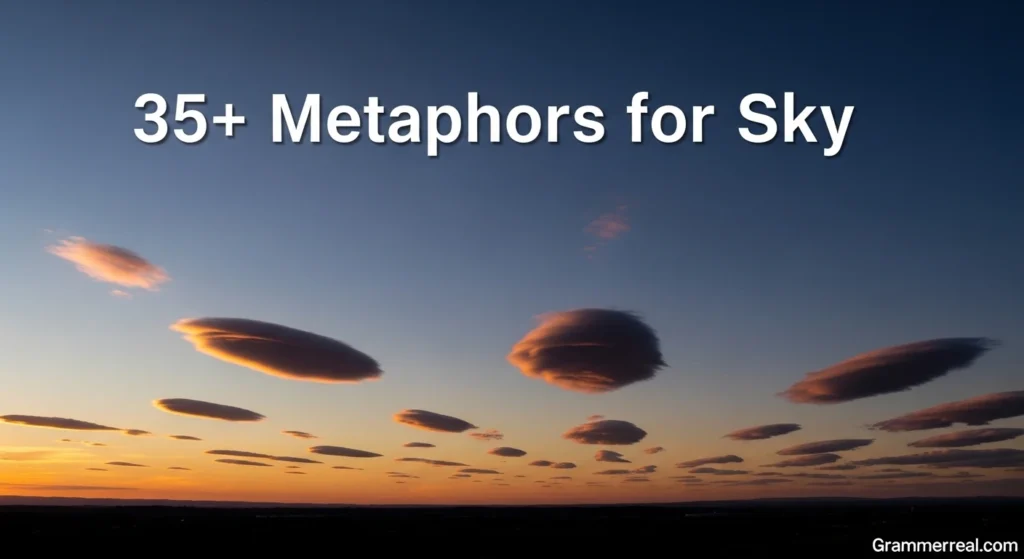
Look up for a moment. The sky stretches without walls. It holds clouds, storms, sunlight, and stars all in one endless space. Sometimes it feels peaceful and open. Other times it feels heavy and dramatic. Because the sky changes constantly, writers use metaphors to describe emotions, freedom, hope, and even uncertainty.
Metaphors for sky help turn something vast and distant into something personal and meaningful. Instead of simply describing it as blue or cloudy, we can compare it to feelings, ideas, and experiences that readers understand deeply.
Below, you will explore extended metaphors for sky, each explained clearly and thoughtfully.
The Sky as an Endless Ocean Above Our Heads
An ocean feels wide and deep, with no clear edges.
Meaning: The sky represents vastness and infinity.
For example: “The sky stretched like an ocean with no shore.”
This metaphor highlights openness. Just as sailors feel small in the sea, people often feel small under the sky. In addition, both the ocean and the sky shift colors and moods throughout the day.
The Sky as a Giant Canvas Painted by Time
A canvas holds art created with color and light.
Meaning: The sky displays beauty and creativity.
For instance: “Evening turned the sky into a painted masterpiece.”
This image emphasizes change. Morning may bring soft pastels. Sunset may bring bold orange and red. Therefore, the sky becomes an artist’s work that never stays the same.
The Sky as a Protective Roof Over the World
A roof shelters everything beneath it.
Meaning: The sky represents protection and shelter.
Example: “They stood beneath the wide roof of the sky.”
This metaphor makes the sky feel close and comforting rather than distant. It suggests unity, since everyone stands under the same roof.
The Sky as a Mirror Reflecting Emotions
Weather often matches mood.
Meaning: The sky reflects human feelings.
For example: “Her thoughts were as gray as the sky above.”
When the sky feels bright, people feel hopeful. When it darkens, emotions may feel heavy. This comparison connects nature with inner experience.
The Sky as a Window to the Infinite
A window allows us to see beyond walls.
Meaning: The sky symbolizes possibility.
For instance: “He looked at the sky as if staring through a window to freedom.”
This metaphor suggests dreams and ambition. The sky has no visible limits. Therefore, it often represents opportunity.
The Sky as a Stage for Nature’s Performance
A stage holds actors and drama.
Meaning: The sky displays action and spectacle.
Example: “Lightning performed across the sky like actors in a play.”
Clouds, storms, rainbows, and sunsets become performers. As a result, the sky feels alive and expressive.
The Sky as a Blanket of Stars at Night
At night, stars spread across the darkness.
Meaning: The sky offers comfort and wonder.
For example: “Night wrapped the world in a blanket of stars.”
This metaphor feels warm and magical. Even in darkness, light remains visible.
The Sky as a Sea of Emotions
Weather shifts quickly.
Meaning: The sky represents emotional change.
For instance: “His mood shifted like clouds across the sky.”
This comparison emphasizes movement. Just as clouds drift, emotions pass.
The Sky as a Silent Witness
The sky observes everything below.
Meaning: The sky symbolizes constancy.
Example: “The sky watched silently over generations.”
This metaphor shows stability. While people change, the sky remains.
The Sky as an Open Book
An open book invites interpretation.
Meaning: The sky holds stories in its patterns.
For example: “Clouds wrote stories across the open book of the sky.”
This image suggests imagination. People often see shapes and meaning in clouds.
Why Writers Use Sky Metaphors
The sky feels universal. Everyone sees it. Because it stretches endlessly, it easily connects to ideas of freedom, dreams, and infinity. At the same time, storms and darkness allow it to represent sadness or tension.
For example, describing hope as “wide as the sky” suggests limitlessness. Describing grief as “a dark sky” suggests heaviness. Small shifts in imagery change emotional tone clearly.
The Emotional Power of the Sky
The sky often symbolizes:
- Freedom
- Hope
- Mystery
- Change
- Protection
- Loneliness
Its size makes it powerful. Standing under a wide sky can feel freeing. However, it can also feel overwhelming. Therefore, the sky works well in both positive and reflective writing.
How to Create Strong Sky Metaphors
First, decide the emotion you want to express. If you want hope, focus on light and openness. If you want sadness, focus on gray clouds or storms or if you want wonder, focus on stars or endless blue.
Keep the comparison simple and clear. Avoid mixing too many images at once.
Weak example: “The sky was an ocean, a book, a roof, and a stage all together.”
Better example: “The sky stretched like an endless ocean above them.”
Clear imagery improves readability and emotional impact.
A Thought to Consider
When you look at the sky, what do you feel?
Do you feel free? Do you feel small? Or do you feel inspired?
Your feeling shapes the metaphor you choose.
Conclusion
Metaphors for sky help describe freedom, emotion, creativity, and infinity. The sky can resemble an endless ocean, a painted canvas, a protective roof, a silent witness, or a blanket of stars. Each image highlights a different emotional layer.
Although the sky appears distant, it connects deeply with human experience. Through thoughtful metaphors, writers can turn the open space above into a powerful symbol of life, hope, and change.
FAQs
Why is the sky often linked with freedom?
Because it appears limitless and open, which naturally represents possibility.
Can the sky symbolize negative emotions?
Yes. Dark or stormy skies often represent sadness, tension, or uncertainty.
What makes a sky metaphor effective?
A clear and focused image that matches the emotional tone of the writing.
Is the sky a common symbol in literature?
Yes. Its universal presence and changing nature make it powerful in storytelling.



