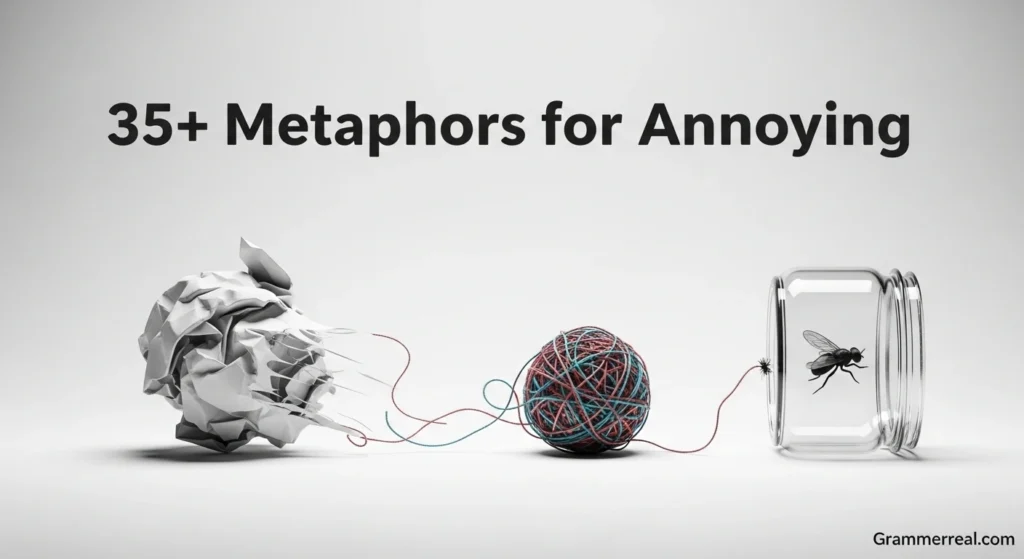
Annoyance is a small emotion, but it can feel surprisingly loud. It is the drip of a faucet you cannot ignore, the buzzing of a fly near your ear, the way a minor inconvenience can grow bigger simply because it refuses to stop. Being annoyed is often not about something huge—it is about something persistent, irritating, and hard to escape.
The word “annoying” is common, but it does not always capture the true feeling. Sometimes annoyance is funny, sometimes it is exhausting, and sometimes it is the first spark of anger. That is why metaphors for annoying are so useful. They help us describe irritation with humor, vividness, and emotional accuracy.Metaphors turn annoyance into noise, insects, sand in shoes, scratches on a record, or clouds that won’t move. These images make the feeling clearer and more expressive.
What Annoying Really Means Beyond Dislike
Annoying things are not always serious. Often, they are small disturbances that interrupt comfort or peace. Annoyance is the emotion of being poked repeatedly, even lightly, until patience wears thin.
Annoyance can also reveal stress. When someone is already tired, even tiny things can feel unbearable. Metaphors help show that emotional layer.
Why Metaphors Describe Annoyance So Well
Annoyance is sensory. It feels like sound, friction, repetition, interruption. Metaphors translate that into images everyone understands.
Instead of saying “That bothers me,” someone might say “It’s like a mosquito buzzing in my ear.” That metaphor instantly creates the feeling of irritation.
Metaphors can also soften annoyance with humor, making it easier to express without harshness.
Annoying as a Buzzing Fly
This is one of the most relatable metaphors.
Meaning: Annoyance is something small but impossible to ignore.
Example idea: “His constant comments were like a fly buzzing around my head.”
Alternative expressions:
- A mosquito in the room
- An insect you can’t swat away
This metaphor captures persistence.
Annoying as a Dripping Faucet
A drip is quiet, but endless.
Meaning: Annoyance builds through repetition.
Example idea: “The little problems felt like a dripping faucet—slowly driving me crazy.”
Alternative expressions:
- Constant drip of stress
- Never-ending tapping
This metaphor suggests gradual frustration.
Annoying as Sand in Your Shoes
Sand is tiny, but uncomfortable.
Meaning: Annoyance is a small irritation that ruins comfort.
Example idea: “Her criticism was like sand in my shoes—small, but impossible to ignore.”
Alternative expressions:
- A pebble in the shoe
- Grit under the skin
This metaphor feels physical and relatable.
Annoying as a Broken Record
A broken record repeats endlessly.
Meaning: Annoyance comes from hearing the same thing again and again.
Example idea: “He kept complaining like a broken record.”
Alternative expressions:
- Repeating on loop
- Same song every day
This metaphor works well for repetitive behavior.
Annoying as a Persistent Itch
An itch demands attention.
Meaning: Annoyance is something you can’t stop noticing.
Example idea: “The tension between them was like an itch you couldn’t scratch.”
Alternative expressions:
- Irritating itch
- Constant prickling feeling
This metaphor captures restlessness.
Annoying as Static Noise
Static is meaningless sound that disrupts clarity.
Meaning: Annoyance becomes background disturbance.
Example idea: “His negativity was like static noise in every conversation.”
Alternative expressions:
- Mental interference
- Buzzing distraction
This metaphor feels modern and emotional.
Annoying as a Cloud That Won’t Move
A cloud blocks light, even if small.
Meaning: Annoyance lingers, casting a shadow over mood.
Example idea: “The awkwardness hung like a cloud that refused to drift away.”
Alternative expressions:
- A shadow of irritation
- A lingering fog
This metaphor is softer and poetic.
Annoying as a Splinter
A splinter is small but painful.
Meaning: Annoyance is a tiny thing that keeps hurting.
Example idea: “That memory was a splinter in my mind.”
Alternative expressions:
- A thorn in the side
- A sharp little reminder
This metaphor suggests lasting irritation.
Annoying as a Loud Alarm
Some annoyances feel sharp and urgent.
Meaning: Annoyance becomes impossible to ignore.
Example idea: “His interruptions were like an alarm going off mid-thought.”
Alternative expressions:
- Sudden noise
- Jarring disruption
This metaphor works for intense irritation.
When Annoyance Can Be Funny
Sometimes annoyance is light and humorous:
- Like a cat knocking things over
- Like a toddler asking “why” endlessly
- Like a phone buzzing at the wrong time
These metaphors show irritation with warmth rather than anger.
When Annoyance Turns Into Anger
If annoyance grows, metaphors become harsher:
- Fire building under the skin
- Pressure in a boiling pot
- Thunder waiting to break
These images show escalation.
How Writers Use Annoying Metaphors
In writing, annoyance adds realism. Characters are not always furious—they are often irritated by small things.
Metaphors help show that irritation without long explanation: a dripping faucet, a mosquito, sand in shoes. These images make scenes vivid and relatable.
A Simple Activity to Describe Your Annoyance
Complete this sentence:
“My annoyance feels like ______.”
Possible answers:
- A fly buzzing near my ear
- Sand in my shoe
- A dripping faucet
- Static in my mind
This helps you express irritation creatively.
Using Annoying Metaphors in Daily Life
Metaphors can make annoyance easier to communicate without sounding harsh.
Instead of saying “You’re irritating,” you might say: “This situation feels like a dripping faucet.”
Instead of “Stop repeating,” you might say: “It’s starting to sound like a broken record.”
These soften frustration.
Keeping Annoyance Metaphors Light and Clear
Annoyance is usually small, so metaphors work best when they are simple. Avoid overly dramatic comparisons unless the irritation is truly intense.
A relatable image is more effective than an exaggerated one.
Conclusion
Metaphors for annoying help describe irritation in vivid, human ways. Whether annoyance feels like a buzzing fly, sand in your shoes, a dripping faucet, or static noise, these images capture what the word “annoying” alone cannot. They remind us that small disturbances can feel big—and that language can express even the tiniest emotions with creativity.
FAQs
Why are metaphors for annoying useful?
They help describe irritation more clearly and vividly than plain words.
What is the most common metaphor for annoyance?
Buzzing flies, mosquitoes, and dripping faucets are very common because they feel relatable.
Can annoying metaphors be humorous?
Yes. Many metaphors make annoyance lighter and more playful.
What metaphor works for repetitive annoyance?
Broken record metaphors are perfect for repeated complaints or behavior.
How can I create my own annoying metaphor?
Think of something small but persistent that bothers you, then compare your feeling to that image.



