Anger is one of the loudest emotions, even when no one speaks. It can sit in the chest like heat, rise suddenly like a wave, or flicker quietly like a flame waiting for air. Sometimes anger is sharp and explosive. Other times it is slow, heavy, and hidden beneath silence. Either way, it is powerful, and it demands expression.
The word “angry” is simple, but anger itself is complex. It can come from hurt, injustice, fear, exhaustion, or longing. That is why metaphors for anger are so important. They help us describe what anger feels like inside—its pressure, its fire, its storm, its weight.
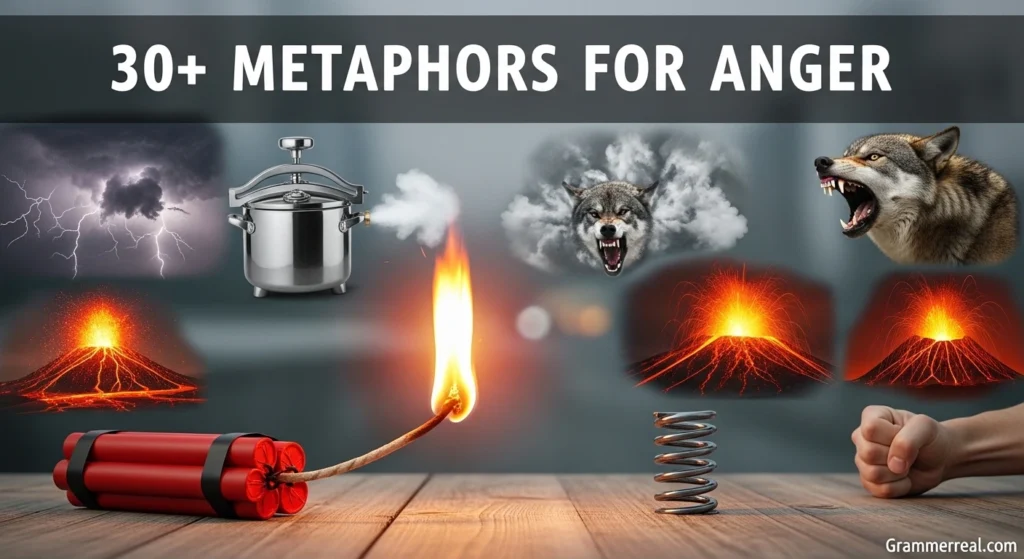
Metaphors turn anger into volcanoes, wildfires, thunderclouds, boiling water, and burning coals. These images make anger easier to understand, communicate, and even reflect on.
What Anger Means Beyond Rage
Anger is not always about shouting or violence. Often, anger is a signal. It tells us something matters. It tells us a boundary has been crossed or a wound has been touched.
Anger can protect, but it can also destroy. It can motivate change, but it can also consume. Metaphors help show these different sides.
Why Metaphors Capture Anger So Well
Anger is physical. It affects breath, heartbeat, muscles, voice. Metaphors translate that physical intensity into images we recognize instantly.
Instead of saying “I’m angry,” someone might say “I’m boiling inside.” That metaphor communicates heat, pressure, and the risk of overflow.
Metaphors also allow anger to be expressed with poetry rather than harshness.
Anger as Fire
Fire is the most common metaphor for anger.
Meaning: Anger burns, spreads, and can consume everything in its path.
Example idea: “Anger flared in him like fire, sudden and fierce.”
Alternative expressions:
- Flames of rage
- Burning inside
- A wildfire of emotion
Fire metaphors show intensity and danger.
Anger as a Volcano
A volcano represents anger that builds and erupts.
Meaning: Anger can stay hidden for a long time before exploding.
Example idea: “She was a volcano, quiet until the pressure finally burst.”
Alternative expressions:
- Emotional eruption
- Lava of resentment
This metaphor captures suppressed anger.
Anger as a Storm
Storm metaphors show anger as chaotic and loud.
Meaning: Anger can feel like thunder, shaking everything around it.
Example idea: “His voice became a storm, crashing through the room.”
Alternative expressions:
- Tempest of fury
- Thunder of emotion
Storm metaphors emphasize emotional turbulence.
Anger as Boiling Water
Boiling water represents pressure reaching a breaking point.
Meaning: Anger heats up until it spills over.
Example idea: “She felt like water boiling over, unable to stay calm.”
Alternative expressions:
- Simmering anger
- About to boil
This metaphor works well for rising frustration.
Anger as a Caged Animal
This metaphor shows anger as trapped energy.
Meaning: Anger feels restless, dangerous, ready to break free.
Example idea: “His anger was a caged animal, pacing behind his ribs.”
Alternative expressions:
- Wild inside
- Barely contained
This metaphor feels intense and primal.
Anger as Lightning
Lightning represents sudden, sharp anger.
Meaning: Anger can strike quickly, without warning.
Example idea: “Her anger flashed like lightning, bright and terrifying.”
Alternative expressions:
- A sudden spark
- A sharp strike
This metaphor captures quick outbursts.
Anger as Burning Coals
Coals represent anger that lasts.
Meaning: Not all anger explodes—some stays glowing quietly.
Example idea: “His resentment was like burning coals, hot beneath the surface.”
Alternative expressions:
- Smoldering rage
- Hidden heat
This metaphor works for long-held anger.
Anger as a Heavy Weight
Sometimes anger is not loud, but exhausting.
Meaning: Anger can feel like carrying something heavy inside.
Example idea: “Anger sat on her chest like a weight she couldn’t lift.”
Alternative expressions:
- Burden of fury
- Heavy resentment
This metaphor shows anger as draining.
Anger as Poison
Poison metaphors show anger as harmful when held too long.
Meaning: Unreleased anger can damage the person carrying it.
Example idea: “Bitterness became poison in his heart.”
Alternative expressions:
- Toxic resentment
- Venom of rage
This metaphor is strong and cautionary.
Anger as a Roaring Beast
A beast metaphor shows anger as uncontrollable power.
Meaning: Anger can feel like something larger than yourself.
Example idea: “Rage roared through him like a beast unleashed.”
Alternative expressions:
- Monster of fury
- Untamed emotion
This metaphor emphasizes loss of control.
When Anger Can Be Protective
Anger is not always destructive. Sometimes it is a shield.
Metaphors for protective anger include:
- A guard at the door
- Fire that warns
- A boundary line
These images show anger as defense, not harm.
When Anger Becomes Destructive
When anger controls someone, metaphors darken:
- Wildfire burning everything
- Storm tearing houses down
- Poison spreading
These images show anger’s danger when unmanaged.
How Writers Use Anger Metaphors
Writers rarely just say “He was angry.” They show it:
- Anger simmering like heat
- Words like knives
- Silence like thunderclouds
Metaphors make anger vivid, allowing readers to feel it rather than simply hear it named.
A Simple Activity to Describe Your Anger
Complete this sentence:
“My anger feels like ______.”
Possible answers:
- Fire in my chest
- A storm in my mind
- Coals under the surface
- A volcano ready to erupt
This helps you understand your anger’s shape and intensity.
Using Anger Metaphors in Daily Life
Metaphors can help express anger without harsh accusation.
Instead of saying “I’m furious,” you might say: “I feel like I’m boiling over.”
Instead of “This is unbearable,” you might say: “It feels like fire inside me.”
These images communicate emotion clearly.
Keeping Anger Metaphors Honest and Simple
Choose metaphors that match the anger’s intensity. Not every frustration is a volcano. Sometimes it is just a simmer.
A single clear metaphor is often more powerful than many dramatic ones.
Conclusion
Metaphors for anger help us describe one of the most intense human emotions with clarity and depth. Whether anger feels like fire, storms, boiling water, or burning coals, these images reveal what simple words cannot. They remind us that anger is powerful, but understanding it through language can be the first step toward expressing it wisely.
FAQs
Why are metaphors for anger useful?
They help describe the emotional and physical intensity of anger more vividly.
What is the most common metaphor for anger?
Fire is the most common because anger often feels hot and consuming.
Which metaphor works best for hidden anger?
Burning coals and volcano metaphors capture anger beneath the surface.
Can anger metaphors be positive?
Yes. Some metaphors show anger as protective, like a guard or warning fire.
How can I create my own anger metaphor?
Think about how your anger feels—sudden, slow, heavy, explosive—and choose an image that matches.