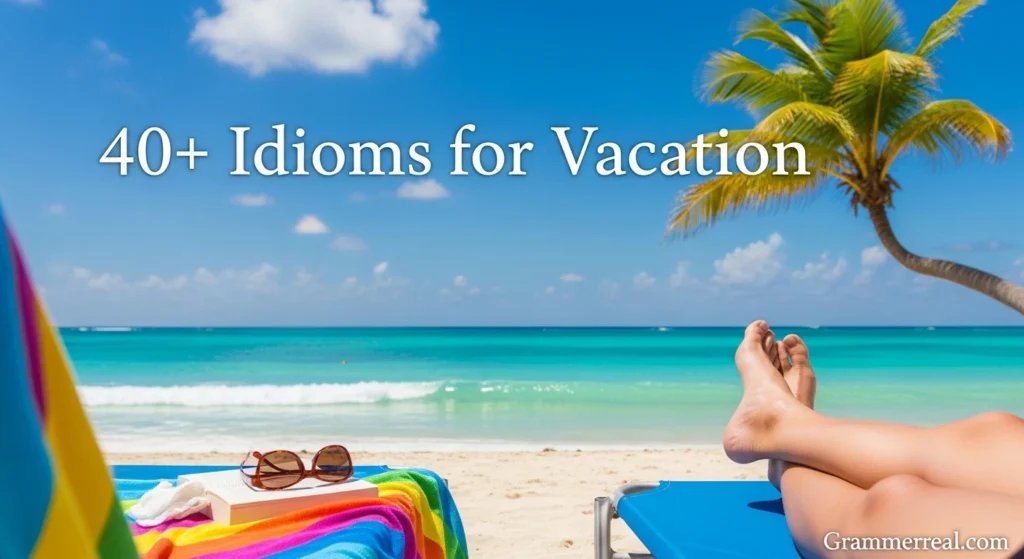
The sun rises slowly over the sea. Waves touch the shore again and again, like soft music playing in the background. A cool wind moves through the trees, and the smell of salt and sand fills the air. Somewhere far away, a child laughs, and a suitcase rolls on the floor of a small hotel room. Moments like these feel different from normal days. They feel lighter, freer, and full of life. That feeling is what people call a vacation mood.
During trips, people often use special phrases to talk about rest, travel, and fun. These phrases are called idioms for vacation. They make language more colorful. They also help people share feelings in a short and fun way. Instead of saying “I am going on a trip,” someone may say, “I am going to hit the road.” The meaning stays simple, but the sound feels more alive.
Learning vacation idioms is useful because people talk about travel all the time. Friends talk about holidays. Families plan trips. Writers describe journeys. Social media posts show beaches, mountains, and cities. When you know the right idioms, you sound natural, friendly, and confident.
This article will explore many idioms for vacation in a simple and easy way. You will see meanings, examples, stories, and practice ideas. By the end, you will feel ready to use these idioms in daily life, writing, and conversation.
What Are Idioms for Vacation
Idioms are phrases that have a special meaning. The words may look simple, but the real meaning is different. For example, “hit the road” does not mean hitting a road. It means starting a trip.
Vacation idioms talk about travel, rest, fun, and leaving work behind. People use them when they plan a trip, when they talk about holidays, and when they remember good times.
These idioms help language feel natural. They also make stories more interesting. When someone says, “We got away from it all,” we can almost see the quiet place and feel the peace.
Because of this, vacation idioms are useful for students, writers, travelers, and anyone who wants to speak better English.
Why Idioms for Vacation Are Important in Daily Life
People do not always speak in plain sentences. They use expressions. They use feelings and they use short phrases that carry big meaning. Vacation idioms do exactly that.
First, they make conversations friendly. When you say, “I need a break,” everyone understands your feeling. Second, they help in storytelling. A simple travel story sounds better with idioms. Third, they help in writing posts, messages, and captions.
Also, these idioms help people show emotion. Travel is not only about moving from one place to another. It is about rest, joy, and memories. Idioms give words to those feelings.
Because of this, learning idioms for vacation is not only for language practice. It is also for better communication.
Hit the Road – A Classic Idiom for Starting a Trip
This is one of the most common idioms for vacation.
Meaning: To start a journey or leave for a trip.
Example: We packed our bags early in the morning and hit the road before sunrise.
Alternative ways to say it:
- Start the trip
- Begin the journey
- Leave for travel
- Get going
Mini story: Ali and his friends planned a trip for weeks. They checked the car, packed snacks, and chose music. When the sky turned orange in the morning, Ali smiled and said, “Let’s hit the road.” Everyone cheered, and the adventure began.
Feeling detail: This idiom gives the feeling of movement, excitement, and fresh beginnings.
Tip: Use this idiom when talking about road trips, holidays, or any travel start.
Get Away from It All – The Feeling of True Vacation
This idiom shows the real reason people take vacations.
Meaning: To go somewhere quiet to relax and forget problems.
Example: We went to the mountains to get away from it all.
Alternative ways:
- Take a break from life
- Escape the stress
- Find peace
- Leave everything behind
Mini story: Sara worked every day for months. The city felt loud. The phone never stopped ringing. One day she booked a small cabin near a lake. No noise. No work and no stress. She finally got away from it all.
Emotional detail: This idiom feels calm, peaceful, and slow.
Tip: Use this when talking about relaxing trips, nature travel, or quiet holidays.
Take a Break – A Simple but Powerful Vacation Idiom
Sometimes the best vacation is short.
Meaning: To stop working and rest.
Example: I need to take a break and go somewhere warm.
Alternative ways:
- Rest for a while
- Pause work
- Relax a little
- Step away
This idiom is very common. People use it at work, at school, and at home. Even a short trip can feel like a big change.
You can use this idiom in daily talk, messages, and posts.
Recharge Your Batteries – Rest Like a Phone Charging
This idiom compares people to machines.
Meaning: To rest and get energy again.
Example: After a long year, I went on vacation to recharge my batteries.
Alternative ways:
- Get energy again
- Feel fresh
- Recover strength
- Feel alive again
Mini story: After many late nights, Hamza felt tired all the time. He could not smile. He went to the beach for five days and he slept, swam, and walked in the sun. When he came back, he felt new. He had recharged his batteries.
Sensory detail: Warm sun, slow mornings, quiet nights — this idiom feels soft and warm.
Tip: Use this idiom when talking about rest after hard work.
Off the Beaten Path – Travel Like an Explorer
Not every vacation is about famous places.
Meaning: To go to places that are not crowded or popular.
Example: We like to travel off the beaten path.
Alternative ways:
- Hidden places
- Quiet spots
- Unknown locations
- Secret travel places
Mini story: Most tourists went to the big beach. But Bilal walked the other way. He found a small road, trees, and a quiet lake. No noise. No crowd. That was off the beaten path.
Feeling detail: This idiom feels like adventure and discovery.
Tip: Use this when talking about unique travel.
Travel Light – A Smart Way to Enjoy Vacation
Packing too much makes travel hard.
Meaning: To take only a few things when traveling.
Example: I travel light, so I only bring one bag.
Alternative ways:
- Pack less
- Carry little
- Keep it simple
- Small luggage
This idiom also means living simply. When you travel light, you move easily and feel free.
Make Memories – The Heart of Every Vacation
Trips are not only about places. They are about moments.
Meaning: To create happy moments to remember later.
Example: We took many photos and made memories.
Alternative ways:
- Keep moments
- Build memories
- Save happy times
- Remember forever
Vacations become stories. Years later, people still talk about those days.
Living Out of a Suitcase – Traveling for Many Days
Some trips last long.
Meaning: To travel for a long time without staying in one place.
Example: I lived out of a suitcase for two weeks.
Alternative ways:
- Travel many days
- Move place to place
- Stay in hotels
- Long trip life
This idiom gives the feeling of busy travel.
Call It a Day – Ending a Vacation Day
After fun, rest is needed.
Meaning: To stop for the day.
Example: We went back to the hotel and called it a day.
Alternative ways:
- Finish for today
- Stop now
- End the day
- Rest now
People use this idiom in travel and daily life.
Mini Story – A Vacation Full of Idioms
Last summer, my friends and I hit the road early in the morning. We wanted to get away from it all, so we chose a small village off the beaten path. We traveled light, with only one bag each. After months of work, we needed to recharge our batteries.
Every day we walked, laughed, and made memories. At night, we sat under the sky and talked. When we felt tired, we called it a day and slept like children.
That trip was simple, but the words we use to tell it make it feel alive.
Practice Exercises for Idioms for Vacation
Try these activities.
Exercise 1: Write 3 sentences using
- hit the road
- take a break
- make memories
Exercise 2: Think about your dream trip. Where will you go? Will you travel light? Will you get away from it all?
Write a short story.
Exercise 3: Make a social media caption using one idiom. Example: Time to recharge my batteries.
Practice makes idioms easy.
Tips for Using Vacation Idioms in Writing and Daily Life
First, use idioms in stories. They make writing fun.
Second, use them in messages. Friends like natural language.
Third, use them in captions. Travel posts sound better with idioms.
Fourth, do not use too many at once. Keep it simple.
Finally, listen to movies, songs, and conversations. You will hear these idioms often.
When you use idioms naturally, your English feels alive.
Conclusion
Vacations bring joy, rest, and memories. Words should show those feelings. That is why idioms for vacation are special. They turn simple talk into colorful talk. They make stories feel real and they help people share emotions in a short way.
When you say hit the road, we see the journey. When you say get away from it all, we feel peace and when you say recharge your batteries, we feel new energy.
Learn these idioms slowly. Use them in daily life. Write them in stories. Speak them with friends. The more you use them, the more natural they sound.
Language becomes fun when words paint pictures. Vacation idioms do exactly that.
FAQs
1. What are idioms for vacation?
Idioms for vacation are phrases people use when talking about travel, holidays, rest, and trips. The meaning is different from the exact words.
2. Why should I learn vacation idioms?
They make your English sound natural, friendly, and easy to understand in conversation and writing.
3. Can I use vacation idioms in daily talk?
Yes. Many idioms like take a break or recharge your batteries are used every day.
4. How can I remember idioms easily?
Practice writing sentences, read stories, and use them in real conversation.
5. Are idioms important for writing and social media?
Yes. Idioms make captions, stories, and posts more interesting and emotional.



