Learning idioms for being happy is very important for English learners, students, and professionals. Happiness is a common human feeling, but English speakers rarely use just the word happy to describe it. They often use idioms to express different levels of joy, excitement, and satisfaction. Idioms make your speech sound natural, expressive, and lively, and help you understand real conversations, movies, books, and social interactions.
Using idioms for happiness also improves your emotional expression. For example, saying I’m over the moon shows extreme joy, while in high spirits describes general cheerfulness. Knowing the correct idiom for the situation makes your English more professional and fluent. It also allows you to connect with people emotionally, because emotions are expressed more effectively with idioms than with plain words.
In this article, you will learn 18 common idioms for being happy, their meaning, examples, alternative phrases, origin, and practical use. There are also practice exercises, quizzes, common mistakes, tips for usage, and suggestions for visuals. By the end, you will be able to use these idioms naturally in conversations, stories, and writing.
Why Learning Idioms for Being Happy Is Important
Idioms are used in almost every conversation in English. If you only know the word happy, you may sound repetitive, flat, or unnatural. Idioms allow you to:
- Express emotions more clearly
- Sound like a native speaker
- Understand conversations, movies, and books
- Make writing and speaking interesting
For example:
- On cloud nine shows extreme happiness after good news.
- Tickled pink shows pleasure mixed with surprise.
- Walking on air conveys excitement and energy.
Learning idioms also helps in emotional understanding. You can sense whether someone is slightly happy, very excited, or euphoric. For students, professionals, and anyone learning English, this understanding is very useful.
What “Being Happy” Means in Idioms
Idioms about happiness can describe:
- Physical joy: jumping, smiling
- Emotional joy: relief, satisfaction
- Subtle joy: calm contentment, peaceful happiness
- Excitement: energy, thrill, exhilaration
For example:
- Grinning from ear to ear = showing happiness on the face
- Over the moon = extremely happy
- Full of the joys of spring = energetic happiness
Understanding idioms as whole phrases is essential. Literal translations often cause mistakes.
Over the Moon
Meaning: Extremely happy or delighted Example: She was over the moon when she got accepted into her dream university. Alternative expressions: Ecstatic, thrilled, elated Origin: Comes from nursery rhymes and old English literature where the moon symbolized joy. Typical use case: Achievements, celebrations, receiving good news
Mini scenario: Imagine getting an email that you won a scholarship. You might say, I’m over the moon! This shows your excitement vividly.
On Cloud Nine
Meaning: Feeling very happy, almost floating Example: He was on cloud nine after his promotion at work. Alternative expressions: Walking on air, in seventh heaven, extremely joyful Origin: Cloud nine is a meteorology term for a high, fluffy cloud, representing floating happiness. Use case: Celebrations, personal success, love, or achievements
Story: After a long year of hard work, receiving a bonus can make someone feel on cloud nine, light, and excited.
Walking on Air
Meaning: Feeling extremely happy and light Example: She has been walking on air ever since she heard about her acceptance letter. Alternative expressions: On cloud nine, overjoyed, thrilled Use case: Excitement after success or good news
Scenario: Winning a small contest or prize can make you feel like walking on air, almost floating while smiling.
Grinning from Ear to Ear
Meaning: Smiling very broadly because of happiness Example: He was grinning from ear to ear after his surprise birthday party. Alternative expressions: Beaming, smiling widely, overjoyed Use case: Visible happiness, celebrations, social events
Tip: Use this idiom when happiness is clearly visible on the face.
In High Spirits
Meaning: Cheerful, lively, and positive Example: Everyone was in high spirits during the festival despite the rain. Alternative expressions: Cheerful, upbeat, lively Origin: “Spirit” historically meant mood or energy Use case: Social gatherings, parties, casual conversations
Scenario: Even if the team lost the game, players may still be in high spirits due to good performance or teamwork.
Tickled Pink
Meaning: Very pleased, happy, or amused Example: She was tickled pink when her friends threw a surprise farewell party. Alternative expressions: Delighted, thrilled, extremely happy Origin: Early 20th century; “tickled” means amused, “pink” represents delight Use case: Gifts, surprises, personal achievements
Mini scenario: Receiving a gift unexpectedly can make someone tickled pink.
Overjoyed
Meaning: Extremely happy, often due to good news Example: The parents were overjoyed at their child’s graduation ceremony. Alternative expressions: Ecstatic, thrilled, elated Use case: Celebrations, achievements, milestones
Story: Imagine finally finishing a project that took months. Feeling overjoyed is natural.
Happy as a Clam
Meaning: Very happy and content Example: He’s happy as a clam living by the beach. Alternative expressions: Content, cheerful, satisfied Origin: “Happy as a clam at high tide” means safe and satisfied Use case: Casual, relaxed happiness
Scenario: Spending a quiet day at home doing your favorite hobby can make you happy as a clam.
Full of the Joys of Spring
Meaning: Very energetic and happy Example: She was full of the joys of spring after finishing her vacation. Alternative expressions: Exuberant, lively, cheerful Origin: Spring represents freshness, energy, and new beginnings Use case: Energetic happiness, celebrations, social events
Tip: Use when someone is not only happy but also full of energy.
On Top of the World
Meaning: Extremely good or successful feeling Example: He felt on top of the world after finishing his first marathon. Alternative expressions: Triumphant, thrilled, delighted Use case: Achievements, personal success
Scenario: Passing a difficult exam can make someone feel on top of the world.
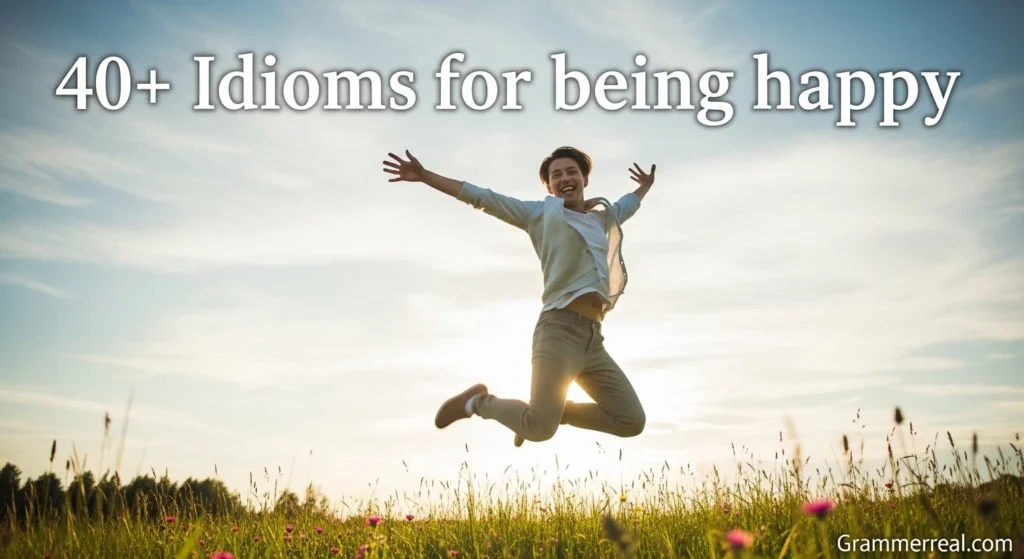
Jump for Joy
Meaning: Expressing happiness physically by jumping Example: The children jumped for joy when they got ice cream. Alternative expressions: Leap for joy, thrilled, delighted Use case: Excited happiness, celebrations
Story: Seeing a long-lost friend can make you literally jump for joy.
In Seventh Heaven
Meaning: Extremely happy, euphoric Example: She was in seventh heaven when meeting her favorite singer. Alternative expressions: Ecstatic, thrilled, over the moon Origin: Religious references to the highest level of heaven Use case: Intense happiness, special moments
On a High
Meaning: Feeling euphoric or extremely happy Example: She was on a high after receiving praise for her project. Alternative expressions: Elated, thrilled, overjoyed Use case: Achievements, recognition, celebrations
Full of Beans
Meaning: Energetic and happy Example: He was full of beans at the birthday party. Alternative expressions: Lively, cheerful, active Origin: “Beans” symbolize vitality and energy Use case: Children, parties, active situations
On Top Form
Meaning: At peak performance and very happy/confident Example: She felt on top form after winning the award. Alternative expressions: Confident, ecstatic, elated Use case: Professional success, sports, personal achievements
In Good Spirits
Meaning: Cheerful, positive, and happy Example: Despite the rainy day, everyone was in good spirits. Alternative expressions: Cheerful, upbeat, happy Use case: Casual, professional, and social situations
Common Mistakes When Using Happy Idioms
- Literal translation: I am on the moon → wrong. Correct: over the moon.
- Wrong context: Tickled pink is for surprises or personal delight, not general happiness.
- Formal situations: Idioms like full of beans may sound too casual; use in good spirits.
Practice Exercises
Fill in the blanks:
Easy:
- She was ______ the moon after her exam results.
- The kids jumped for ______ when they got ice cream.
Medium: 3. He felt on ______ of the world after finishing the marathon. 4. Everyone was in ______ spirits at the festival.
Advanced: 5. She was full of the ______ of spring after her vacation. 6. He was grinning from ______ to ear after hearing the news.
Answers:
- over
- joy
- top
- high
- joys
- ear
Tips for Effective Use
- Learn idioms in phrases, not single words
- Practice aloud to remember natural pronunciation
- Watch movies, shows, and videos for real-life usage
- Group idioms by context: formal, informal, extreme happiness, casual happiness
- Use visual aids like drawings, symbols, or emoji to remember meanings
Suggested Visuals or Infographics
- A happiness scale from mild joy to extreme happiness
- Images illustrating idioms like jump for joy, walking on air, grinning from ear to ear
- Flowchart: formal vs informal idioms
- Timeline showing subtle happiness → extreme joy → euphoric happiness
Conclusion
Idioms for happiness make your English lively, natural, and expressive. They allow you to describe subtle joy, extreme excitement, and visible delight. Using idioms correctly shows that you understand context, culture, and emotion in English. Regular practice, noticing idioms in movies or conversations, and using them in your own speaking and writing will help them become part of your vocabulary naturally.
FAQs
Why should I learn idioms for happiness?
They make your English expressive, natural, and help you understand real conversations.
Are all idioms informal?
No, some are polite (in good spirits, overjoyed), others informal (full of beans, tickled pink).
How can I remember idioms easily?
Use sentences, visuals, and practice aloud; notice them in media.
Can I use these idioms professionally?
Yes, but choose polite ones like in good spirits or overjoyed for formal contexts.
How many idioms should I learn at a time?
Start with a few, practice, then gradually add more.