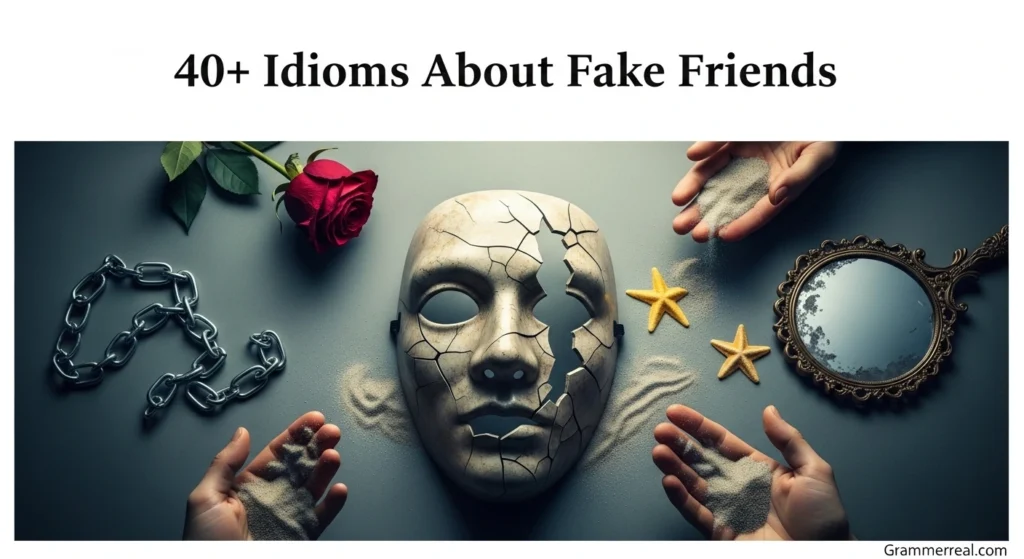
The room feels warm. Laughter floats in the air. A friend pats your back, smiles wide, and says kind words. Yet something feels off. The smile looks bright, but it feels cold. The words sound sweet, but they leave a dry taste in your mouth—like dust. You nod, you laugh, and still, your heart whispers, “Be careful.”
This is where fake friends live. They live in soft voices and hidden thoughts. They sit close but stand far in truth and they cheer when you watch them, yet they fade when you need them most.
So, what are idioms about fake friends? They are short, clever phrases that explain this kind of hidden truth. They help us talk about people who act nice but feel fake inside. These idioms are useful because they give simple words to complex feelings. Moreover, they help us understand people better. And most importantly, they help us protect our hearts.
Let’s walk through this world together. Step by step, we will explore these idioms, feel their meaning, and learn how to use them in daily life.
What Are Idioms About Fake Friends
Idioms are special phrases. They do not mean exactly what the words say. Instead, they carry a deeper meaning.
For example, when we say someone is a “wolf in sheep’s clothing,” we do not mean they are an animal. We mean they hide their true, bad nature behind a good face.
Idioms about fake friends talk about people who:
- Pretend to care
- Hide their true feelings
- Stay close for their own gain
These idioms help us explain trust, pain, and truth in a simple way. They make our speech colorful. Also, they make our writing more alive.
Why Idioms About Fake Friends Matter in Life
Life is full of people. Some stay true. Some fade away. And some… act real but feel fake.
Idioms matter because they:
- Help us see signs early
- Give us words to express hurt
- Teach us wisdom in a simple form
For instance, instead of saying, “He is not loyal,” you can say, “He is a fair-weather friend.” This sounds stronger and clearer.
Moreover, these idioms help in conversations, stories, and even social media posts. They make your message sharp and easy to remember.
How Fake Friends Show Themselves in Small Ways
Fake friends rarely show their true face at once. Instead, they reveal themselves in small cracks.
They:
- Smile but gossip behind your back
- Stay only when things are easy
- Leave when problems begin
At first, you may ignore these signs. However, over time, the truth grows louder. That is when idioms help you name what you feel.
Common Themes in Idioms About Fake Friends
Most idioms about fake friends share similar ideas:
- Hidden danger (like a wolf)
- Changing loyalty (fair-weather)
- False sweetness (sugar-coated lies)
These themes make it easier to understand human behavior. Also, they show that fake friendships have existed for a long time.
Powerful Idioms About Fake Friends
1. A Wolf in Sheep’s Clothing
Meaning: A person who looks kind but is actually harmful.
Example Scenario: Ali always smiles and helps others. However, he secretly spreads rumors. People trust him, yet he breaks that trust. He is a wolf in sheep’s clothing.
Alternative Ways to Say It:
- Hidden enemy
- Fake helper
- Two-faced person
Sensory/Emotional Detail: It feels like hugging someone warm, only to feel a sudden chill. Your trust shakes.
Mini Story: In a small village, a man helped everyone. He fixed roofs, shared food, and spoke kindly. Still, at night, he stole from the same homes he helped. When people found out, they said, “We trusted a wolf in sheep’s clothing.”
2. Fair-Weather Friend
Meaning: A friend who stays only in good times but leaves in bad times.
Example Sentence: When Sara lost her job, many friends stopped calling. They were fair-weather friends.
Alternative Expressions:
- Good-time friend
- Surface-level friend
- Temporary friend
Emotional Detail: It feels like standing alone in the rain after someone promised to stay.
Mini Story: Rashid had many friends when he was rich. They laughed, ate, and traveled together. But when he faced loss, his phone stayed silent. Only one friend stayed. That day, he learned who was real.
3. Two-Faced
Meaning: Someone who says one thing to you and another behind your back.
Example Scenario: Zara praises you in front of others. Yet she criticizes you in private. She is two-faced.
Alternative Ways to Say It:
- Double-faced
- Backstabber
- Fake talker
Sensory/Emotional Detail: It feels like hearing your own name spoken with poison.
Mini Story: A boy had a friend who always agreed with him. Still, others told him that the same friend laughed at him later. When he confronted him, the truth came out. The mask fell.
More Idioms About Fake Friends You Should Know
Here are a few more:
- Backstabber
- Snake in the grass
- Smile to your face, stab your back
- False friend
- Hollow friend
Each one carries a strong image. Each one tells a story without long words.
How to Use These Idioms in Daily Conversation
Using idioms is simple. You just need the right moment.
Instead of saying: “He is not loyal,” Say: “He is a fair-weather friend.”
This sounds more natural and powerful.
Also, use idioms:
- In chats with friends
- In stories or essays
- In social media captions
Writing With Idioms: Make Your Words Stronger
Idioms make writing alive. They add color, emotion, and depth.
For example:
- Plain: “She felt hurt.”
- Better: “She felt like she trusted a wolf in sheep’s clothing.”
See the difference? The second one paints a picture.
Spotting Fake Friends Early: Simple Tips
Now let’s talk about real-life use.
Tip 1: Watch Actions, Not Words People can speak sweet words. However, actions show truth.
Tip 2: Notice Who Stays in Hard Times Real friends stay. Fake ones disappear.
Tip 3: Trust Your Feelings If something feels wrong, it often is.
Emotional Impact of Fake Friendships
Fake friendships hurt deeply.
They:
- Break trust
- Create doubt
- Cause sadness
However, they also teach strong lessons. They help you grow. They help you choose better people next time.
Cultural and Literary Touch: Fake Friends Through Time
Stories about fake friends exist everywhere.
Old tales often warn about hidden enemies. Many cultures use animals to explain human behavior. For example, wolves often represent danger hidden under calm.
Even today, movies and books show this theme again and again. Because fake friendship is a common human experience.
Interactive Exercise: Spot the Fake Friend
Try this:
Think of three people you know. Now ask yourself:
- Who supports you always?
- Who disappears in tough times?
- Who talks differently about others?
Write your answers. This helps you see clearly.
Creative Practice: Make Your Own Sentences
Now your turn.
Use these idioms in sentences:
- A wolf in sheep’s clothing
- Fair-weather friend
- Two-faced
Example: “He looked kind, but he was a wolf in sheep’s clothing.”
Try to create your own. This will make you remember them better.
Bonus Tips for Social Media and Daily Life
You can use these idioms in fun ways:
- Instagram captions: “No more fair-weather friends.”
- WhatsApp status: “Beware of wolves in sheep’s clothing.”
- Daily talk: Use them to express feelings clearly.
They make your words simple but powerful.
Building Real Friendships After Fake Ones
After facing fake friends, you may feel scared. That is normal.
However, do not close your heart.
Instead:
- Take time to trust
- Choose quality over quantity
- Look for honesty
Real friends may be few, but they are strong.
Final Thoughts Before the End
Fake friends teach hard lessons. Yet those lessons shape you. They help you grow wiser and stronger.
Idioms give voice to these lessons. They turn pain into understanding. They turn confusion into clarity.
Conclusion
Life is a mix of real and fake. You will meet both kinds of people. Some will lift you up. Others will pull you down.
Idioms about fake friends help you see clearly. They give simple words to deep truths. They guide you to better choices.
So, next time you feel something is wrong, remember these phrases. Trust your heart. Choose wisely. And always value those who stay real.
FAQs
1. What are idioms about fake friends?
Idioms about fake friends are phrases that describe people who pretend to be kind but are not truly loyal. They use simple words to explain complex feelings.
2. Why should I learn these idioms?
They help you understand people better. Also, they improve your speaking and writing. They make your message clearer and stronger.
3. Can I use these idioms in daily conversation?
Yes, you can use them in everyday talk, messages, and social media. They sound natural and expressive.
4. How do I remember these idioms easily?
Practice using them in sentences. Also, connect them with real-life situations. This makes them easy to remember.
5. Are fake friends common in life?
Yes, many people face fake friendships. However, these experiences help you learn and choose better friends in the future.



