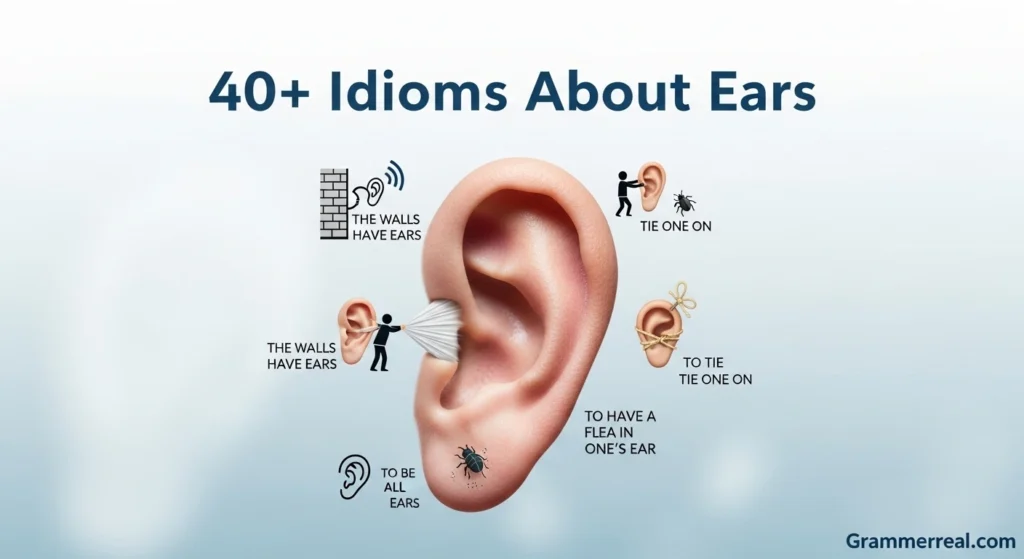
The room hums softly—the faint tick of a clock, a whisper drifting through the air, the distant echo of footsteps in a hallway. You tilt your head, your ears catching every sound, sorting meaning from noise. In that quiet moment, listening becomes more than hearing—it becomes understanding. This is exactly where idioms about ears come alive. They take ordinary listening and turn it into something vivid, emotional, and deeply human.
Idioms about ears appear everywhere in English. People use them in daily conversations, stories, movies, and even social media captions. These expressions do not talk only about physical ears; instead, they represent attention, curiosity, secrecy, surprise, and even judgment. Because of this, learning these idioms helps you speak more naturally and understand others more deeply. Moreover, they add color to your language, making your words more expressive and memorable.
In this article, you will explore idioms about ears in a fun, clear, and engaging way. You will learn their meanings, see real-life examples, and discover how to use them in your own speech and writing. Along the way, you will also practice using them creatively and confidently.
What Are Idioms About Ears
Idioms about ears are phrases where the word “ear” or “ears” carries a meaning beyond its literal sense. Instead of referring to the body part, these idioms describe actions, feelings, or situations connected to listening, attention, or communication.
For example, when someone says, “I’m all ears,” they do not mean their body has turned into ears. Instead, they mean they are ready to listen carefully.
These idioms make language more colorful. Instead of saying something simple like “listen carefully,” you can say something more engaging and lively.
Why Idioms About Ears Matter in Everyday Language
Language becomes powerful when it feels natural and expressive. Idioms about ears help you achieve that. They allow you to:
- Show emotions clearly
- Make conversations more engaging
- Sound more fluent and natural
- Understand native speakers better
Moreover, these idioms often appear in movies, songs, and books. Therefore, when you understand them, you connect more deeply with the language and culture.
The Emotional Power of Listening Expressions
Listening is not just a physical action; it is emotional too. When someone listens carefully, it shows care, respect, and interest. That is why many ear-related idioms carry emotional meaning.
For instance, saying “lend me your ears” feels more polite and respectful than simply saying “listen.” It creates a connection between people.
Because of this, idioms about ears help you express feelings indirectly yet powerfully.
I’m All Ears
This is one of the most common and friendly idioms.
Meaning: “I’m all ears” means you are ready and eager to listen carefully.
Example: “Tell me your story—I’m all ears.”
Alternative expressions:
- I’m listening
- Go ahead
- I’m paying attention
Sensory detail: Imagine leaning forward slightly, your attention fully focused, as if every sound matters.
Mini Story: Ali sat quietly while his friend hesitated to speak. Then he smiled and said, “I’m all ears.” That small phrase made his friend feel safe enough to share everything.
Music to My Ears
This idiom connects sound with emotion.
Meaning: Something that sounds very pleasing or satisfying.
Example: “Hearing that I got the job was music to my ears.”
Alternative expressions:
- That sounds great
- That’s wonderful news
- I’m happy to hear that
Emotional detail: Think of your favorite song playing softly—it brings comfort and joy instantly.
Cultural Note: Writers often use this phrase to show relief or happiness after a long struggle.
Turn a Deaf Ear
This idiom describes ignoring something.
Meaning: To refuse to listen or pay attention.
Example: “He turned a deaf ear to their advice and made a mistake.”
Alternative expressions:
- Ignore
- Not listen
- Pay no attention
Emotional tone: It often carries frustration or disappointment.
Mini Story: A teacher warned her students about the exam. Some listened, but others turned a deaf ear. Later, those same students regretted their choice.
The Role of Idioms in Storytelling
Idioms bring stories to life. Instead of plain sentences, they create vivid images.
For example, instead of saying “He listened carefully,” you can say “He was all ears.” Instantly, the scene feels more real and expressive.
Writers, speakers, and storytellers often use idioms to connect with their audience emotionally.
Common Themes in Ear Idioms
Most ear idioms focus on a few main ideas:
- Listening and attention
- Ignoring or refusing
- Secrets and whispers
- Surprise or shock
Because these themes are universal, people easily understand and relate to these idioms.
Idioms About Ears in Daily Conversations
You can hear these idioms in everyday situations:
- Friends talking
- Teachers explaining
- Movies and TV shows
- Social media posts
For example: “Wait, I didn’t catch that—say it again, I’m all ears now.”
Using idioms makes your speech sound natural and friendly.
Using Ear Idioms in Writing Creatively
Writers use ear idioms to add flavor to their work.
Instead of writing: “She ignored him.”
You can write: “She turned a deaf ear to his words.”
This creates a stronger image and emotional impact.
Cultural and Literary Touch of Ear Idioms
Many idioms have historical or cultural roots. For example, “lend me your ears” appears in famous literature.
Such expressions connect modern language with history and storytelling traditions.
Because of this, idioms enrich both language and culture.
Interactive Exercise 1: Fill in the Blank
Try this exercise:
- When she said yes, it was ______ to my ears.
- Tell me everything—I’m ______ ears.
- He ______ a deaf ear to the warning.
Think carefully before checking answers.
Interactive Exercise 2: Create Your Own Sentences
Now, try making your own sentences:
- Use “I’m all ears” in a conversation
- Use “music to my ears” in a happy moment
- Use “turn a deaf ear” in a negative situation
This practice helps you remember and use idioms naturally.
Tips for Remembering Idioms Easily
Learning idioms can feel difficult, but these tips make it easier:
- Connect idioms with images
- Use them in daily conversation
- Write short stories using them
- Practice regularly
Moreover, repetition helps fix them in your memory.
Using Ear Idioms in Social Media and Daily Life
Idioms work great in modern communication.
For example:
- “Your support is music to my ears”
- “Got something interesting? I’m all ears”
They make your messages more expressive and relatable.
Mistakes to Avoid When Using Ear Idioms
Be careful with these common mistakes:
- Do not translate idioms word-for-word
- Use them in the right context
- Avoid overusing them
Balance is important. Use idioms naturally, not excessively.
Expanding Your Vocabulary with Similar Idioms
You can also learn related expressions:
- “Keep an ear to the ground”
- “In one ear and out the other”
- “Play it by ear”
Each adds a new layer to your communication skills.
Practice Prompt: Write a Short Scene
Imagine this situation:
A friend shares a secret with you. Write a short paragraph using at least two ear idioms.
This creative exercise strengthens both understanding and usage.
Bonus Tips for Fluent and Natural Expression
To sound more fluent:
- Mix idioms with simple sentences
- Use them in real conversations
- Listen to native speakers
Over time, your language will feel smoother and more natural.
Building Confidence Through Idioms
At first, idioms may feel confusing. However, with practice, they become easy and fun.
Each idiom you learn builds confidence. Slowly, you start thinking in the language instead of translating.
That is the real goal of learning.
Final Thoughts on Mastering Ear Idioms
Language grows with practice. The more you use idioms about ears, the more natural they feel. So, listen carefully, speak confidently, and do not be afraid to experiment.
After all, when it comes to learning, the best approach is simple—stay curious, stay engaged, and always be “all ears.”
Conclusion
Idioms about ears transform simple listening into something vivid, emotional, and meaningful. They allow you to express attention, joy, ignorance, and curiosity in a more colorful way. Throughout this article, you explored their meanings, examples, and uses in real-life situations.
More importantly, you practiced using them creatively through exercises and storytelling. As you continue learning, remember that idioms are not just phrases—they are tools for connection. They help you speak naturally, understand deeply, and communicate effectively.
FAQs
1. What are idioms about ears?
Idioms about ears are expressions that use the word “ear” to describe listening, attention, or emotions instead of the literal body part.
2. Why should I learn ear idioms?
They help you sound more natural, understand conversations better, and express ideas more creatively.
3. How can I remember idioms easily?
Practice regularly, use them in sentences, and connect them with real-life situations or images.
4. Can I use these idioms in formal writing?
Some idioms work in informal writing, but you should use them carefully in formal contexts.
5. What is the easiest idiom to start with?
“I’m all ears” is simple, common, and easy to use in everyday conversations.



