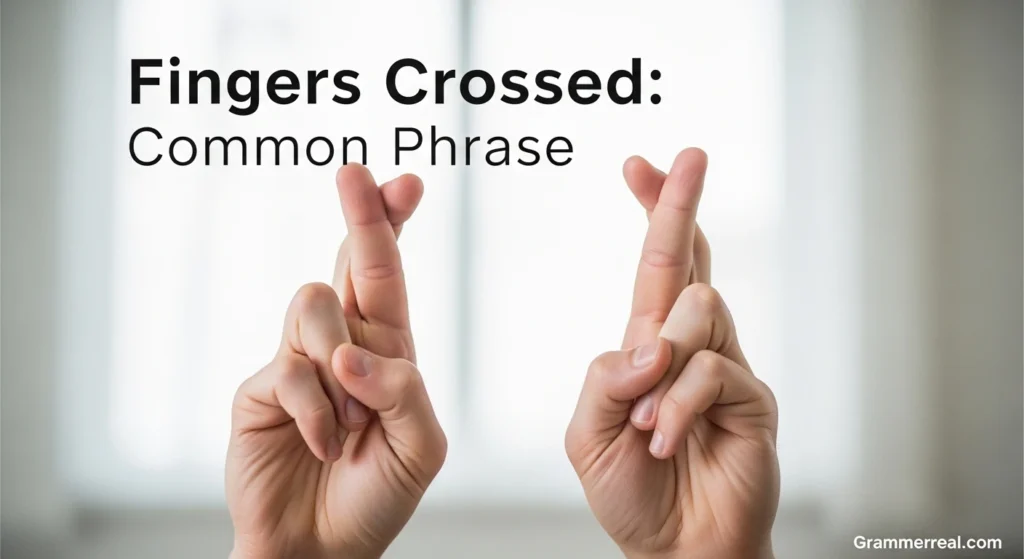
The phrase fingers crossed is a popular English idiom. People use it when they hope something good will happen. It shows a wish for success, good luck, or a positive result. When someone says “fingers crossed,” they are expressing hope without certainty.
In everyday conversation, people often say this phrase before an important event. For example, a student might say “fingers crossed” before an exam. A person waiting for a job interview result might also use this phrase. The idiom reflects a simple human feeling: hope for a good outcome.
The phrase also connects to a small physical gesture. People sometimes cross one finger over another as a sign of wishing for luck. Over time, the gesture and the words became a common expression in English. In this article, you will learn the meaning, origin, grammar use, examples, cultural background, common mistakes, and practical writing tips for the idiom fingers crossed.
Meaning of Fingers Crossed
The idiom fingers crossed means hoping for good luck or a positive result. It expresses a wish that something will go well.
In simple words, it means “I hope everything works out.”
Example sentences:
- Fingers crossed for your exam tomorrow.
- I sent my job application today. Fingers crossed.
- Fingers crossed that the weather stays sunny.
In each sentence, the speaker is hoping for success or a favorable outcome.
The phrase does not guarantee success. Instead, it shows optimism and hope.
Origin of the Phrase
The origin of fingers crossed comes from an old cultural practice. In many European traditions, people believed that the sign of the cross brought protection and good luck. Crossing fingers symbolized this protective sign.
In early Christian traditions, people sometimes formed a cross with their fingers while praying or making a wish. Over time, this gesture became connected to hope and luck.
As English language and culture developed, the gesture turned into a spoken phrase. Today, people say “fingers crossed” even if they do not actually cross their fingers.
The idiom is now widely used in modern English conversation.
The Gesture Behind the Idiom
The idiom is connected to a physical action. When someone crosses one finger over another, the fingers form a small cross shape.
This gesture symbolizes hope or good fortune.
People may use the gesture silently, especially when waiting for results. For example, a student might cross their fingers while waiting for exam grades.
However, the phrase fingers crossed is now common in speech and writing. The gesture is optional.
The meaning stays the same whether the gesture appears or not.
Grammar Structure of Fingers Crossed
The phrase fingers crossed often appears as a short expression or sentence fragment. It functions as a wish for good luck.
Common structures include:
Fingers crossed + for + noun
Example:
- Fingers crossed for the interview.
Another structure:
Fingers crossed + that + clause
Example:
- Fingers crossed that everything goes well.
It can also appear as a short statement:
- Fingers crossed.
This sentence works because the meaning is clear from context.
Using Fingers Crossed in Conversation
The idiom appears frequently in everyday conversation.
Example dialogue:
Person A: I have an important meeting today. Person B: Fingers crossed. I hope it goes well.
Another example:
Person A: I applied for a scholarship. Person B: Fingers crossed that you get it.
These conversations show how the phrase expresses support and encouragement.
It is friendly and positive.
Fingers Crossed in Written Communication
The idiom also appears in emails, messages, and informal writing.
Example:
- I submitted the project yesterday. Fingers crossed for a good response.
Another example:
- Fingers crossed that the event goes smoothly.
However, the phrase is usually informal. It works best in casual communication.
In formal writing, people often replace it with phrases like “I hope for a positive outcome.”
Cultural Meaning and Symbolism
Fingers crossed reflects a universal human emotion: hope. Many cultures have gestures or phrases connected to luck.
In English-speaking cultures, crossing fingers symbolizes positive expectation. It also expresses support for others.
For example, when someone says “fingers crossed for you,” they are showing encouragement.
The phrase therefore carries emotional warmth.
Contextual Examples
Education:
A student finishes an exam and says, “Fingers crossed that I pass.”
Work:
Someone waiting for a promotion might say, “Fingers crossed for good news.”
Weather:
People planning a picnic may say, “Fingers crossed for sunny weather.”
Travel:
Before a long trip, someone might say, “Fingers crossed that the flight is on time.”
These examples show that the idiom fits many everyday situations.
Similar Expressions
English has several expressions that share a similar meaning.
Examples include:
- Good luck
- I hope so
- Let us hope for the best
- Wish me luck
- Hoping for the best
Each phrase expresses hope. However, fingers crossed sounds slightly more playful and casual.
It also carries a cultural gesture.
Differences Between Spoken and Written Use
In spoken English, the idiom sounds natural and friendly.
Example:
- Fingers crossed for tomorrow.
In written English, especially formal writing, the phrase may appear less often.
Formal example:
- I hope the results will be positive.
Because of this difference, writers should consider the context before using the idiom.
Common Mistakes
Learners sometimes misunderstand the structure of the idiom.
One common mistake is changing the phrase.
Example mistake:
- Crossed fingers for the exam.
The standard idiom is fingers crossed.
Another mistake is using the phrase in very formal documents. Academic writing usually prefers neutral expressions.
Learners should also avoid repeating the phrase too many times in one paragraph.
Balanced use improves clarity.
Practical Tips for Using Fingers Crossed
Use the phrase when expressing hope for a result.
Keep the structure simple and natural.
Use it mainly in informal conversation and writing.
Avoid using it in formal reports or academic essays.
Use it once or twice in a discussion to maintain clarity.
These tips help maintain natural English usage.
Sentence Structure and Clarity
Good writing combines short and longer sentences.
Short example:
- Fingers crossed.
Longer example:
- Fingers crossed that the team wins the match tonight.
Writers should avoid sentence fragments when clarity is needed.
Example:
Incorrect form: Fingers crossed for success tomorrow because very important. Improved form: Fingers crossed for success tomorrow because the event is very important.
Clear structure improves readability.
Emotional Tone of the Idiom
The tone of fingers crossed is positive and hopeful.
It shows support and encouragement. When people say it to someone else, they are expressing goodwill.
Example:
- Fingers crossed for your presentation.
This statement shows that the speaker wants the other person to succeed.
The idiom therefore carries a warm and friendly tone.
Everyday Situations Where People Use It
People use the phrase in many real-life moments.
Students waiting for grades often say it.
Job applicants waiting for interview results use it.
Sports fans use it before an important game.
Families planning outdoor activities use it when hoping for good weather.
Because these situations involve uncertainty, the phrase becomes useful.
Writing Practice
Practice can help you remember how to use the idiom.
Write a sentence about exams using fingers crossed.
Write a short message wishing a friend success in a job interview.
And write a sentence using fingers crossed with the word “weather.”
These exercises help you build confidence with the idiom.
Conclusion
The idiom fingers crossed expresses hope for good luck or a positive result. It comes from an old cultural gesture where crossing fingers symbolized protection and good fortune. Today, the phrase appears widely in conversation and informal writing.
People use it in situations where they hope for success but do not know the result yet. It is simple, friendly, and supportive. Although it is not suitable for very formal writing, it remains one of the most popular expressions for hope and encouragement in everyday English.
By understanding its meaning, structure, and context, you can use fingers crossed naturally in conversation and writing.
FAQs
1. What does fingers crossed mean?
It means hoping for good luck or a positive result.
2. Is fingers crossed formal or informal?
It is mainly informal and common in everyday conversation.
3. Do people always cross their fingers when saying it?
No. Many people say the phrase without making the gesture.
4. Can I use fingers crossed in professional emails?
It can appear in friendly emails, but formal communication usually avoids it.
5. What is a similar expression to fingers crossed?
Common alternatives include good luck, wish me luck, or hoping for the best.



