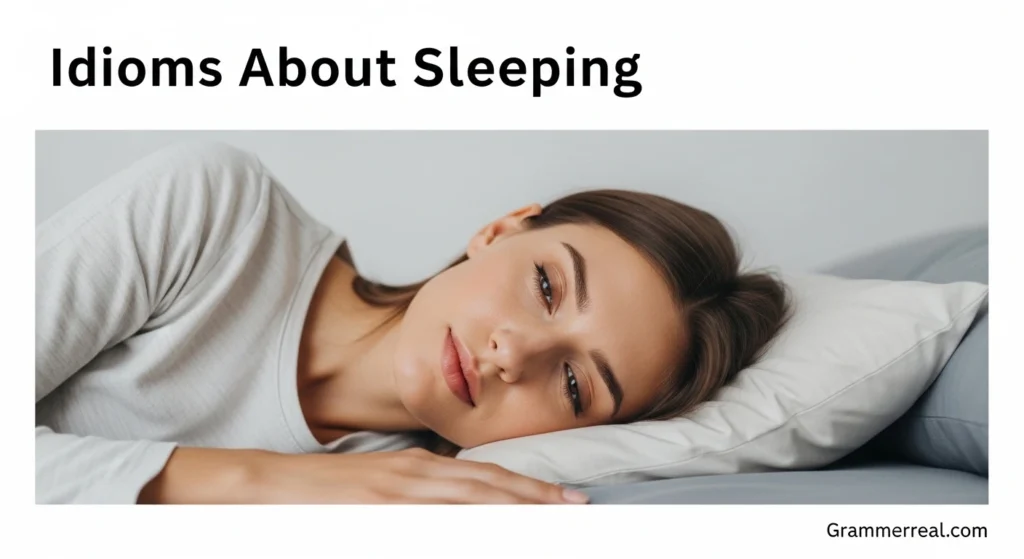
The night falls slowly, like a soft blanket over the world. The air cools down, and the noise of the day fades away. A quiet hum fills the room. Maybe it is the fan. Maybe it is your own breathing. Your eyes begin to close, little by little. The pillow feels warm and gentle under your head. Your body relaxes. Your thoughts slow down. Then, sleep comes, soft and deep, like a calm ocean wave.
Sleep is something every person needs. It helps your body rest and your mind feel fresh again. Because sleep is so important, people talk about it in many creative ways. One of the best ways is through idioms. Idioms are special phrases that do not mean exactly what the words say. Instead, they have a hidden meaning that people understand over time.
In this long and friendly guide, you will explore idioms about sleeping in a deep and easy way. You will learn meanings, examples, tips, stories, and even fun exercises. You will also see how these idioms can make your speaking and writing more lively and expressive. So, take a deep breath, relax your mind, and step into this calm world of sleep and words.
What Are Idioms About Sleeping and Why Do They Feel So Alive
Idioms about sleeping are phrases that talk about sleep, rest, dreams, or tiredness in a creative way. These phrases do not follow simple meanings. Instead, they paint pictures in your mind.
For example, when someone says, “I slept like a baby,” they do not mean they became a baby. They mean they slept very well and peacefully. This makes the sentence more colorful and emotional.
People use idioms because they make language fun. They also help us express feelings quickly. When you say, “I did not sleep a wink,” others understand your tiredness right away.
Because of this, idioms feel alive. They carry emotion. They tell small stories in just a few words.
Why Idioms About Sleeping Matter in Everyday Conversations
In daily life, we talk about sleep a lot. We say we are tired. We say we need rest and we talk about dreams. So, idioms naturally become part of our speech.
When you use sleep idioms, your English sounds more natural. It feels like real conversation, not textbook language. Also, people enjoy listening to expressive words.
For example:
- “I am going to hit the sack.” sounds more relaxed than “I am going to sleep.”
- “I slept like a log.” feels stronger than “I slept well.”
So, these idioms help you:
- Sound friendly and confident
- Express emotions clearly
- Connect with people better
Because of this, learning sleep idioms is not just fun. It is also very useful.
Common Idioms About Sleeping You Hear Every Day
There are many idioms about sleeping, and you may already know some of them without realizing it.
Here are a few common ones:
- Sleep like a baby
- Hit the sack
- Out like a light
- Not sleep a wink
- Catch some Z’s
- Sleep on it
Each of these idioms has a simple meaning, but together they create a rich and colorful way to talk about sleep.
When you hear them often, they become easy to remember. Over time, they become part of your natural speech.
Sleep Like a Log
Let’s explore this idiom in detail.
Meaning/Explanation: “Sleep like a log” means to sleep very deeply. A log is a piece of wood. It does not move at all. So, the idea is that the person sleeps without moving or waking.
Example Sentence: After working all day, I slept like a log.
Alternative Ways to Say It:
- Slept very deeply
- Had a heavy sleep
- Slept without waking up
Sensory Detail: You feel your body become heavy. Your arms and legs do not move. The night passes quietly. You wake up and feel like time moved fast.
Mini Story: Bilal helped his father all day in the field. The sun was hot, and the work was hard. When night came, he ate dinner and lay on his bed. Within minutes, he slept like a log. Even thunder in the sky could not wake him.
Extra Tip: Use this idiom when you want to show strong tiredness followed by deep rest.
Hit the Sack
Now let’s look at another popular idiom.
Meaning/Explanation: “Hit the sack” means to go to bed. In the past, people slept on sacks filled with straw. So, the phrase came from that habit.
Example Sentence: I am very tired today, so I will hit the sack early.
Alternative Ways to Say It:
- Go to bed
- Turn in
- Call it a night
Emotional Detail: There is a calm feeling when you decide to stop everything and rest. It feels like closing a busy chapter of the day.
Mini Story: Ayesha studied for many hours. Her eyes hurt, and her mind felt slow. She looked at the clock and smiled. “It’s time to hit the sack,” she said softly, feeling peace in that moment.
Extra Tip: Use this idiom in casual talk, not in formal writing.
Not Sleep a Wink
This idiom shows the opposite of sleep.
Meaning/Explanation: “Not sleep a wink” means not sleeping at all. A wink is a very short moment, so it means zero sleep.
Example Sentence: I did not sleep a wink because I was nervous.
Alternative Ways to Say It:
- Stayed awake all night
- Could not sleep at all
- Had no rest
Emotional Detail: Your eyes feel heavy, but your mind keeps running. You turn left, then right. Time moves slowly. The night feels long.
Mini Story: Hamza had an important exam. He kept thinking about questions and answers. Because of that, he did not sleep a wink. In the morning, he felt tired but ready.
Extra Tip: Use this idiom when talking about stress, worry, or excitement.
Idioms About Sleeping and Human Emotions
Sleep is not just physical. It is emotional too. When people talk about sleep, they also share feelings.
For example:
- Deep sleep shows peace
- No sleep shows stress
- Quick sleep shows tiredness
Because of this, sleep idioms often carry emotion. They help you show how you feel without long explanations.
Using Sleeping Idioms in Daily Conversations Naturally
You can easily add these idioms to your daily talk. Start small. Use one idiom at a time.
For example:
- “I will sleep on it before deciding.”
- “He was out like a light after dinner.”
Practice with friends or family. Speak slowly and clearly. Over time, it will feel natural.
Idioms About Sleeping in Stories, Movies, and Culture
Sleep idioms appear in stories and movies often. They make scenes feel real and emotional.
In fairy tales, characters fall into deep sleep. In movies, tired heroes say they will “hit the sack.”
Because of this, learning idioms also helps you enjoy stories better. You understand emotions more deeply.
Interactive Exercise: Fill in the Blanks and Think Deeply
Try this exercise slowly:
- After the long journey, I slept like a ______.
- I could not sleep a ______ last night.
- I will ______ the sack early today.
Now say your answers aloud. Then create your own sentence. This builds confidence and memory.
Creative Practice: Build Your Own Mini Sleep Story
Now let’s do something fun.
Write a short story using one idiom. For example: “After a long day, I hit the sack and dreamed of a quiet beach.”
Try to add feelings and small details. This makes learning enjoyable.
Tips to Learn and Remember Sleeping Idioms Easily
Learning idioms can feel hard at first. However, simple steps make it easy:
- Use them every day
- Write them in a notebook
- Say them out loud
- Imagine pictures in your mind
Also, repeat them often. Repetition helps your brain remember.
Using Sleep Idioms in Writing, Captions, and Social Media
Sleep idioms work great in writing too.
For example:
- “Finally hitting the sack after a busy day.”
- “Did not sleep a wink, but still smiling.”
These lines feel real and friendly. They connect with readers.
More Idioms About Sleeping to Expand Your Vocabulary
Here are more idioms you can learn:
- Out like a light (fell asleep very fast)
- Catch some Z’s (get some sleep)
- Sleep on it (think before deciding)
Each one adds more color to your language.
Common Mistakes to Avoid When Using Sleeping Idioms
Sometimes learners make small mistakes. Avoid these:
- Do not take idioms literally
- Do not use them in wrong situations
- Do not overuse them in formal writing
Practice helps you avoid these errors.
How Sleeping Idioms Improve Communication Skills
Idioms make your language more expressive. They help you share feelings quickly.
Also, they make conversations more interesting. People enjoy listening to creative speech.
Because of this, idioms improve both speaking and writing.
Bonus Ideas: Fun Ways to Practice Idioms Every Day
Here are some fun ideas:
- Keep a “sleep idiom diary”
- Use one idiom each day
- Share idioms with friends
- Create small stories
These activities make learning fun and easy.
Conclusion
Sleep is soft, quiet, and peaceful. In the same way, idioms about sleeping bring softness and beauty to language. They turn simple sentences into colorful expressions. They help you speak with emotion, clarity, and style.
When you learn these idioms, you do more than improve your English. You build a deeper connection with words. You share your feelings in a richer way. So, keep practicing, keep exploring, and let your language rest and grow like a calm night.
FAQs
1. What are idioms about sleeping?
Idioms about sleeping are phrases that describe sleep or tiredness in a creative way. They have special meanings, not direct meanings.
2. Why are sleep idioms important?
They help you speak naturally, express feelings better, and understand others easily.
3. Can beginners learn these idioms?
Yes, beginners can learn them step by step. Start with simple ones and practice daily.
4. How can I practice sleeping idioms?
You can practice by writing sentences, speaking with friends, and doing small exercises.
5. Are sleep idioms used in daily life?
Yes, people use them often in conversations, stories, and social media.



