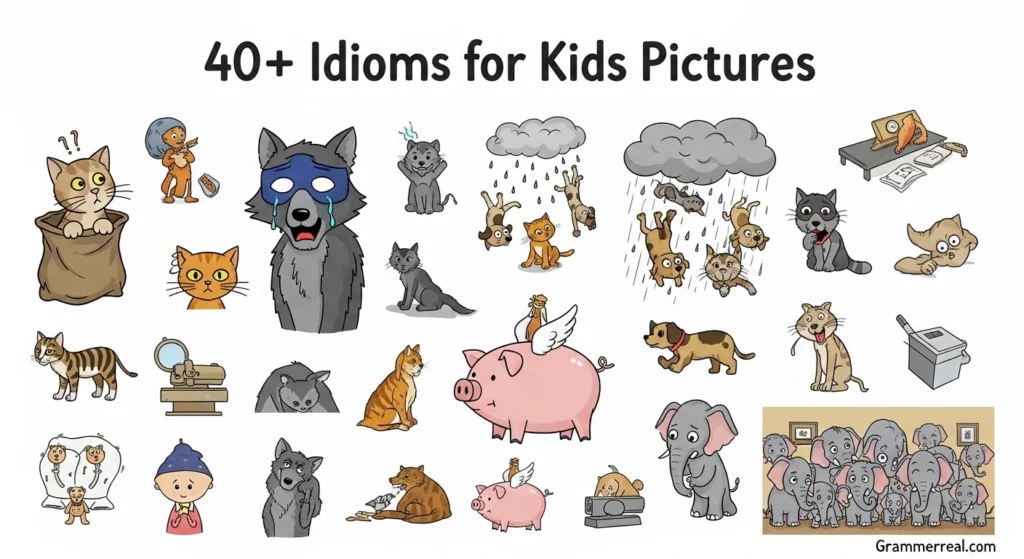
Imagine walking into a colorful room filled with laughter, crayons scattered across the floor, and pictures of smiling children holding up little signs that say, “Break a leg!” or “Piece of cake!” Your eyes light up as you see bright drawings that tell stories in fun, playful ways.
These pictures are not just cute—they are windows into a world of idioms, little phrases that hold meanings beyond the words. Idioms make language magical, helping children think creatively, speak fluently, and connect feelings to words. Understanding idioms through pictures can make learning exciting, lively, and unforgettable.
Idioms are expressions whose meanings aren’t literal. For example, “It’s raining cats and dogs” doesn’t mean animals are falling from the sky—it means it’s raining very hard. For kids, learning idioms can be like discovering hidden treasures. They improve imagination, make storytelling fun, and help children understand cultural language in stories, movies, and conversations. Using pictures makes these idioms even easier to grasp because visuals create strong memory links.
In this article, we will explore idioms for kids through pictures. You’ll find examples, explanations, alternative expressions, storytelling, exercises, and tips for daily life, social media, and writing. Let’s dive into this colorful world of words!
Why Kids Love Learning Idioms with Pictures
Kids are naturally visual learners. When they see a picture, they immediately connect it to a feeling, an action, or a story. Pictures paired with idioms turn abstract words into concrete ideas. Imagine showing a child a picture of a cat hanging from a tree with the phrase “Curiosity killed the cat.” Suddenly, the idiom isn’t confusing—it’s funny, memorable, and easy to understand.
Pictures also make idioms playful. A child might draw a “ball is in your court” picture as a game of tennis, helping them remember that it means someone has to make a decision or take responsibility. Using visuals keeps learning interactive and encourages kids to create their own idiom illustrations, sparking imagination and creativity.
How Pictures Help Kids Understand Idioms
When children look at pictures, they can visualize the meaning behind idioms. Visual learning combines sight, memory, and context. For example, a drawing of a frog jumping into water with the idiom “Jump on the bandwagon” can help kids associate action and opportunity.
Pictures also reduce confusion. Without visuals, idioms can be tricky because the words don’t always match the meaning. But when kids see a picture showing someone literally “holding their tongue,” they immediately grasp that it means “stay quiet.” Pictures make learning active, memorable, and fun.
Three Fun Idioms for Kids Pictures
Here are three idioms, explained with examples, alternative ways to say them, and fun sensory details.
1. Break the Ice
Meaning/Explanation: To “break the ice” means to start a conversation in a friendly way, especially when people feel shy.
Example Sentence: “At the birthday party, Maria told a funny joke to break the ice.”
Alternative Expressions: Start the conversation, make friends, ease the tension.
Storytelling/Visual Idea: Imagine a picture of a penguin sliding on icy ground toward another penguin. The first penguin waves its flipper, making the other smile. The ice is cracking with joy! Kids can draw their own version showing animals or friends smiling at each other.
Sensory Details: Cold, sparkling ice, giggles, and warm smiles.
Interactive Exercise: Draw your own “break the ice” scene. Who are the characters? How do they start a conversation? Share it with friends or family and see if they can guess the idiom.
2. Piece of Cake
Meaning/Explanation: When something is very easy, it’s a “piece of cake.”
Example Sentence: “Doing my homework was a piece of cake because I studied yesterday.”
Alternative Expressions: Very easy, simple, no problem.
Storytelling/Visual Idea: Picture a child reaching for a huge slice of chocolate cake with a happy grin. Each bite makes them feel lighter and excited, showing that tasks can be simple and fun.
Sensory Details: Sweet, fluffy cake, soft chocolate, laughter, and a cheerful smile.
Interactive Exercise: Think of a task you found easy today. Draw a picture or make a short comic showing how it felt like a piece of cake.
3. Raining Cats and Dogs
Meaning/Explanation: This means it’s raining very heavily.
Example Sentence: “We couldn’t go to the park because it was raining cats and dogs.”
Alternative Expressions: Pouring rain, heavy rain, storming.
Storytelling/Visual Idea: Imagine a child with an umbrella looking up as cartoon cats and dogs gently fall with raindrops. It’s silly, fun, and memorable!
Sensory Details: Wet streets, splashing puddles, soft fur landing like raindrops, playful sounds.
Interactive Exercise: Make your own picture for a weather idiom. Can you think of a silly way to show “snowing heavily” or “windy day”?
Creative Ways to Teach Idioms with Pictures
- Drawing Games: Ask children to draw their own illustrations for idioms. They can create a story panel or a comic strip.
- Matching Activities: Print idioms and pictures separately. Kids match idioms with the correct visual.
- Storytelling: Have children tell a story based on an idiom picture. This encourages speaking, imagination, and understanding.
Using Pictures to Connect Emotions and Words
Idioms often express feelings. Pictures help kids link these emotions to words. For example, “Feeling under the weather” paired with a drawing of a child in bed with a thermometer helps kids understand sadness or illness. Visuals reinforce the meaning in a memorable way.
Cultural References in Kids Idioms
Some idioms come from stories, fables, or historical events. “Let the cat out of the bag” comes from old markets where merchants might trick buyers. Showing a picture of a cat popping out of a bag makes history playful and helps kids remember idioms easily.
Tips for Making Idioms Fun in Daily Life
- Use Everyday Objects: Turn kitchen items, toys, or pets into idiom illustrations.
- Encourage Role-Playing: Act out idioms like “Hit the nail on the head” by pretending to hammer a toy nail.
- Combine Words and Art: Let children write the idiom under their drawings for visual-text connections.
How Idioms Help in Writing and Storytelling
Idioms make writing lively. A story saying “The project was a piece of cake” is more colorful than just “It was easy.” Pictures can inspire children to write stories using idioms, making narratives fun and imaginative.
Social Media and Idioms for Kids
Parents or teachers can share idiom pictures online. Short, playful posts with a drawing and a phrase like “Break the ice” can teach kids in a fun, visual way. Stories, reels, and posts with pictures attract attention and help children learn without formal lessons.
Using Comparisons and Metaphors
Idiom pictures often include metaphors. For example:
- “Hold your horses” – Picture children holding toy horses, waiting patiently.
- “Spill the beans” – Draw beans spilling from a pot to show someone revealing secrets.
These metaphors spark imagination and create a connection between words and meaning.
Mini Storytelling with Idioms
Once, in a small village, a clever fox wanted to “steal someone’s thunder.” The villagers drew a picture showing the fox holding a little cloud while the sun peeked through. The children laughed and instantly understood that it meant taking someone else’s attention or credit.
Storytelling combined with pictures makes idioms unforgettable.
Sensory Connections to Idioms
Adding sensory details strengthens memory:
- Taste: “Piece of cake” – sweet chocolate, soft sponge.
- Touch: “Hold your horses” – rough wooden reins in hand.
- Sight: “Raining cats and dogs” – cartoon animals falling like rain.
- Sound: “Break the ice” – cracking ice under flippers.
Sensory connections make idioms more engaging and vivid for kids.
Interactive Exercises for Idiom Learning
- Draw Your Own Idiom: Pick an idiom and create a picture story.
- Act It Out: With friends or family, perform the idiom physically.
- Create Idiom Comics: Make a short comic using three idioms you like.
These exercises make idioms fun, memorable, and easy to understand.
Bonus Tips for Idioms in Daily Life
- Encourage kids to describe their day using idioms and drawings.
- Use idioms in bedtime stories to make language playful.
- Celebrate creativity by displaying idiom art in the classroom or at home.
Conclusion
Idioms for kids through pictures open a world where words, art, and imagination meet. Children learn language, express emotions, and explore stories in a playful, memorable way. Whether drawing, acting, or storytelling, idioms spark creativity and make learning unforgettable. With a splash of color, a pinch of imagination, and a touch of humor, idioms become alive, leaving a lasting impression on young minds.
FAQs
1. What are idioms and why are they important for kids?
Idioms are phrases with meanings that aren’t literal. They help kids think creatively, speak fluently, and understand cultural language. Pictures make learning idioms easier and more fun.
2. How can pictures help children remember idioms?
Pictures provide visual context, link emotions to words, and make abstract ideas concrete. Children remember idioms better when they see illustrations.
3. Can kids create their own idiom pictures?
Yes! Drawing their own idiom pictures encourages creativity, storytelling, and understanding. Kids can make comics, drawings, or paintings to illustrate idioms.
4. What are some fun idioms for kids to start with?
“Break the ice,” “Piece of cake,” and “Raining cats and dogs” are simple, fun, and easy to illustrate for beginners.
5. How can idioms be used in daily life or social media?
Parents and teachers can share idiom pictures online, use them in stories, bedtime reading, or classroom activities. Kids can also use idioms in writing, drawings, and creative projects.



