The word kafkaesque describes a strange and confusing situation. People use this word when a problem feels complex, unfair, or hard to escape. The term often refers to systems that trap people in long rules and endless steps.
Many readers first see the word while learning about literature and language. However, the word now appears in daily conversation as well. A situation may feel kafkaesque when rules make life harder instead of easier. For example, someone may face a long process in an office where no one gives clear answers. Because of that confusion, the experience feels stressful and absurd. Therefore, people use the word kafkaesque to explain these difficult moments. In this article, you will learn the meaning of kafkaesque, its origin, examples, grammar usage, and writing tips in very simple language.
What Does Kafkaesque Mean
The word kafkaesque describes a situation that feels confusing, unfair, and hard to understand. In many cases, a person faces many rules but receives little help. As a result, the problem becomes bigger instead of smaller.
A kafkaesque situation often includes:
- confusing rules
- slow systems
- unclear answers
- stressful conditions
For example, imagine visiting an office to solve a small problem. One worker sends you to another desk. Then another person sends you somewhere else. In the end, no one solves the issue. This experience may feel kafkaesque.
Therefore, the word explains moments when systems become difficult and strange.
Origin of the Word Kafkaesque
The word kafkaesque comes from the writer Franz Kafka. He wrote stories about people trapped in strange and powerful systems. His books often show characters facing confusing rules and unfair treatment.
Franz Kafka wrote famous works such as:
- The Trial
- The Castle
- The Metamorphosis
In many of his stories, a normal person suddenly faces a mysterious system. The character tries to understand the rules but never finds clear answers. Because these stories felt strange and troubling, readers started using the term kafkaesque.
Today, the word describes real-life situations that feel similar to the events in Kafka’s stories.
Why People Use the Word Kafkaesque
People use kafkaesque to explain difficult systems or confusing problems. Sometimes life includes rules that do not make sense. When that happens, people feel frustrated.
There are several reasons people use this word.
First, it explains complicated situations quickly. Second, it shows that a system feels unfair or strange. Third, it helps describe stress caused by confusing rules.
For instance, a person may wait months for a simple document. Every office asks for new papers, but no one explains the process clearly. In that moment, someone might say, “This situation is kafkaesque.”
Thus, the word captures the feeling of being stuck inside a difficult system.
Kafkaesque Situations in Real Life
Many real-life situations can feel kafkaesque. These situations often appear in offices, legal systems, or government processes.
Here are a few examples.
Example one: A person submits a form, but the office says the form is incorrect. When the person asks what is wrong, the office refuses to explain.
Example two: A worker loses access to a system at work. However, every department says another department controls the problem.
Example three: Someone waits in long lines and fills many forms, but the office keeps asking for new information.
In each example, the person feels lost in a system that makes no sense. Therefore, the word kafkaesque describes the situation well.
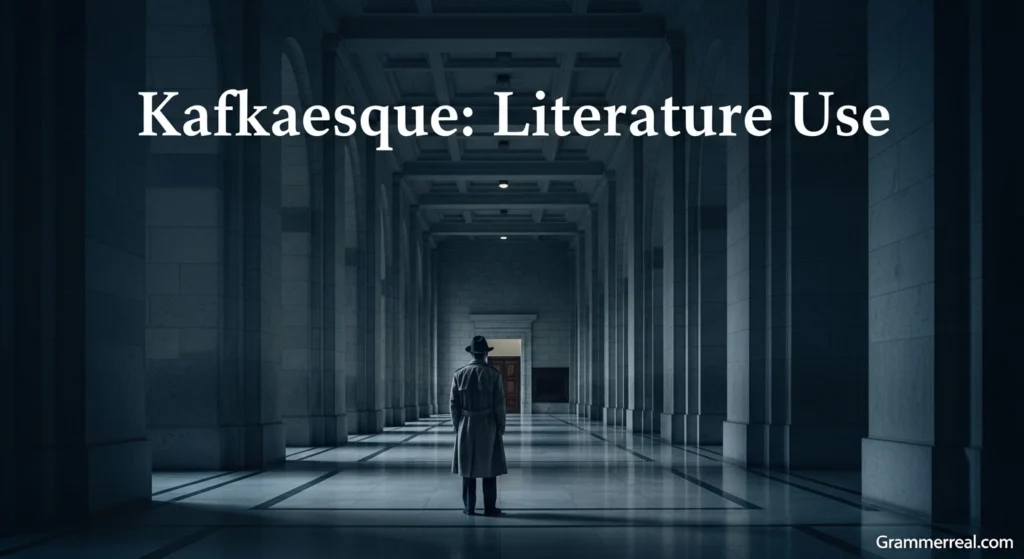
Kafkaesque in Literature and Storytelling
The term kafkaesque also appears often in literature. Writers use this concept to show characters trapped in strange systems.
In kafkaesque stories, common elements appear:
- confusing rules
- hidden authorities
- unclear laws
- endless waiting
The character usually tries to understand the system. However, the system never gives clear answers.
Because of this structure, the story creates tension and mystery. Readers feel the same frustration as the character.
Many modern stories, films, and shows include kafkaesque ideas. These stories show how systems can control people’s lives.
Grammar Structure of the Word Kafkaesque
The word kafkaesque is an adjective. An adjective describes a noun.
Example sentence:
The situation felt kafkaesque.
In this sentence, kafkaesque describes the situation.
Another example:
He faced a kafkaesque process at the office.
The word can appear before a noun or after a linking verb such as “is” or “felt.”
Examples:
The process is kafkaesque. She described the experience as kafkaesque.
Because it is an adjective, the word does not change form for plural or tense.
Using Kafkaesque in Conversation
People sometimes use kafkaesque in conversation. However, it appears more often in discussions about systems, politics, or work problems.
Example conversation:
Person A: I went to three offices today, and no one helped me.
Person B: That sounds kafkaesque.
In this case, the second person understands the confusing experience.
Another example:
The legal process felt kafkaesque.
Therefore, the word helps people explain complicated situations in a simple way.
Tone and Emotional Meaning
The word kafkaesque usually carries a negative tone. It describes stress, confusion, and frustration.
However, the tone may vary slightly depending on context.
Sometimes people use the word humorously. They may laugh about a strange situation.
Other times the word expresses serious criticism. For example, someone may criticize a government system that causes problems for citizens.
Because tone matters, speakers should think carefully before using the word.
Kafkaesque Systems and Bureaucracy
A kafkaesque system often connects to bureaucracy. Bureaucracy means a system with many rules and procedures.
Some bureaucratic systems work well. However, others create problems because the rules become too complex.
When a system includes:
- endless paperwork
- unclear rules
- slow decisions
people may describe it as kafkaesque.
For example, a person may spend weeks trying to correct a small error in official records. Every office asks for new documents. In the end, the process feels impossible.
Thus, the term kafkaesque describes the frustration people feel in complicated systems.
Common Examples from Daily Life
Kafkaesque situations can appear in many areas of life.
For example:
At work: An employee needs approval from five departments for a simple change.
At school: A student cannot access records because one office says another office controls them.
At a government office: A citizen fills many forms but still receives no answer.
These experiences make people feel trapped. The system exists, but no one understands how it works.
Therefore, the word kafkaesque explains the strange nature of these experiences.
Difference Between Confusing and Kafkaesque
Not every confusing situation is kafkaesque. The word usually describes something deeper than simple confusion.
A normal confusing situation may include unclear instructions.
However, a kafkaesque situation includes:
- complex systems
- unfair rules
- endless procedures
- lack of explanation
For example, losing directions in a new city is confusing. But being trapped in a system with endless rules feels kafkaesque.
This difference helps people use the word correctly.
Similar Expressions and Related Words
Several expressions carry meanings similar to kafkaesque.
Some examples include:
- absurd situation
- bureaucratic nightmare
- endless process
- confusing system
Each phrase describes frustration with complicated systems.
However, kafkaesque carries a deeper meaning because it connects to literature and the works of Franz Kafka.
Therefore, the word often sounds stronger than other expressions.
American and British English Usage
Both American and British English use the word kafkaesque. The spelling remains the same in both varieties.
However, the word appears more often in academic writing, journalism, and cultural discussions.
In British conversation, people sometimes use the word when discussing government systems or public services.
In American conversation, the word may appear when discussing legal systems or office procedures.
Although the context may change, the meaning remains the same in both regions.
Common Mistakes Learners Make
Language learners sometimes make mistakes when using kafkaesque.
One mistake involves spelling.
Incorrect spelling example:
kafkasque
Correct spelling:
kafkaesque
Another mistake involves using the word as a noun.
Incorrect example:
This is a kafkaesque.
Correct example:
This is a kafkaesque situation.
Because kafkaesque is an adjective, it must describe a noun.
Understanding this rule helps learners avoid common grammar errors.
Sentence Structure and Clarity
Clear sentence structure improves writing quality. Therefore, writers should combine short and longer sentences.
Example short sentence:
The process felt kafkaesque.
Example longer sentence:
The worker faced a kafkaesque process because the office required many forms but offered no clear explanation.
This balance keeps writing easy to read.
Writers should also avoid sentence fragments.
Fragment example:
Because the process was kafkaesque.
Correct sentence:
The process caused stress because it felt kafkaesque.
Thus, careful sentence structure improves clarity.
Practical Tips for Using Kafkaesque Correctly
Several tips help writers and speakers use the word correctly.
First, use kafkaesque mainly when describing complex systems.
Second, avoid using the word for simple problems.
Third, place the word before a noun or after a linking verb.
Fourth, use clear sentences when explaining the situation.
Finally, remember the emotional meaning of the word.
Following these tips makes communication clearer and more accurate.
Writing and Communication Tips
Good communication depends on clear ideas and simple language.
When explaining a kafkaesque situation, writers should describe the problem step by step. This helps readers understand the complexity.
Writers should also use examples. Examples make abstract ideas easier to understand.
Another useful technique involves varying sentence length. Short sentences add clarity. Longer sentences provide details.
Because of these techniques, the text becomes easier to read.
Reflection on Grammar and Writing Technique
This article uses simple grammar rules and clear writing techniques. Most sentences follow standard subject and verb order. As a result, the meaning stays clear and direct.
The text also uses correct verb tense and subject–verb agreement. For example, singular nouns use singular verbs, and plural nouns use plural verbs. This rule helps maintain grammatical accuracy.
Articles, prepositions, and modifiers appear carefully in each sentence. These small grammar elements help create precise meaning.
In addition, the article mixes short sentences with longer explanations. This variation improves readability. Active voice appears often, but passive voice also appears when it helps the sentence flow.
These techniques show how careful grammar and clear structure improve writing quality.
Conclusion
The word kafkaesque describes confusing and unfair situations that often involve complicated systems. The term comes from the writer Franz Kafka, whose stories show characters trapped in strange and powerful structures. Over time, people began using the word to explain real-life experiences that feel similar.
A kafkaesque situation usually includes complex rules, unclear answers, and frustrating procedures. People may face these problems in offices, legal systems, or government processes. Because the system feels difficult to understand, the experience becomes stressful.
Understanding this word helps readers describe complex situations more clearly. When used correctly, kafkaesque captures the feeling of confusion and frustration that people sometimes experience in modern systems.
FAQs
1. What does kafkaesque mean?
Kafkaesque describes a confusing, unfair, and complex situation, especially one involving difficult systems or unclear rules.
2. Where does the word kafkaesque come from?
The word comes from the writer Franz Kafka, whose stories often show characters trapped in strange and confusing systems.
3. Is kafkaesque a noun or an adjective?
Kafkaesque is an adjective. It describes a noun, such as a situation, system, or experience.
4. Can kafkaesque describe real-life situations?
Yes. People often use the word to describe frustrating experiences with offices, legal systems, or complicated rules.
5. Is kafkaesque used in everyday conversation?
Sometimes. The word appears more often in discussions about literature, politics, and complex systems, but it can also appear in daily speech.