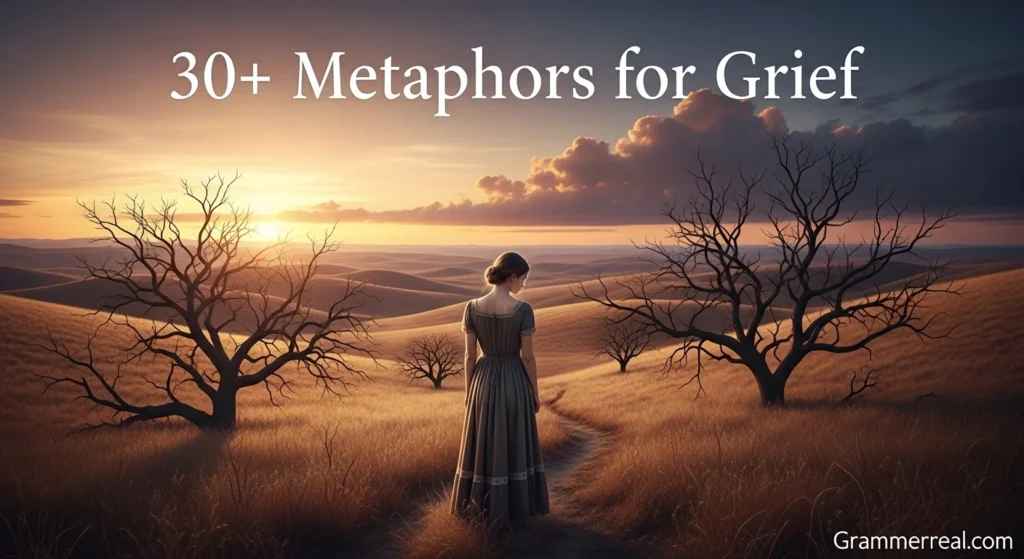
Grief is heavy. It feels like a shadow that follows everywhere. Sometimes it comes quietly. Other times, it hits hard. Everyone experiences grief differently, but it always leaves marks. Writing about grief can be difficult. That is why writers use metaphors. Metaphors help us imagine feelings we cannot touch. They make sadness easier to understand.
Below are 15 different metaphors for grief. Each explains a feeling in simple, clear language.
Like a Heavy Stone in the Heart
Grief can feel like carrying a large stone inside your chest. Meaning: Pain feels heavy and hard to bear.
For example: “Her sadness weighed on her like a stone in the heart.”
The stone presses down with every thought. Breathing feels harder. Even small tasks seem impossible. Relief comes when someone listens or helps carry the weight.
Like a Dark Cloud Covering the Sky
Clouds block sunlight. They cover everything in gray. Meaning: Grief can feel like sadness blocking happiness.
For example: “His loss hung over him like a dark cloud.”
Nothing feels bright. Smiles feel fake. Colors seem dull. Over time, clouds may move away, but for now, they hide the sun.
Like a River Overflowing Its Banks
Rivers rise after rain and flood nearby land. Meaning: Grief can feel uncontrollable and strong.
For example: “Tears poured out like a river overflowing.”
Emotions spill everywhere. Sometimes they surprise you. You may cry or feel angry. Flooding takes time to calm. Patience helps the river settle slowly.
Like a Broken Bridge
A bridge connects two places. A broken one separates them. Meaning: Grief can make people feel disconnected.
For example: “After losing her friend, life felt like a broken bridge.”
Communication stops. Joy seems far away. Rebuilding connections takes care and time. Bridges can be repaired slowly.
Like Thorns That Stick in Your Mind
Thorns hurt when they touch your skin. Meaning: Grief can feel painful and constant.
For example: “Memories pricked him like thorns.”
Even small reminders hurt. Thoughts may repeat. Moments of peace are interrupted by sharp reminders. Healing softens the pain over time.
Like a Cold Winter Wind
Winter winds are biting and harsh. Meaning: Grief can feel chilling and empty.
For example: “Her sorrow swept over her like cold wind.”
It makes you shiver inside. Warmth seems far away. Comfort feels distant. Time allows the cold to fade slowly.
Like Walking Through Thick Fog
Fog makes it hard to see ahead. Meaning: Grief can make life feel unclear and confusing.
For example: “He moved through the day like walking in fog.”
Decisions feel difficult. Steps are uncertain. The future seems hidden. Patience and guidance help the fog lift slowly.
Like a Ship Lost at Sea
Ships can drift without direction when storms come. Meaning: Grief can make people feel lost.
For example: “After losing his father, he felt like a ship at sea.”
The current pushes you. Waves pull in different directions. Even small goals feel far away. Over time, calm waters return, and direction is found again.
Like Shadows That Never Leave
Shadows follow objects everywhere. Meaning: Grief can feel constant and lingering.
For example: “Her sadness stayed like a shadow.”
Even happy moments are touched. The shadow may soften, but it does not completely disappear. Grief becomes part of life, quietly present.
Like Fire Burning Slowly
Fire warms, but fire can also burn painfully. Meaning: Grief can be slow and persistent.
For example: “His heart burned with sorrow like a quiet fire.”
The fire does not destroy quickly. It lingers, uncomfortable but noticeable. Gentle care and kindness help cool the flame.
Like a Garden with Withered Flowers
A garden with no sun grows weak. Meaning: Grief can make life feel empty and dull.
For example: “Her happiness faded like flowers without water.”
Colors disappear. Energy feels low. Life seems gray. Time, support, and care can revive the garden slowly.
Like Heavy Rain Without End
Rain sometimes falls for a long time. Meaning: Grief can feel continuous and relentless.
For example: “Tears fell like heavy rain.”
The ground becomes muddy. Movement feels slow. Relief may take time. Eventually, clouds clear, and the sun shines again.
Like Chains Around Your Heart
Chains restrict movement. They feel tight and heavy. Meaning: Grief can make someone feel trapped.
For example: “His sorrow held him like chains.”
Freedom feels distant. Breathing feels difficult. Understanding, support, and patience help loosen the chains over time.
Like a Fading Candle
A candle gives light, but it melts slowly. Meaning: Grief can diminish energy but not disappear immediately.
For example: “Her hope dimmed like a candle burning low.”
Brightness becomes smaller. Darkness grows around it. Eventually, new light appears, either from time, care, or new experiences.
Like a Mountain Too Steep to Climb
Mountains are hard to climb. They test endurance. Meaning: Grief can feel like an impossible obstacle.
For example: “Moving on felt like climbing a steep mountain.”
Each step requires effort. Progress may feel slow. Support and persistence allow the climb to continue. The summit becomes possible eventually.
Like a Heavy Blanket on Your Shoulders
Blankets protect, but heavy blankets can weigh you down. Meaning: Grief can feel heavy and hard to carry.
For example: “His loss lay on him like a heavy blanket.”
Every movement requires effort. Even breathing can feel hard. Sharing the weight with friends or family helps lighten it slowly.
Like Broken Glass on the Ground
Glass can cut if touched carelessly. Meaning: Grief can feel sharp and dangerous to handle.
For example: “Memories were like broken glass under her feet.”
Every step feels risky. Words and actions must be careful. Slowly, wounds heal and sharp edges become safer to handle.
Understanding Grief
Grief is complicated, but metaphors help explain it. It can be heavy, sharp, confusing, constant, or slow. Each image above gives a way to understand how it feels inside. Talking, resting, and sharing help people manage grief. Time helps too.
Grief is part of life. It leaves marks but also teaches strength. Pain may linger, yet hope slowly returns.
Conclusion
Metaphors for grief turn feelings into pictures we can understand. Grief can feel like a stone, a storm, a shadow, heavy rain, broken glass, or chains. Each metaphor explains one part of the experience.
Even when grief feels overwhelming, it changes over time. Support, patience, and care help ease the burden. Life continues, and small moments of peace appear again.
FAQs
Why are metaphors used for grief?
Metaphors help describe feelings that are hard to explain in words.
Can grief feel different for everyone?
Yes. Some people feel it quietly, others feel it strongly.
Does grief disappear completely?
Not always. Grief may remain but become easier to manage over time.
How can someone cope with grief?
Talk to others, rest, and allow time to heal.
Can grief teach lessons?
Yes. It helps people grow, understand emotions, and value life more.